
5 Easy Indian Arts And Crafts Ideas To Teach Kids Our Rich Culture During Festivals
Fun, simple Indian arts and crafts activities that help children enjoy learning and connect with our rich culture in playful, hands‑on ways
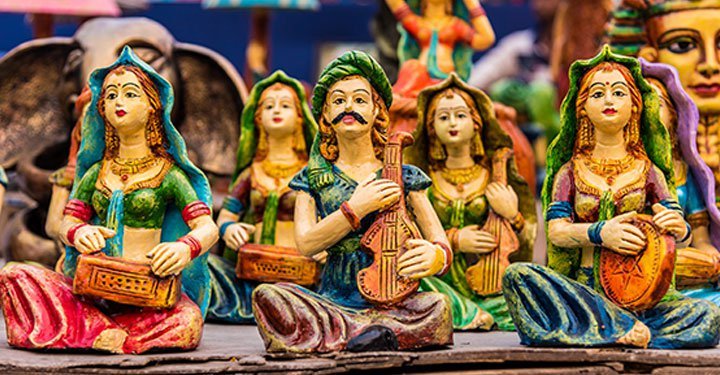
Indian arts and crafts are everywhere. On walls, cutlery, courtyards, or doorsteps, they come alive during festive celebrations at home and in public spaces. Rituals, decor, and displays highlight the richness of traditional designs and materials used to create them.
Festivities are also an exciting time to introduce children to India's cultural heritage.
"When a child sees and works with Indian motifs and designs, they begin to understand the value of social and religious customs of their culture", says Arundhati Swamy, Counsellor and Head of Parent Engagement Programme at ParentCircle.
Learning about Indian arts and crafts helps children connect with nature and teaches them about village life, symmetry, and design.
"Indian crafts introduce children to a variety of colors, patterns, designs, and meanings associated with different Indian festivals and customs. An interesting way to build your child's knowledge about these is to narrate short Indian stories as they work on their crafts," Arundhati adds.
Here's a guide to teaching your children some easy art and craft.
1. Pot painting
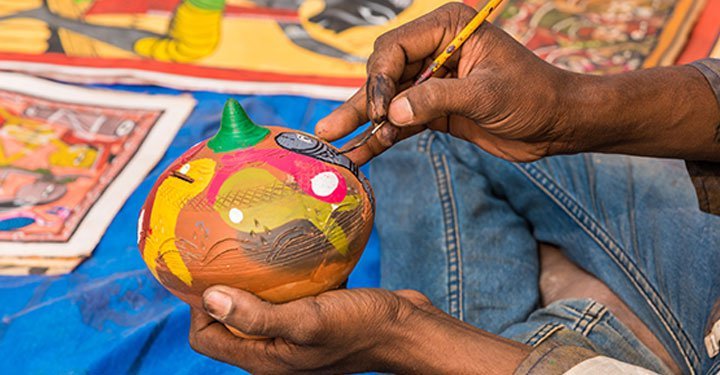
With the shift from small to high-rise buildings, connection with nature is diminishing. What better way to help kids connect with Mother Earth than by painting Indian designs on mud pots? Interestingly, pottery is one of man's earliest inventions and dates to the Neolithic age.
Show them pictures of traditional pottery art like khavda pottery from Gujarat or blue pottery designs from Rajasthan. Explain the significance of pots in communities; for instance, in Tamil Nadu, a new artistically painted pot is used to prepare sakkarai pongal during the Pongal festival. After the culture download, get hold of a set of earthen teacups or bowls and get busy painting.
Materials needed
|
Method
Step 1: Wash the clay pot.
Step 2: Smooth the clay with sandpaper to remove any rough spots. This will even out the bumps.
Step 3: Use acrylic paint and paint interesting designs on the pot. You can refer to an image or let your child's imagination run wild.
Step 4: Use small bristle brushes for the final details.
Step 5: Let the paint dry before you use it.
2. Toran
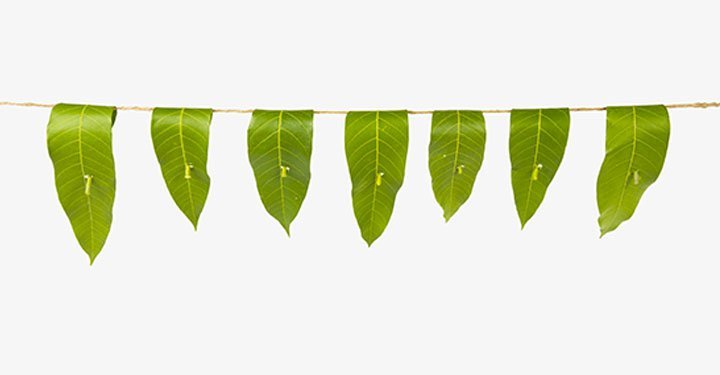
Some cultures in Asia and Africa adorn front doors with masks and busts to ward off the evil eye and bring good luck. The toran, a banner- or garland-like decorative piece usually made of mango leaves, is unique to India, said to have antiseptic and antimicrobial properties. Torans are a common sight during festivals and weddings. This is a great activity for pre-schoolers for hand-eye coordination and gross motor skills. All you need is a thick string and mango leaves. It's simple to make, and not much of a mess to clear up later, too! Do not fret if mango leaves are not available; you can make torans from sheets of paper or beads as well.
Materials needed
|
Method
Step 1: Take about 15-20 mango leaves
Step 2: Fold and punch a hole using the stalk of the leaf to create a loop.
Step 3: Repeat for all leaves.
Step 4: Measure some thick string as wide as the door.
Step 5: String the leaves through the loops.
Step 6: Hang up on the entrance door!
3. Block print napkins
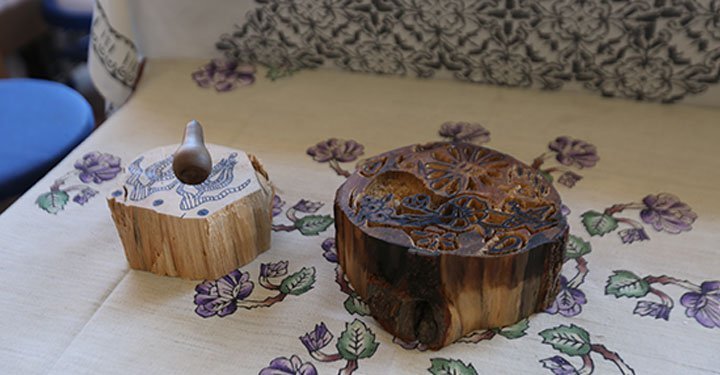
Indian block prints from Rajasthan, Madhya Pradesh, Andhra Pradesh, West Bengal, and Gujarat are popular the world over. It is one of the oldest and slowest techniques for creating prints on textiles. The designs often draw inspiration from nature and usually feature leaves, flowers, or animals. Here are some DIY tips to get your child block-printing at home.
Materials needed
|
Method
Step 1: Choose a pattern. Use a marker to draw your design on the foam board.
Step 2: Help your child cut out the pattern.
Step 3: Stick the pattern on the wooden board with hot glue. Remember, the images will be reversed while printing, so (if you are working with two or more designs) stick the patterns in reverse order.
Step 4: The block is ready to print. Now, paint the foam with acrylic paint.
Step 5: Make impressions on the napkin and let them dry before use.
4. Warli art
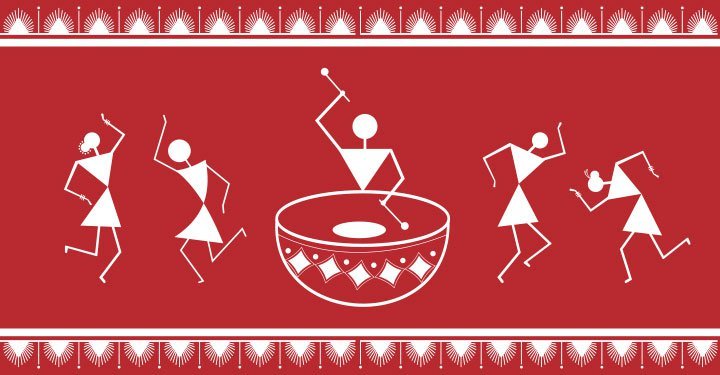
This tribal art form originates from Maharashtra. The triangular and circular white designs usually adorn ochre mud huts. Warli draws its inspiration from everyday life. Children can create these designs on brown parchment paper, pots, walls (after some practice), and T-shirts for that uber cool look. Warli painting kits are also available in stationery stores these days. The evolution from tribal to retail is complete!
Materials needed
|
Method:
Step 1: Observe traditional designs and, using a pencil, draw a Warli design on the handmade paper.
Step 2: Fill in with white color.
Step 3: Hang it on walls or turn it into handmade greeting cards.
5. Kolam
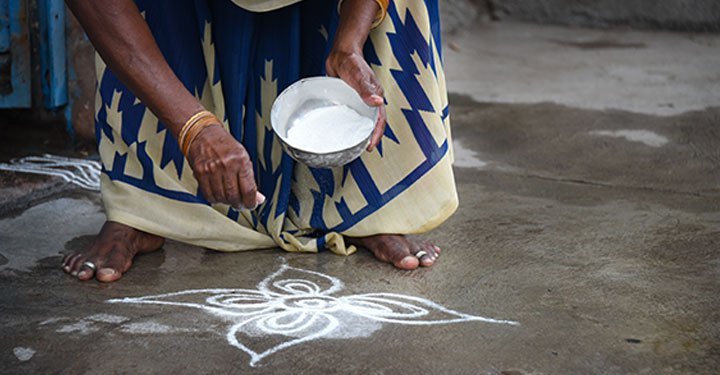
The beautiful intricate geometric designs that adorn South Indian doorsteps have many lessons to teach young children. Be it an example of joining the dots, memory, mathematics, and symmetry in design, kolam is a great exercise for fine motor skills. The pincer grasp is used to hold and release the kolam powder, and making the design steadies the hand. While learning the art may be complicated for very young children, they can help fill the kolam designs with colored powder or flowers. Do it in the morning, as it is traditionally done. Encourage children to keep a book of designs they learn.
Materials needed
|
Method:
Step 1: Observe traditional designs.
Step 2: Draw designs on paper.
Step 3: Practise on the ground.
Step 4: Fill in with colored powder or flowers.
"When your child sees the outcome of their efforts, they have the satisfaction of having created something they will value. Working with various crafts and styles exposes children to different cultural practices, opening their minds to diversity," says Arundhati Swamy.
Give your kiddos a chance to explore their creativity and their Indian heritage. Try out these easy-to-make craft ideas to teach them the art of crafting today.
Last updated on: October 22, 2026
The Dot art and creative program provides opportunities for children to experiment with different forms of art - from drawing, colouring, and painting, to cutting and pasting, modelling, and crafting.





















Comments
Edit
Comment Flag
Cancel Update