
Celebrating Diwali: Declutter Your Home This Diwali, The Marie Kondo Way
Vani Venugopal
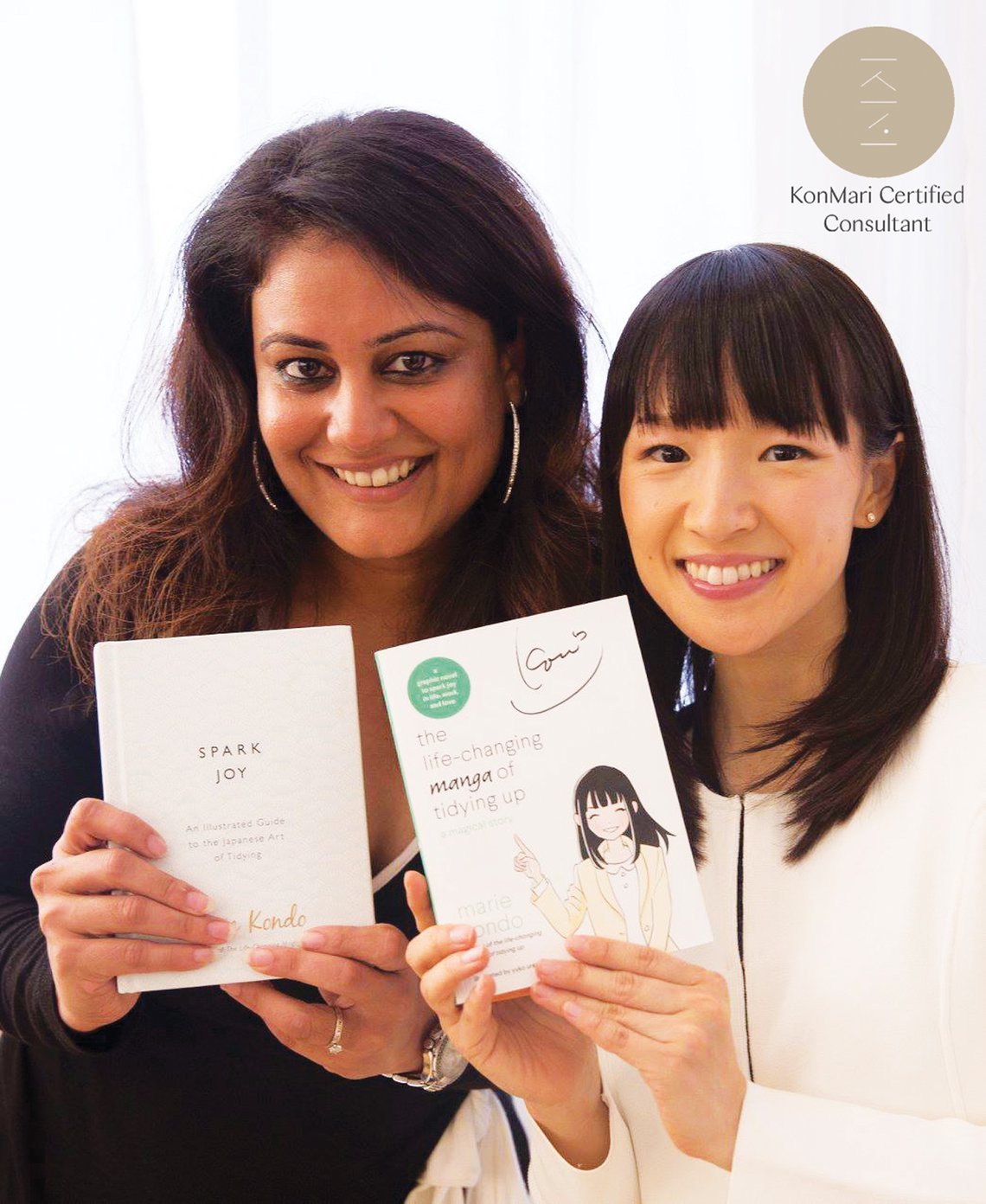
Getting ready for Diwali cleaning? Use the KonMari method to tidy up and declutter your home and usher in joy and harmony. India's first KonMari consultant, Gayatri Gandhi, tells us how.

Diwali cleaning has always been an important tradition in our household calendars. It marks the beginning of Diwali season, a time when is the house is abuzz with activity. Most of us have fond memories of running around the house as children while our mother, aunts and grandmothers cleared out cupboards and moved furniture as part of the cleaning spree. This was our much-awaited reminder that Diwali sweets and gifts were on their way!
Traditionally, Diwali cleaning is done in honour of Goddess Lakshmi who is believed to visit our homes during the festival and bless us with happiness and prosperity. And a dirty and untidy house is hardly the way to welcome a goddess home! The other reason for the tradition of cleaning around Diwali is that it comes after the rainy season. In olden times, most homes would need repair and renovation after heavy and unrelenting rains, not to mention insect and mould infestations. It was therefore customary to give the house a thorough round of cleaning once the rainy season was over.
Whatever the reason behind the custom, a good round of cleaning has become an integral part of Diwali. This year, as you get ready to clear out the old and make room for the new, it is the perfect opportunity to explore the KonMari method. Created by Japanese tidying expert and bestselling author Marie Kondo, the KonMari method is a way of tidying and decluttering that not just helps you organise your home but also brings peace and joy to your life.
The KonMari method gained much popularity after Marie Kondo's bestselling book, 'The Life-changing Magic of Tidying Up: the Japanese Art of Decluttering and Organizing' and the Netflix show, 'Tidying Up with Marie Kondo'. The core idea behind the KonMari method is that clutter takes up a lot of our physical and mental space. The KonMari method urges people to only surround themselves with items that spark joy for them and get rid of the unnecessary items. This act of decluttering will create more space for energy and ideas to flow and bring in joy and harmony.
In our attempt to understand how the KonMari method can be applied to the context of an Indian household and Diwali cleaning, we spoke to Gayatri Gandhi, India's first certified KonMari consultant. Gayatri is an ex-media professional, gave up on her lucrative career at Discovery Networks to chase her passion for perfect premises. She also owns a company called 'Joy Factory', which offers decluttering services for people at their homes.
In a chat with Parent Circle, Gayatri speaks to us about the KonMari method, how she got into it and how it can be applied to an Indian household. She also shares useful tips on how to incorporate the method to your Diwali cleaning. Read on to find out how you can make your home 'spark joy' this Diwali.
What is the KonMari method? Can you give us a short gist of what it entails?
The world-renowned KonMari method of tidying and organizing has been developed by lifestyle expert, Marie Kondo. This method encourages a way of life wherein one retains things that 'Spark Joy' and discards those that don't. Most importantly, the KonMari method is a state of mind and its success depends 90% on your thought process. Once you have undergone your "decluttering festival", you become more conscious of what you own, need and buy, leading you to live a life of positivity and mindfulness.
The question, "Does it spark joy?", is the unique characteristic of the KonMari method and the focus here lies on what to keep rather than what to discard. Once you have decided on what items no longer spark joy, you express gratitude towards them and let them go. The other exceptional characteristic of this method is to tidy by category and not by location. The method divides all possessions into five categories: clothes, books, papers, komono (miscellaneous items), and sentimental items. One of the most common mistakes we make is to tidy room by room or drawer by drawer. This is a recipe for disaster. While it temporarily gives you a feeling of being organised, you will eventually rebound, because all you have done is shuffled items around from one location to the other.
The KonMari method is not merely a tidying method, but an approach that will enable you to become capable of tidying.
Why is decluttering important?
Before we come to the importance of decluttering, it is essential to understand what constitutes clutter?
If we were to ask ourselves - Is my physical space organised? Most of us are likely to answer yes! We all have well-kept houses, organised and neat on the surface, but it's only after we start opening our lofts, stores, kitchen cabinets, unused drawers, cupboards, trunks, unused suitcases and bed boxes, that we open our life to clutter. More often than not, clutter is hidden in the most unobvious and unassuming of places.
Cluttered surroundings or unorganised spaces have a deep impact on not just the physical but also on the mental and emotional well-being of a person. Studies have shown that physical clutter competes for your attention, decreases performance, reduces focus and increases stress. We seldom acknowledge the cause of our problems to be clutter and blame other factors.
To address these effects, it becomes essential to first declutter. Believe it or not, organised surroundings can positively affect your mental and physical state in ways you can't imagine. From having more time for family to creating a stress-free life, organisation contributes to happier living. After all, there's nothing more stressful than searching for your keys as you're trying to get out of the house on time. One of the biggest benefits of decluttering is creating more time to spend on what's meaningful to you - be at home or at work or just with yourself!
You are the first certified KonMari consultant in India. Tell us how you got into this field and what you do.
I was on a sabbatical after working for 10 years with Discovery Channel (in 2015), which is when I came across the book 'The Life Changing Magic of Tidying Up' by Marie Kondo. The concept of the book was so exciting that I decided to apply it in my life. As I went along the process, I started to see a change not only in my physical environment but also in my personal life as well. This is when I decided to delve more on this topic.
Till then I hadn't realised how clutter could have a deep impact on our everyday lives! Researching on the topic, I discovered that cluttered surroundings have a great impact not just on the physical environment but also on the mental state of a person. The more I researched, the more passionate I felt about this and saw merit in taking this concept ahead as a business proposition. To concretise this theory, I carried out a survey with over 200 global respondents. This further validated the findings and gave me clarity on making the availability of the decluttering service in India truly relevant and bringing in the KonMari method due to its effectiveness and credibility.
I underwent training at the KonMari Consultants Seminar in New York and consequently became India's first KonMari Consultant. I also launched Joy Factory - the first company in India that officially offers The KonMari method to people for their premises. We also conduct workshops/talks to create awareness on the subject and educate the audience.
How can the KonMari method be incorporated into an Indian household?
The beauty of the KonMari method is that it can be incorporated in any culture since the philosophy behind it is very positive, mindful and simple. It's really about asking yourself this honest question, 'Does it Spark Joy?' So, when one is able to break it down and ask that 'what makes me happy or joyful from within' on a day-to-day basis, it becomes very easy to understand and thus the concept can be easily applied to all aspects of your life!
I wouldn't deny that one of the most common concerns in our country is the aspect of attachment to the items. We always feel 'we will need this someday' but this someday never comes! The majority of Indians store items that have been passed on by their ancestors and therefore find it difficult to let go, even though those items are deemed useless and become outdated over a period of time. It is challenging to break through this mindset. And that is also because awareness around the concept is very weak. Hence, one of Joy Factory's primary objective is to create this awareness and conduct as many workshops as possible so as to educate people.
Diwali is just around the corner. Can you give us a few tips on how to use the KonMari method for Diwali cleaning?
- First and foremost, cleaning and decluttering are not one and the same thing. Often, we use the words synonymously, but they are different at many levels. Traditionally, Diwali cleaning means to take out EVERYTHING that we own, clean and put back everything! In the process, NO decluttering takes place. Hence, it's important to know the difference between the two. Marie Kondo explains it quite simply and rather well. Kondo says, "Tidying is the act of confronting yourself, while cleaning is the act of confronting nature."
- The second aspect is to become committed towards your decluttering festival and carry it out in one go. Start by imagining your ideal lifestyle. Be it the kind of food you want to eat, the home you aspire to have, the evening you plan to spend with your family or the books you want to start reading. Imagine it all, because it helps you establish a clear vision of why you want to tidy in the first place.
- Then focus on tidying category wise and in the right order starting with clothes, books, papers, miscellaneous items and finally sentimental items. While dealing with each item, always remember to ask yourself, 'Does It Spark Joy?' And this question must be asked with each and every item in the house. If the item doesn't make you feel happy or joyful, it's time for it to go out of the house.























Comments
Edit
Comment Flag
Cancel Update