
Stories And Reading: How They Build Your Child's Imagination, Language, And Life Skills
Divya Ramesh
author parentcircle author parentcircle author parentcircle author parentcircle author parentcircle author parentcircle author parentcircle author parentcircle author parentcircle author parentcircle
Does your toddler or preschooler struggle to sit through storytime? Discover simple ways to make stories engaging while supporting language, imagination, and emotional development

Three-year-old Sanju sits next to his mom, Shalini, as she reads a beautiful picture book to him. But within a couple of minutes, Sanju is playing with his cars and trucks. Shalini can never get Sanju to sit still for even a minute during storytime. She throws her hands up in frustration and moves on to her other chores.
Do you also give up when your child does not sit quietly during storytime? Don't be discouraged. Many young children listen while moving, playing, or looking elsewhere, and gradually develop a love for storytime.
Here are some ways you can support your child:
When your child won't sit still for stories
Follow your child's lead
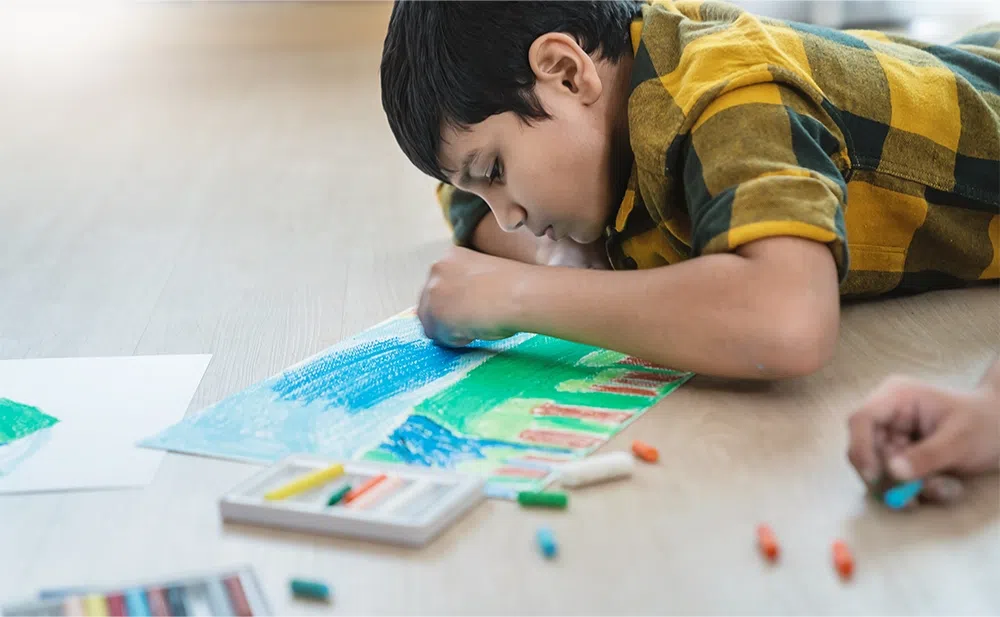
Not all children enjoy sitting quietly with a book. Some prefer to listen to stories while playing with their toys, colouring, or cuddling a favourite toy, and that's normal.
Keep story sessions short
Your young child's attention span is still developing. Instead of trying to finish an entire story, try reading a few pages. It may be more effective than trying to finish the entire story.
Make stories interactive
Try using funny voices, asking simple questions, pointing to pictures, or asking your child to guess what happens next. The more involved your child is, the more likely they will be engaged.
Revisit favourite books
Children often enjoy hearing the same story repeatedly. Repetition helps them understand language and predict what's next.
Don't force storytime
If your child appears to lose interest, try another time. Try to sense their mood and let them choose. They must associate books with comfort and joy, rather than struggle.
Why stories matter in early childhood
Storytelling benefits children from infancy onward, even before they understand words. Hearing language, rhythm, and familiar voices helps bonding and lays the foundation for language skills.
Benefits of introducing your child to books and stories
Stimulates imagination
Stories open your child's imagination as they listen, imagine different endings, or make up their own tales. Stories help them explore ideas and create characters and places they have never seen.
Imagination helps your child think in different ways, express themselves, and come up with simple solutions.
It also supports emotional development as they begin to understand feelings and situations through the characters.
Allow your child to revel in the world of violet sheep, blue milk, dancing crocodiles, flying humans, and endless possibilities. |
Develops concentration
Reading storybooks helps build your child's attention span and patience. Listening to words, looking at pictures, turning pages, and engaging with the story help them stay focused.
Encourages curiosity
My daughter was reading an animal rhyme the other day, and suddenly asked me, "What sound does a giraffe make?" I gave her a blank stare, then we looked it up together. Stories can arouse your child's curiosity in interesting ways.
Builds critical thinking skills
How does Mama Bear in the Berenstain Bear series manage to set things right all the time after Papa Bear bungles up? Moving on to another all-time favourite, could Goldilocks have done anything different to avoid getting caught? Stories raise many questions, and trying to solve problems for their favourite characters helps develop empathy and critical thinking skills.
How stories strengthen language and communication
Develops listening skills
The ability to listen as someone speaks may not come easily to young children. And what is the best way to encourage this skill? Reading to your child or narrating a lively tale, while making the whole experience as interactive as possible.
Good listening skills help children participate in conversations, build friendships, and communicate confidently.
Builds vocabulary
Stories introduce children to many new words, which they then try to use in conversations, sometimes in hilariously wrong contexts! But that's fine because they're building vital language skills. So, cheer them on and celebrate your child's eagerness to use new words.
Stories help children learn about emotions and behaviour
Inspires positive behaviour
The good manners and gaffes of all the characters your child encounters in stories can help them learn acceptable behaviour. For instance, I read Little Monkey Calms Down by Michael Dahl to my 1.5-year-old daughter. In the book, the little monkey relaxes by taking a deep breath. One day, when my daughter was throwing a tantrum, she remembered the book, paused, and tried to imitate the monkey. And the tantrum disappeared into thin air. So, there you go!
Teaches good habits
Your child's favourite character has their nails cut and uses the toilet without any fuss. Now, how can this not have a positive impact on your child?
Fosters bonding
Imagine you and your child having a hearty laugh over the bumbling turkey from 'Blue Hat, Green Hat,' or rejoicing together when 'Little Bo Peep' finds her lost sheep! Stories can help you connect and engage with your child in ways you wouldn't have thought possible. So, whenever boredom is in sight, whip up an impromptu story and enjoy the instant magic!
Parent checklist: Make storytime enjoyable
- Read with your child every day, even if it's only for a few minutes.
- Let your child choose the book whenever possible.
- Use funny voices, gestures, and facial expressions to bring stories alive.
- Pause to ask simple questions and encourage predictions.
- Allow your child to retell the story in their own words.
- Connect stories to everyday life and experiences.
- Don't worry if your child doesn't sit still. Many children listen while playing.
- Read favourite books often; repetition strengthens language and comprehension.
- Make storytime a warm, stress-free experience.
Besides discovering the joy of books, your child builds imagination, language, and confidence. When your child falls in love with books, they have found themself a buddy for life.
Need more information? Trusted resources:
- UNICEF — Early Moments Matter
- Harvard Center on the Developing Child — Brain architecture and early experiences
- American Academy of Pediatrics — Reading aloud with young children
Last updated on: July 28, 2026
Foster your child’s love for language through captivating stories and rhymes in our innovative Dot language and communication program for kindergarten.
























Comments
Edit
Comment Flag
Cancel Update