
Tips to boost your score in CBSE Class 10 Board: Maths Exam Tips From An Expert
Team ParentCircle
CBSE Board Exams are here and the Maths exam is just round the corner. Anshul Tomar, a Math expert, suggests ways for students to crack the exam. Find out how in this exclusive article!

With the Class 10 and Class 12 CBSE board exams already here, students are burning the midnight oil hoping to do well in their exams. Mathematics is one subject that many of them find hard to crack. And as the maths exam nears, there is a feeling of dread and nervousness among the majority of students.
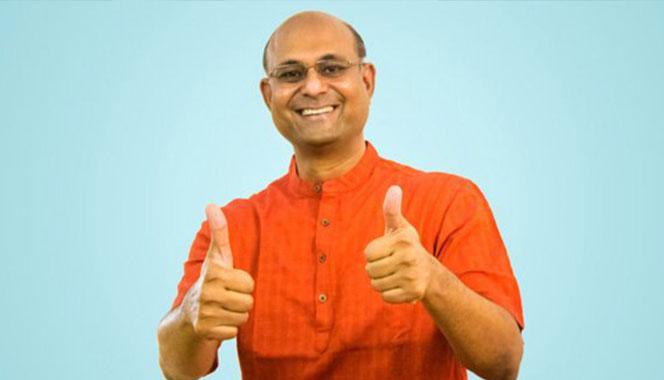
So, who is better than a maths expert to guide anxious students during this phase? Meet Anshul Tomar, an expert from Gradeup. From useful learning hacks to the importance of time management, from deciding beforehand on a question paper section to understanding what questions to attempt first, his tips are sure to come in handy for students. Read on...
Excerpts:
As an expert on the subject, is there any suggestion you would like to give on the right way to prepare and plan for the Maths exam?
First and foremost, students should focus on time management. In both Class 10 and 12, there are four main sections comprising one-mark, two-mark, four-mark and six-mark questions. Being mentally prepared and deciding beforehand which section to attempt first helps save time. Ideally, the four questions carrying six marks should be done first as they take the most time. Once they have finished with this section, they can move on to the four-mark questions followed by the two-mark questions and finally, the one-mark questions.
Before the exams, here are some things students should keep in mind:
- Mock papers are important as they help familiarise the students with writing the actual paper on the day of the exam.
- It is important for them to try and solve all the problems in the NCERT books within a specified time limit.
- Time management is vital as many students fail to finish the paper within the specified 3 hours, and so lose valuable marks. So, practicing mock papers and solving the problems in NCERT books is vital.
A week or two before the exam, apart from these tips, are there other things students can do as part of their preparations?
Students should concentrate on two main textbooks - the basic NCERT textbooks and one more book such as the RD Sharma one. They should try to complete these two textbooks and attempt all the solved as well as unsolved examples. They should set a goal to complete a chapter within two days and for this, they have to make a timetable. For example, let us say there are 20 days to go for the Class 12 maths exam that consists of 12 chapters. Students can allocate a day or two to each chapter, depending on the length of the chapter. A proper timetable is absolutely necessary.
Say there are two days to go for the exams... how should children prepare? Also, your opinion on preparing the night before the exam or the morning of the exam.
I would recommend that students do not attempt lengthy problems a day or two before the exams as they can get confused. It is better if they just memorise or write down the formula for these problems. Revising notes or important passages of chapters can also help. As I keep saying, students should make a timetable and revise quick formulas. They should remain calm and avoid unnecessary stress or tension. One important thing that they should do is go through their pre-board and half-yearly papers to see what mistakes they have made so that they can avoid repeating them. A student who has scored 60 or 70 marks out of 100 in these exams has a good chance to get higher marks after analysing his mistakes. Students should make a note of where they have gone wrong and not make such mistakes in the board exams. This can be done before the night of the exam or a few days earlier.
Are there any learning hacks or techniques students can adopt to do well in maths? Is there any such method that works for you when you teach?
Most maths problems are a little complex and there are certain methods needed to tackle them successfully. The method used depends on the teacher and the way the student has prepared. It differs from one student to another and could be long or short. Each chapter poses a different problem and can be solved in different ways using various techniques. Ideally, students should focus on learning and try to understand the concept fully while solving problems.
Students should also be aware of the requirements of the board exams and how marks are given. Many students take the short route and, in the process, they lose marks. They should pay full attention to their teachers and the methods being used so they can score well in the board exams. To learn maths, I do not think much technique is required as most problems have concepts. So, students should try to learn all the concepts of the chapter rather than trying to memorise them. This is one of the main techniques they should employ.
Is there anything students can do to improve their focus and concentration in maths? Would you like to share an example from your experience?
Maths requires a lot of practice. As a student, I would study for one hour where my main objective would be to complete the exercise within the stipulated period. For example, if you study for two to three hours and attempt only four to five or even 10 problems, it won't be of much help.
If an exercise has 20 questions and a student wants to complete the entire set in one hour, then she must ensure that she completes it in one hour. After this, she can take a break. Stretching her study time by two, three or four hours will not help as it is difficult to concentrate fully for such a long period. Instead, she can study for an hour and attempt the maximum number of questions possible, take a short break of 15 to 20 minutes, and resume studying. This will not only improve her skills but also her speed, confidence and focus.
Any other specific tips you would like to share with students appearing for the maths exam?
They should always decide beforehand on the section to begin with and try to start with the six-mark questions because these are long and important. Leaving them for the last will make them panic, resulting in confusion and errors in calculation. One important tip I would like to share with students is that they should allot a specific amount of time for each question. They should set aside 10 to 12 minutes for each six-mark question so that they will take about 40 to 50 minutes to complete the section. For the section consisting of six questions of four marks each, they can allocate 7 to 8 minutes for each, ensuring the section is completed in 30-35 minutes. Taking mock tests will help immensely. I suggest that students take at least 8-10 mock tests before the exam. This will give them ample confidence before the actual exams.
Question selection is also important. Students should not spend too much time on questions they find difficult as they will lose out on precious time and get confused. They should start with the questions they know and then move on to the ones they think are difficult.
Are you suggesting that even in the six-mark questions section, they should attempt the questions they find relatively easy first?
Yes. I find this a good strategy. Even within a section, students can first attempt to solve the problems they are comfortable with before moving on to the more difficult ones.
Does a neat and clean paper that has little traces of overwriting and rough work increase the chances of students getting better marks?
Actually, things that are widely recommended such as ensuring a neat and clean paper do not make much of a difference. However, the examiner would prefer to check a clean paper that does not have too much of overwriting or crossed lines. It is always good to have a presentable paper, but students should not worry too much about this. Some students have good handwriting while some have bad handwriting. They should just make sure certain things like cutting out are avoided.
You have stressed the importance of time management and starting with the higher-mark questions. Is there anything else students can do when writing the Maths paper?
They should try and finish the paper in 2 hours and 45 minutes if possible. The remaining 15 or even 20 minutes should be set aside for going through the paper and checking for calculation mistakes (if any), the high mark questions and others.

What can students of Class 10 and Class 12 expect from this year's maths exam?
Every year, the maths paper follows a similar pattern and difficulty level - it is of moderate difficulty. This year too, I am expecting the difficulty level to be the same as in previous years. Class 10 and class 12 students can always check out previous years' papers to see the question pattern and the type of questions so that they get a general idea of what to expect.
Every now and then there are reports of the maths paper being difficult, leaving students flustered and distressed. Can you give any tips to help them should they ever find themselves in such a situation?
As I mentioned earlier, students should focus on NCERT books and similar others like RD Sharma or RS Agarwal, depending on their choice. Here, high-order thinking skills can help students to a great extent by enhancing their question-solving ability. For instance, in Grade UP, we conduct courses that cater to students appearing for the CBSE as well as students sitting for the Joint Entrance Exams (JEE). In this way, we try to impart high-order thinking skills (HOTS). Students should practise these skills as there could be one or two questions that might prove difficult for them.
Still, board exams are generally not drafted in a difficult manner and the so-called 'tricky' problems may or may not be there. However, it helps if one is mentally prepared for any possibility. Students can always practise complex and difficult problems known as the HOTS paper or HOTS questions. They can find them on the CBSE website and in books like RD Sharma.
Math is one subject that requires practice every single day. Would you agree?
Yes. I totally agree with this statement as maths is one subject where practice makes perfect. Students should not just study formulas and equations. They should try and solve every problem in writing. I have noticed many students complaining about mistakes in calculation, and not being able to solve the problem. They just will have to practice till they solve the problem!
Now that you have brought it up, what are the common general mistakes students make?
Most mistakes, according to me, arise due to a lack of practice. For example, if there is a problem based on integration, most students tend to revise the formula but do not write down the problem and its solution. This is wrong. They should write down the problem and solve it - their calculation error will come down. It may not be 100 per cent but the error rate will definitely come down.
Is there any particular message you would like to give parents whose children are appearing for the board exams?
I think parents should not put pressure on the students. Instead, they should motivate them daily to do well. They should ensure the children are not stressed, give them some space and ask them questions like what they have done and give them input.
We have covered a lot of things. Do you feel there is any other point that needs to be discussed?
I think we have covered most of the points. However, let us summarise the main ones.
- The right strategy involves selecting the section to be attempted first.
- They should solve as many mock test papers as they can. Ideally, they should attempt one mock paper every day to have a proper exam strategy in place.
- Time management is important for completing the paper on time.
- The selection of questions requires the students to decide beforehand which questions to attempt first and which questions to leave for attempting later.
This apart, students should have the utmost faith in their ability to do well. Maths is not a difficult paper if they have prepared well. They should solve previous years' papers and make sure that one or two days before the exam, they do not practise lengthy problems. For each chapter, they should just make short notes and write down their mistakes. This will help them while revising and in correcting their mistakes.
Also read: 7 Interesting Ways To Make Math Fun For Your Child




























Comments
Edit
Comment Flag
Cancel Update