
Know your education board: Innovations introduced by CBSE for classes 10 and 12
Team ParentCircle
The CBSE has introduced several state-of-the-art practices to keep up with the times. In an exclusive conversation with ParentCircle, the CBSE spokesperson Rama Sharma discusses the changes to education and how they will be beneficial to students
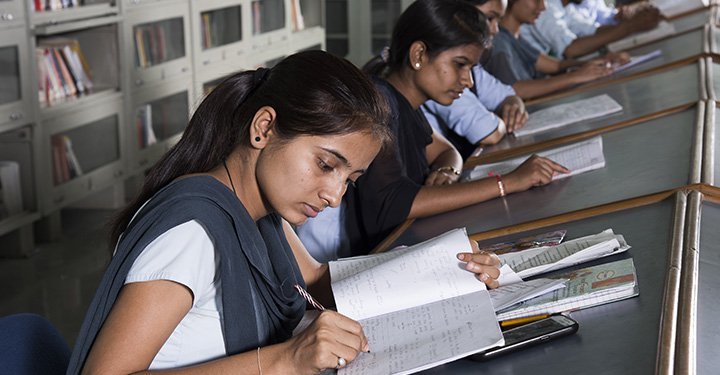
With board exams 2020 in progress, ParentCircle reached out to the Central Board of Secondary Education (CBSE) to learn about its innovative practices for Class 10 and Class 12 exams. The CBSE spokesperson Rama Sharma talked at length about how the Board is bringing in state-of-the-art practices and innovations to adapt to changing times and to prepare students for the jobs of the future. Here are excerpts from the exclusive conversation.
Q. The Anger-Free Zone initiative from the CBSE is a novel approach. Tell us more about it.
The Anger-Free Zone initiative from the Board is aimed at creating a healthier world for students by infusing positivity in everything around them. The idea behind this is to provide a happy learning environment to students in schools, which will help in their holistic development. As anger can have long-term effects on the psyche of children and may cause increased anxiety and other health issues, the Board has decided to take up holistic health and fitness in an innovative manner and requested all affiliated schools and its school leaders to make efforts to convert all the CBSE schools into Anger-Free Zones. It’s praiseworthy that schools have made keen efforts in making children happy, joyous, and active learners.
Q. There has been a lot of talk from the Board lately on artificial intelligence.
The CBSE is the only board of school education in the world to have initiated this move. The CBSE views artificial intelligence (AI) as a significant accelerator of future global digital growth considering its importance, opportunity and potential. In order to make India’s next generation “AI ready,” the CBSE has introduced artificial intelligence as an optional sixth subject in Class 9 from Session 2019 –2020 onward. To enhance the multidisciplinary approach in teaching and learning and also to sensitize the new generation, schools may start AI “Inspire” module of 12 hours in Class 8 itself.
The CBSE has issued FAQs on AI, Artificial Intelligence Integration Manual, AI Curriculum Handbook, and AI Project to help schools initiate the AI course effectively.
Q. How else is the CBSE embracing technology?
The Board uses TETRA (Theory Evaluation Trend Analysis), a decision support system that facilitates real-time evaluation monitoring and also allows trend analysis and visualization of scoring patterns by students in different regions, cities and across different sets.
TETRA helps in assessing live trend of marks scored across the centers and in the detection of deviation/ambiguity or difficulty level of question papers. It helps in the formation of decision on moderation of marks in subject(s) as required against the difficulties/deviation observed.
Q. How is the Board planning to innovate in the face of international boards entering India?
The CBSE is always in sync with the changing times and has taken several steps to meet the emerging requirements of students, schools, and other stakeholders in the background of international changes. Today, the CBSE has a presence in 26 countries and has adopted technology in its systems and functions to enable global reach. It has introduced new-age subjects like AI and yoga and has emphasized new methods and practices in teaching-learning processes like experiential learning-based AI integration and art-integrated education.
For quality improvement in classrooms, the Board provides common platforms to schools through “Hubs of Learning” for sharing best practices and emerging trends.
The CBSE is perhaps the first and foremost board in the world to ideate and provide free-of-cost pre-exam psychological counseling to its students for the last 23 years through telephone, IVRS, social media channels, and the Board’s website to safeguard the mental health of students.
Q. Any plans for gradually moving away from board exams and opting for continuous evaluation?
The CBSE constantly monitors its assessment and evaluation systems and brings in the required changes. It has already emphasized different levels of assessment and evaluation.
As a part of continuous evaluation, internal assessment has been introduced in all subjects other than those having practicals. Strengthening Assessment and Evaluation Practices of the Board have been developed for classes 9 to 12 based on the feedback received from education experts, teacher educators, principals, and teachers. Even the assessment and evaluation practices have been modified to encourage conceptual understanding instead of rote learning to the extent that creative, correct, and relevant answers given by students other than the ones mentioned in the Marking Scheme are preferred for evaluation now.
Q. The CBSE curriculum is usually perceived to emphasize rote learning. But today we see a shift to experiential learning.
There is a need to promote self-thinking, creativity and effective study skills among students. Experiential learning has become one of the core thrust areas for the CBSE. This is perhaps the most effective and profound way to connect knowledge to real life and shift the focus away from rote learning.
Even the design of the question papers has been changed with approximately 33% increase in internal choice in all of the major subjects, both for classes 10 and 12, and by introducing 25% objective type questions. In consonance with its agenda, the CBSE has made art education mandatory for classes 1 to 10 with a minimum of two periods per week per class. Guidelines have been given to schools to integrate art with teaching and learning of all subjects from classes 1 to 12. In another first from the Board, the CBSE has recommended that schools teach culinary art in classes 6 to 8 in a gender-neutral way.
Q. What are some accommodations the Board is offering to students with special needs?
In accordance with the Rights of Persons with Disabilities Act 2016, the Board has already extended several exemptions/concessions to persons with benchmark disabilities for Class 10 and Class 12 examinations conducted by the CBSE.
In addition to concessions/exemptions being extended as contained in Circular No. CBSE/COORD/112233/2019 dated 12 April 2019, the Board has now decided to allow students registered for the Board’s Class 10 and Class 12 exams under the CWSN category [children with special needs] to use a basic calculator.
























Comments
Edit
Comment Flag
Cancel Update