
Career In Radio Broadcasting: A Complete Guide For Aspiring Radio Jockeys And Voice Professionals
Harsha Sajnani Ganeriwala
Harsha Sajnani Ganeriwala authorparentcircleauthorparentcircleauthorparentcircleauthorparentcircleauthorparentcircleauthorparentcircleauthorparentcircleauthorparentcircleauthorparentcircleauthorparentcircleauthorparentcirclev
Does your child display exemplary skills as a voice artist? Then why not encourage them to pursue a career in radio? This article might help you to do so
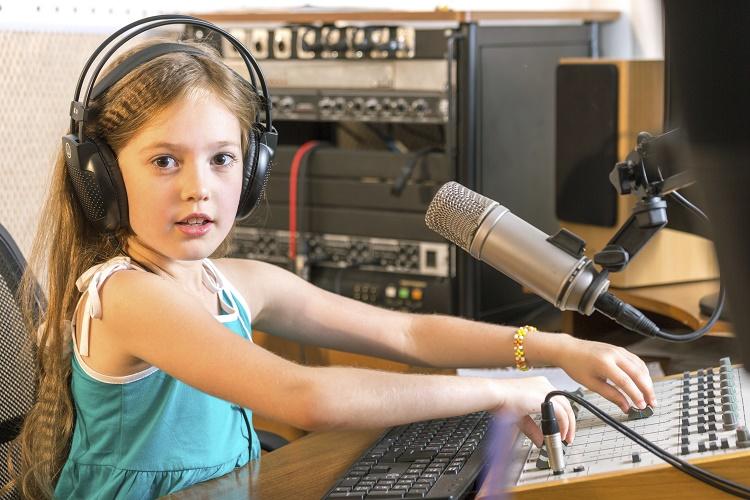
'I want to become a hot and happening RJ,' read a social media post of a boy in his mid-teens, who is on the verge of making a career decision. He is not alone. Today, there are many teenagers who are keen to make a mark as a Radio Jockey. But, how many of you actually know that radio is not just about the RJ? There's a whole support system that ensures you get to hear the best music while also receiving the most up-to-date traffic updates.
For many of us, FM radio has become an inseparable part of everyday life. With World Radio Day around the corner, it's time you introduced radio broadcasting as a career option to your child. Find out how, as we talk to industry experts to guide you in the process.
Education and training
To begin with, your child will need to know about the academic qualifications required to find work in the radio industry. A degree in Journalism, Communications, or Broadcasting is preferred, although not mandatory. If your child wants to become an RJ, great communication and connection skills matter over all else. If your child wants to become a music manager, great knowledge of music and the ability to understand what the audience is likely to be interested in become an important virtue.
"The ability to connect with people is the most important qualification. There are lots of people who come and tell me that their children are very talkative and would make great radio jockeys. Being talkative has nothing to do with being an RJ; that is a myth. If you have a personality and you can bring it out on air efficiently and speak well, I think it might just work," states Sanobar Sultana, popularly known as RJ Sano, of Fever 91.9 FM, Chennai. She further explains, "Working in this field is like creating theatre in the mind. You can make your audience think, make them laugh, and leave a thought inside their heads."
Such is the influence of the radio. This is perhaps why on-the-job training is seen as one of the important elements in FM radio. "Nothing can beat hands-on training. For the first few years, you should focus on honing your skills. Voice training is not mandatory, as being an RJ is more about being clear, articulate, and as genuine as possible," adds Ginnie Mahajan, better known as RJ Ginnie, Radio City 91.1 FM's award-winning jockey from New Delhi.
Career growth in a radio channel is good. Most people join at a young age and, if they are good, a managerial position is possible within a few years. According to Jyoti Srinivas, Head of Programming, Big 92.7 FM, Hyderabad, one can become a programming head within seven years and a regional head/station head within nine years.
A sea of opportunities
India's FM radio sector is one of the fastest-growing in Asia. The sector was opened to private players in 1999 when the government of India approved the FM Phase-I policy. Following a lukewarm response to Phase I, the government implemented the recommendations of TRAI (Telecom Regulatory Authority of India) to ensure Phase II would meet with a better outcome. It worked, and the FM story effectively began taking shape in India. Phase II was a roaring success, and today, there are close to 240 fully-operational FM radio stations in India. Only two months ago, the government completed the first part of Phase III auctions, which should open up another 250 new stations within the next few months. This will be followed by the second part of Phase III, which will virtually open the floodgates for the sector.
You can safely say FM radio in India is set for an explosion. "Tier 3 cities and smaller towns will play a major role in the coming days. There will be a clear demand-supply mismatch as far as talent availability is concerned. There's no doubt a career in radio would be one of the better options to consider in the next decade," says Vaishnavi HS, former Regional Head of Programming for South at Radio City.
These statistics are music to the ears. Like we mentioned earlier, although specific qualifications aren't required, it always helps to be equipped with specialised degrees in Electronic Media, Mass Communication, Journalism, or Broadcasting. Here are some top institutes where your child can pursue such courses.
Top Indian institutes
- Radio City School of Broadcasting, Mumbai
- Indian Institute of Mass Communication, New Delhi
- Xavier Institute of Communications, Mumbai
- Jamia Millia Islamia, New Delhi
- MICA (formerly known as The Mudra Institute of Communications), Ahmedabad
Top International institutes
- Seneca College (Toronto, Canada)
- American Broadcasting School (Oklahoma, USA)
- American Broadcasting School (Texas, USA)
- Carolina School of Broadcasting (North Carolina, USA)
Source:http://indiatoday.intoday.in/education/story/radio-jockey/1/354961.html
FM radio is a powerful communication tool. Gone are the days when the radio was limited by region, language, and resources. Today, with technological advancements and greater reach, there is a lot more optimism about the growth of this industry. So, if your child is interested in pursuing a career in radio broadcasting, you should encourage them.
Interesting facts about Radio
- The word radio is derived from the Latin word radius, which means 'beam' or 'ray'.
- Serbian-American scientist Nikola Tesla and Italian physicist Guglielmo Marconi are both credited with having invented the radio. This was because they were almost head-to-head in their race to invent the radio.
- The first-ever radio broadcast in the history of the world was made on Christmas Eve in 1906. It was a Christmas concert by Reginald Fessenden to the crews of the ships out in the Atlantic Ocean and the Caribbean Sea. His was the first human voice to have been transmitted through radio waves, earlier in 1900, between two 50-foot towers.
- The first commercial radio station was initiated by Henry P Davis in the U.S in 1920.
- The radio features at number two in the list of '101 gadgets that changed the world' according to the History Channel. It is second only to smartphones!
- Regular FM radio broadcasts started in 1939 because of the efforts of Edwin H Armstrong, an American electrical engineer.
- Radio waves travel at a speed of 299,792,458 metres per second (speed of light).
































Comments
Edit
Comment Flag
Cancel Update