
Baby bottle purchase guide: Everything you need to know about baby feeding bottles
Monali Bordoloi
It is not easy to pick the best baby feeding bottle from the plethora of bottles available in the market. To help you in your search for the best ones, we are here to guide you as you shop for baby bottles. Also check out as Dr Kanupriya Rajeshwar (PT), Lactational counsellor, Motherhood Hospital, Kharghar answers queries on bottle feeding and baby bottles
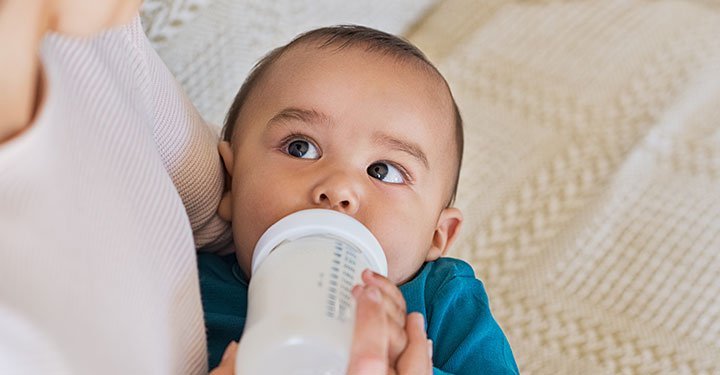
Scene 1: Vinitha N spends hours in the aisle of a baby store as she is clueless to which feeding bottle to pick for her 6-month-old infant. She needs a bottle to store breast milk, as she is planning to return to work soon.
Scene 2: After giving birth to her baby boy, Jyothika S, unfortunately had trouble with lactation and is unable to feed her baby properly. Now, she is looking to buy a high-quality bottle to feed formula milk to her newborn son.
Scene 3: Mother of a one-year-old, Dhriti, is searching for a baby bottle to offer water to her tiny tot. On top of that, she also wants a bottle, which is easy to carry while travelling and another one for semi-liquid food like porridges.
Yes, all babies have different requirements, at different ages and stages, and accordingly need different baby bottles. But before hoarding up on 5 to 6 of the same type of bottle, buy one or two different kinds and test them out with your baby. Different babies prefer different shapes, sizes and textures. And it can be hard for you to know which one works best until you give it a try!
Apart from what works for your baby and what is convenient to you, you must ensure that the feeding bottle is of premium quality. There are several other factors to look into as well. Check out our guide on the right way to approach bottle feeding, as well as on how to pick the right feeding bottle that will work for you and your baby.
Additionally, you can take a look at the top baby bottles we have picked that you can easily buy on Amazon!
Baby bottle purchase guide
If you are about to purchase feeding bottles for your baby, you have come to the right place.
First and foremost, how many bottles do you need? Well, if you are exclusively bottle feeding your baby for some reason, you might easily need six to eight bottles. If you are using it occasionally, like while travelling or when you are away, 3 to 4 bottles should be more than enough. If you are making a comeback to work after your child's birth, you need to depend on several bottles for formula or expressed breast milk.
Different types of baby bottles
1. BPA-free plastic baby bottles: This is the most common type of baby bottle available in the market. Your baby bottle should be free from a compound named Bisphenol-A, which is harmful for humans, leave alone babies. So, ensure the bottle you pick specifies it is BPA-free.
2. Glass bottles: Glass bottles are gaining in popularity as there are less chances for contamination and it is easy to clean them.
3. Anti-colic feeding bottles: Manufacturers claim that the valve present in the bottles, prevent gas to enter your baby, thereby reducing incidents of colic.
4. Wide neck feeding bottles: Wide neck bottles are the easiest to clean. Your hands can easily reach inside of the bottle, and thus you don't even need a bottle brush to clean it. It is a good one to take along when you travel.
5. Stainless steel bottles: Baby bottles are now even made of stainless steel. A great alternate to plastic bottles, steel ones are sturdy and easy to clean.
6. Disposable feeding bottles: Have you heard about use-and-throw baby bottles? These bottles have a disposable liner inside which needs to be discarded after every use. These baby bottles come in handy when you are travelling.
Age-appropriate bottles
0-3 months: Exclusive breastfeeding for the first 6 months of your baby is recommended. However, due to certain circumstances, if you are using a bottle to feed formula to your child, make sure that the bottle you are using is a slow-flow bottle, i.e. a feeding bottle with a teat designed for newborns. For this age group, a 150 ml bottle is recommended.
3-6 months: By three months of age, babies are better at latching and they also attempt to hold the bottle by hand. Make sure that feeding bottles are leak-proof, weigh less and easy to handle by your baby.
Pro tip: Bhavna J, mother of two kids says, "If you are buying a baby bottle, ensure that the milk, formula or water does not come out in a flow. When it comes to baby bottles, liquids should only drib. Also, try the upside-down trick. Fill up a feeding bottle, close the lid tight and keep it upside down for some time. The water should drib for a while and then stop. If you notice any leakage, discard it. No liquid in baby bottles should ever come out in full flow."
Different types of bottle nipples in the market
Different types of nipples shapes and sizes are available to cater to the varied needs of babies. Level 1 nipples are for slow-flow liquids, which is ideal for newborns. These slow-flow nipples have one hole to dispense milk or formula slowly. You can, then, gradually switch to larger holes and faster flow nipples as your baby grows. The material of the nipple should be either silicone or latex. Bottle nipples are marked with different sizes and age groups. For newborn, level 1 or stage 1 is recommended. Level 2, 3, 4 are for fast flow with larger holes for semi-liquids.
1. Latex nipples: Latex nipples are softer and flexible, and babies take to it easily. On the downside, these latex nipples do not last long.
2. Silicon nipples: These nipples are firmer than the latex kind, but last longer as they hold its shape.
Pro tip: Amrita M, mom to a nine months old baby boy says, "If you are switching between breastfeeding and bottle feeding, try flat-topped and wide nipples in baby bottles. As these bottle nipple are similar to natural breasts, your child would not mind switching one for another. Also, don't bother too much about nipple sizes, some babies transition to next phase faster or slower than others. My child shifted to faster flow within two months."
What to look for while picking a baby bottle
- Age appropriateness: Before you think about buying a feeding bottle, consider the age of the child. For newborns and infant, slow-flowing bottles are recommended as they might choke if the flow is more.
- Ease of use: Always check that your baby bottles are easy to use.
- Material of bottle: Feeding bottles come in all types of materials now. Most common ones are plastic. There are glass, stainless steel, silicone feeding milk bottles too.
- Size of the nipple: Make sure that your baby is comfortable with the nipple and is getting the feed.
- Shape of the nipple: For babies get used to breastfeeding, might find it difficult to transition it to bottle feeding. Nipples which mimics breasts could do the trick.
- Bottle size and capacity: Size and capacity of the bottle depends on your need. It varies according to age too.
- Weight: The baby bottles should not be too heavy to handle. The one you carry during travel should be lightweight.
- Ease of cleanliness: You should be able to reach to each and every nook and crevices of the baby bottle to wash it thoroughly.
- Leakage: For uninterrupted feeding time, make sure feeding bottles for your baby do not leak.
- Child-friendly: The bottle you are buying for your baby, should be child-friendly. Your baby should be able to hold it.
- Baby's specific needs: The bottle you are buying to feed your baby should cater to specific needs, e.g., for premature babies, you would need a slow-flow bottle as their sucking reflexes are not developed yet. For children who have started teething, orthodontist baby bottles are available.
Expert tips on bottle feeding your baby
1. Make sure the teat is full of milk.
2. Make sure the baby is not lying down but is in a half-sitting position while drinking.
3. Sit in a comfortable position before you begin to bottle feed your baby.
4. Keep your baby close to your body, so that he feels your body warmth
5. Make sure bottles, nipples, other utensils to prepare formula food is thoroughly clean before use.
6. Do not warm your baby's bottles using a microwave oven. Put the bottles in warm water for a minute or so to make the milk or water warm.
7. Your baby's feeding should be based on her demand. Never force a baby to finish bottled food if she shows disinterest.
8. Throw away the leftover milk or formula if it has been unused after an hour.
9. After each feeding session, ensure to burp your baby.
Further, ParentCircle reached out to Dr Kanupriya Rajeshwar (PT), Lactational counsellor, Motherhood Hospital, Kharghar to get answers to some of the questions regarding bottle feeding and bottles. Read on.
How early can I start bottle feeding my baby?
Exclusive breastfeeding is recommended for the first six months of baby. If for any reason that's not possible, try to express mother's milk and feed the same through baby bottles. Formula feeding before six months of age should be restricted to only exceptional cases.
How do I choose the right bottle for my baby?
When selecting a baby bottle, make sure it is easy to clean and that it is BPA-free. You can also try glass, silicon or steel bottles. Angular bottles are convenient to handle, and you can give these a shot.
How to choose the right nipple for my baby?
Many bottles are specifically designed to work in tandem with the breastfeeding experience. Choose a nipple which mimics the mother's like the flat top, wide, vented or rimmed kind. Also, choose a nipple according to your baby's age. These are available with different flow levels - slow, medium and fast. Nipple sizes vary from company to company.
When should I change the nipples of feeding bottles?
If the nipple is visibly torn or your baby is fussing during feed for lack of milk or fast flow of milk, change the nipple. Also keep in mind that your baby's appetite increases every three months, hence nipples need to be changed accordingly.
What should I do if my baby refuses a certain type of bottle?
If your baby is not comfortable with a baby bottle, observe the cues. If your baby is struggling, spitting or choking, then that bottle is definitely not right for him. And follow your instincts. Observational learning is one of the most important tools for new mothers.
How often should I sterilise baby bottles?
You must sterilise the bottle after every use.
How returning to work mothers can use bottles to store milk?
Breast milk can be stored in bottles and can be given to babies as and when needed. It helps the mothers to start working after a maternity break. She can continue to breastfeed when she is available and asked to use a feeding bottle when not around the baby.
Taking your child in the crook of your hand and feeding her, - be it breastfeeding, or bottle feeding is one of the joys of parenthood. If you are bottle-feeding your child, share the experience with your spouse and together - along with right bottles - you can bask in the pleasure of watching your child grow from a tiny sweet pea to a rumble-rousing toddler and beyond.
Also Read: Newborn Baby Feeding Schedule By Age (0 to 5 Months)

























Comments
Edit
Comment Flag
Cancel Update