
Gastroesophageal Reflux Disease (GERD) in Babies: All You Need to Know
Dr Chaitali Laddad
author parentcircle author parentcircle author parentcircle author parentcircle author parentcircle author parentcircle
Though it causes a great deal of discomfort, there is hope, for children usually outgrow GERD.
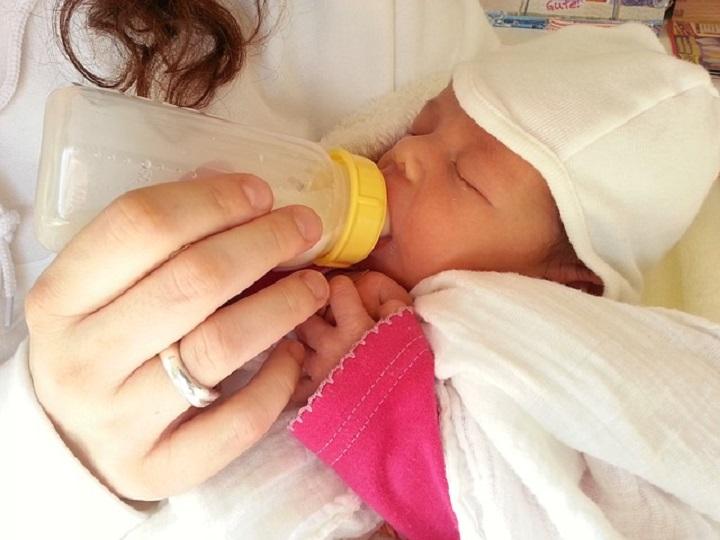
Vomiting in the initial months of life - What's normal and what's not?
Often, adults experience heartburn or an uneasy feeling in the chest after a heavy or a spicy meal. This is not just limited to adults. This burning sensation can be experienced by infants, babies, older kids and teenagers as well. If you have connected the occurrence of these symptoms only to your food ingredients, you really need to reconsider your assumptions.
It is common for babies to vomit after eating. This condition is called Gastroesophogeal reflux (GER). If you notice your child has been throwing up frequently or is experiencing great discomfort while being fed and is losing weight, he may be suffering from Gastroesophageal reflux disease (GERD). This disorder causes all the contents of the stomach and the acid in the stomach to move in an upward direction into the esophagus. In some cases, the acid moves either into or out of the mouth. This is caused by erroneous relaxing or closure of the muscle that links the esophagus to the stomach, the esophageal sphincter. The dissimilarities between the two disorders are noticeable by the severity of the condition and the lasting effects.
The foremost symptom of GERD in infants is frequent vomiting. Reflex in infants is caused by poorly synchronised gastrointestinal tract. It occurs when a toddler's lower esophageal sphincter is not completely developed. Due to this the muscles cause the contents in the stomach to go back to the esophagus. Once the stomach fillings find its way to the esophagus, the infant will immediately vomit, or spit up. Children usually outgrow this condition. A newborn baby stops vomiting once the sphincter muscle matures. GERD, in general, does not affect the health of your child in a major way but, in some kids, it may affect the functioning of the brain, nerves and muscles.
What are the worrying signs?
If any of these symptoms occur, medical attention and further investigations are required:
Frequent spitting up and vomiting
This condition usually springs up at four months and is eliminated between 12 to 18 months. It is very normal for infants to spit up, but what makes it a matter of worry is forceful spitting which is the most common symptom of GERD. Although spitting is painless, in case your child spits out blood, green or yellow liquid or a coffee-like substance, it may be an indication that your child suffers from GERD. This process is followed by crying and nagging.
Refusing to eat and trouble swallowing
Your infant may refrain from eating since they might experience pain while being fed. This discomfort might be due to the irritation caused when the insides of the stomach come back up and reach the esophagus. Toddlers may cry during feeding due to uneasiness in the belly.
Wet burps or hiccups
This is caused when an infant spits out fluid during burping or during hiccup.
Failure to gain weight
Weight loss or failure to gain weight may occur as a result of excessive spitting up.
Abnormal arching
Fluid build-up in the esophagus causes a burning sensation that hurts when the toddler is feeding. This makes babies and toddlers arch their bodies abnormally. This is called Sandifer syndrome.
Frequent coughing or recurrent pneumonia
When your child coughs frequently, it may cause food to come back to the throat. This vomited food when inhaled into the lungs and wind pipe, may cause respiratory problems like chemical or bacterial pneumonia.
After you have understood the causes and symptoms, it's vital to know how a paediatrician can diagnose acid reflux. Usually, the doctor is able to diagnose the reflux of acid just by taking into consideration the symptoms described by you and by studying your child's medical history. Your doctor will recommend that you get your child medically examined for the following tests.
- Barium swallow or upper GI series: This is an X-ray test wherein your child will be made to drink a chalky substance that is intended to highlight his esophagus, abdomen and upper portion of his small intestine. This test will determine anything that is obstructing or tapering these areas.
- pH probe: Here your toddler will be made to gulp a long, thin tube having a probe at the tip. This tube has to stay in his esophagus for about 24 hours in order to evaluate the acid level in his belly. If your child has difficulty in breathing, this test also can help the paediatrician tell if it is due to reflux.
- Upper GI endoscopy: In this test, the doctor will use a thin, bendable, lit tube and camera that permit the doctor to look right inside the esophagus, belly and upper portion of the small intestine.
Try these lifestyle changes to help your baby cope with acid reflux.
- Get started with raising the head of the infant's crib. You can elevate the head end of the mattress on which the baby sleeps by placing a few folded bedsheets under it to create a gentle slope.
- Do not place your baby over a pillow to prevent choking
- Do not place your baby in a prone (on the tummy) position to sleep as it is a risk factor for SIDS (sudden infant death syndrome). Have your baby sleep on her back even if she has reflux. "Back to sleep" is the norm followed.
- After you are done with feeding, hold the baby straight for 30 minutes.
- Try altering his feeding schedule.
- If spit ups are significant, your pediatrician may recommend a change of formula (if bottle fed), thickening of feeds or a trial diet of eliminating all cow's milk protein from the mother's diet (in breast-fed infants )
- Pediatricians mostly prescribe medicines that help your child's belly produce less acid.
- Most toddlers don't need surgery to cure reflux, but surgery can be performed in case of kids who complain of breathing problems or pneumonia due to GERD.
Will my baby outgrow this problem?
As your baby grows older, the muscle ring at the end of the food pipe develops and becomes stronger preventing food from regurgitating into the food pipe. So, the frequency and intensity of the spit ups reduces. The spit ups stop by the time the baby is between 12-18 months.
The author is Founder and Director at The Pediatric Network.

























Comments
Edit
Comment Flag
Cancel Update