
The Myth Of Perfect Parenting: Embracing Imperfection And Overcoming Guilt
Divya Ramesh
author parentcircle author parentcircle author parentcircle author parentcircle author parentcircle author parentcircle author parentcircle author parentcircle author parentcircle author parentcircle
Do you worry about not doing enough for your child? Are you constantly trying to live by parenting rules? Do you long for the perfect parent tag? Then this one is for you

It was a typical Monday morning. My 2-year-old daughter was fiddling with her toy laptop while I hurriedly tried to finish cooking. After a few minutes of play, she came running to the kitchen, lifted her arms, and demanded to be carried. Juggling bowls and plates in my hand, I told her to go to her dad, forgetting that my husband was in a virtual meeting in the next room. She ran to his room and banged on the door. When there was no response, she came running back to me. "Carry me," she said, and her voice had an edge. I gave her a pleading look. I had a work meeting to attend in a couple of minutes. With a helpless shrug, I switched on our spare laptop, played her favorite song, 'Fire on the Mountain,' and rushed to attend my meeting.
After the meeting, I slumped into my chair, consumed by guilt. For the nth time, I wondered if we were spending enough time with our daughter and taking good care of her. But then I spoke to Gayathri, a close friend who had chosen to be a stay-at-home mom. Gayathri had given up her career to experience the joys of motherhood. "I was happy in the beginning, but after three years of staying at home, I feel I have made a mistake. My son is extremely clingy and often does not even go to his dad. Is this because I have been spending too much time with him from Day 1? I think yes! If I had continued to work, he may have learned to be a little more independent and bold," she said.
I was relieved to hear those words. So the grass is not greener on the other side, I thought. One thing is common, though—the self-blame. Do you realize what's happening? No matter what choices we make for ourselves and our children, we are always racked with guilt. Experts call this parental guilt a silent epidemic.
But why should parenting be fraught with anxiety and insecurity? Was it always like this? Did your parents and grandparents constantly feel they were underperforming as parents? And is there a way for you to break free from guilt and simply enjoy being a parent?
The bane of parenting in the digital era
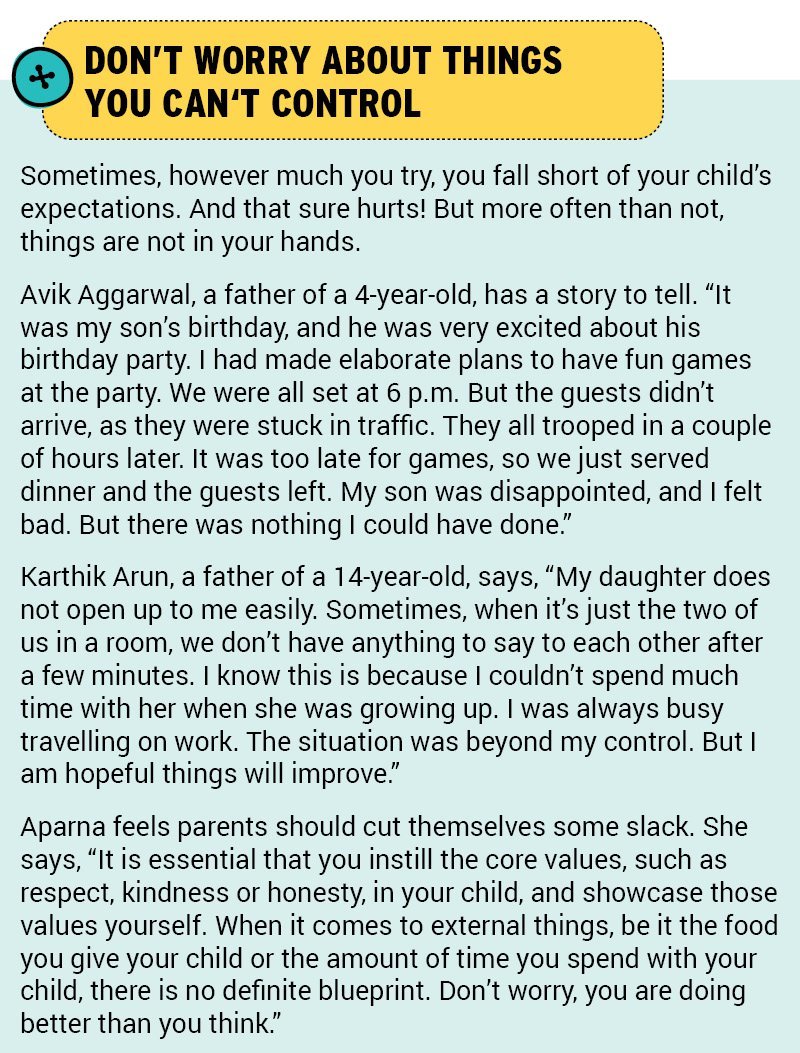
Parenting was never easy. Some would argue that it was tougher in the pre-digital era than it is now. For instance, Google wasn't around to answer our parents and grandparent's queries on children's health and behavior. But that was also their biggest trump card! They were not bombarded with parenting guidelines, and so there was no pressure on them to be perfect. Nor did they have social media to constantly remind them that they weren't doing enough for their child. BPI Network, a peer-driven thought leadership organization, conducted a survey of 2000 parents in the United States and Canada in January 2020 and found that social media was one of the leading reasons why parenting feels much harder today.
A few young parents shared with us how social media has often dented their confidence and made them feel guilty:
- Nithya M, a mom of a 4-year-old, says the photos of exotic foods on Instagram make her feel guilty. "I don't have the time to prepare anything out of the ordinary. I feel sorry for my son, who has to eat the same old sambhar that I make every day," she says.
- Garima Raj, a stay-at-home mom, says the photos of her friend's neat and tidy living room prick her conscience. "As a stay-at-home mom, my only job is to look after my child and the house. So, shouldn't I be perfect at it? But my clothes are still unfolded, toys are strewn all over the room, and often, I am forced to give my child some screen time so that I can do the chores in peace," she says.
And finally, here's my experience with social media. As a new mom, I was a complete mess in the initial days—exhausted, worried, and sleep-deprived. Now, I had my baby in the same month as one of my schoolmates. I wasn't in touch with her, but I saw her Instagram pictures, she was wearing gorgeous post-partum dresses and holding her baby with a wide smile. Her beaming face often made me smile. But then I looked at myself and the chaos that my life was, with no time or energy to even comb my hair. I was disheartened. It was only later, when I talked to her, that I learned even she had faced many challenges. And that she clicked cheerful pictures every day to avoid depression. Ah, how deceptive social media can be!
Don't let social media hoodwink or shame you. The perfect smile you see on social media is just one fleeting moment of a person's day. Who knows what happened before or after that envy-inducing click? And the perfect cake your friend is showing off is perhaps the only one she's baked in over six months!
Comparisons take the joy out of parenting
Parenting is hard. Why add to your woes by indulging in comparison parenting? However, avoiding the comparison trap is not easy. For instance, my daughter's screen time has gone up considerably in the last couple of months. On the other hand, my neighbor's child is blissfully unaware of screens. Needless to say, I am losing my peace, wondering what I should be doing differently. But the rational me knows that every family has its own set of circumstances. My neighbor lives in a joint family, and so her child has grandparents and cousins to play with and interact with, while my daughter is stuck with two preoccupied adults.
Aparna Samuel Balasundaram, a psychotherapist and life coach, says, "When it comes to parenting, there is no one-size-fits-all solution. Your parenting style is linked to the personality and needs of your child. Remember, every family is unique, and there are many factors involved in a child's mental make-up—your persona, your support system, the demands of your job, and so on.
You are human, and it's okay to lose your temper
It has happened to all of us at some point. You are overworked and stressed, and your child decides to throw their biggest tantrum right then for the silliest of things. Understandably, you fly off the handle. However, after an angry outburst, you must apologize and initiate a conversation with your child, especially if they are older than 7 years.
Aparna adds that parents must apologize with a plan in mind. You can say something along these lines, "Mama doesn't like screaming at you. I'm sorry I did. Mama's intention was not to hurt you. But I couldn't get my message across. I know you did not like it when I screamed. I do not want to scream at you again. But for me to achieve that, I need your help. Can we work together?"
She adds, "Life happens. Temper outbursts happen. But remember, you are the adult here. So, make sure you have some boundaries for yourself. Do a bit of self-talk. Tell yourself that you will not hit your child, no matter what.
How to minimize angry outbursts
Here are some simple pointers from Aparna to tame your temper:
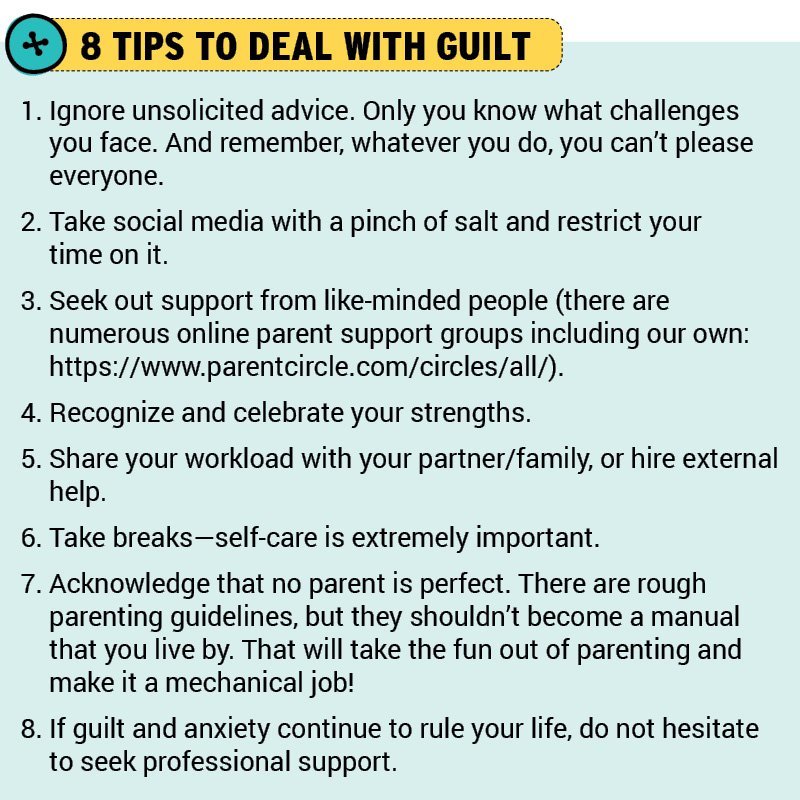
- Note down your anger triggers. Do you get angry when you are really tired? Or does it happen when your child starts throwing things?
- Be aware of the bodily sensations you experience when you are close to losing your cool- hands trembling, blood rushing to your face, etc.
- The above two steps will warn you when you are close to having a temper breakdown. So, when you realize you are being pushed to your limit, disengage from your child. Go wash your face, leave the room, or take a walk. But when you leave the room, make sure you tell your child that you are leaving not because you are vexed with their behavior but because you want to take control of yourself. You can tell your child, "I don't want to scream now. I am going to the next room to calm down. Let me know when you have calmed down, too. We can talk and sort it out together."
Those are valuable tips indeed. The next time you feel your anger rising, try the above steps and see if they help.

As Aparna says, "This is not the time to be a super-parent." She also suggests that parents take a short break when the going gets tough and sit down and think about what they enjoy in parenting. Focussing on the positives and being grateful can lift your spirits. Never forget that despite the hard times, there are many wonderful things in life to be thankful for!
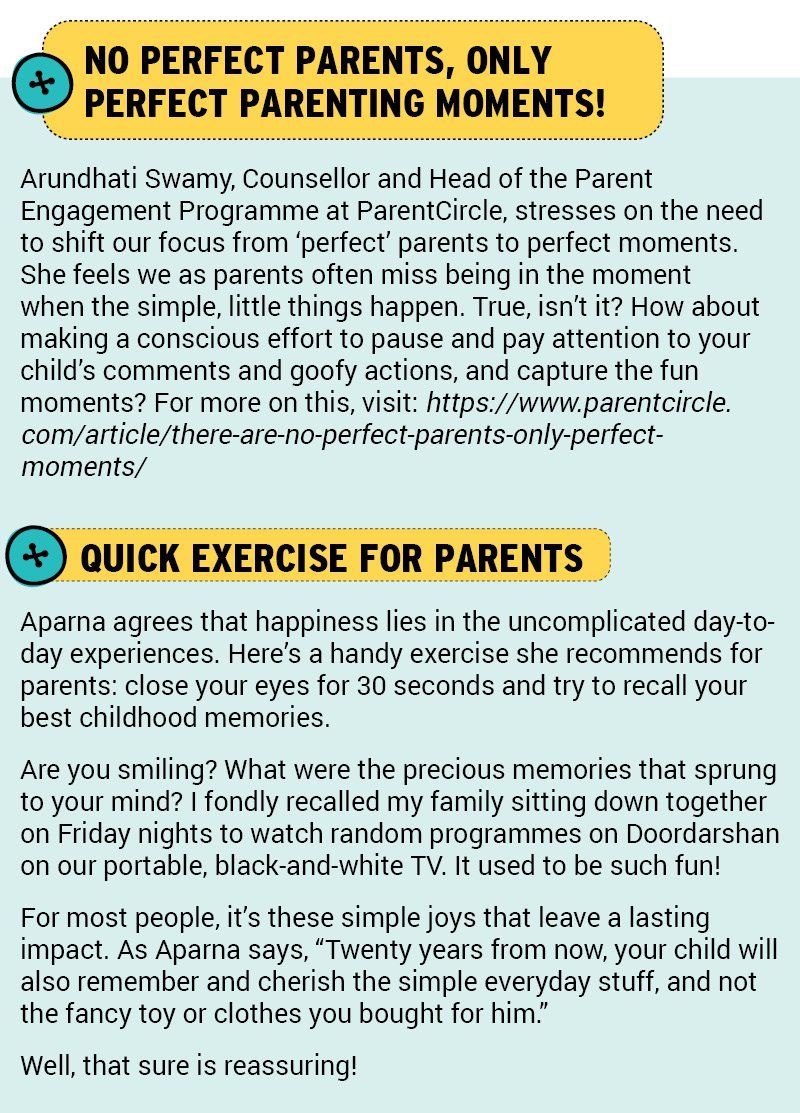
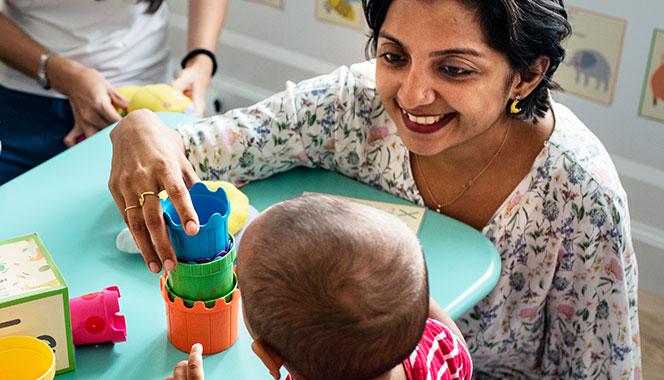
Perfect parents do not exist. It's a myth. Remember, regardless of what you cook or buy for your child, your child adores you. What's important is your unconditional love for your child and the trust and connection you build with them. So, try and give your child a few minutes of undivided time and attention every day—hug them, read to them, play pranks, and laugh together.
And take care of yourself, too. Happy parent = Happy child. So, just sit down and relax when you feel drained. The unfolded clothes and the unwashed dishes can wait.





























Comments
Edit
Comment Flag
Cancel Update