FEATURED
Is your child facing challenges in writing, reading or speaking? She might be suffering from Specific Learning Disability (SLD). Identify the cause and help her overcome her learning difficulties.
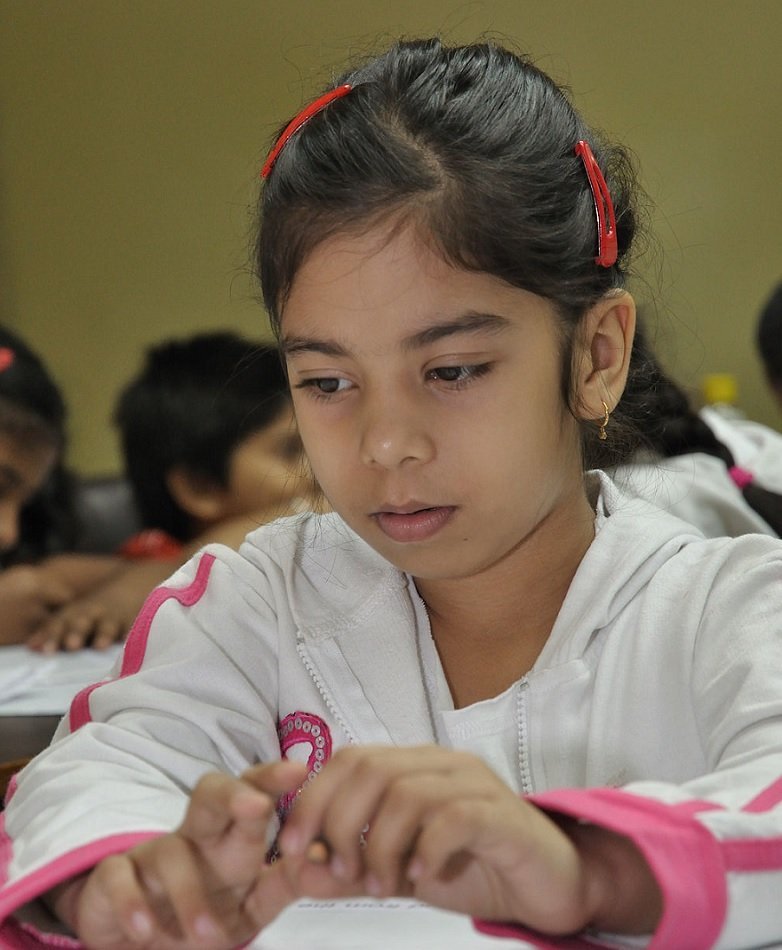
What do inventors Leonardo Da Vinci and Thomas Alva Edison, actor Daniel Radcliffe, and celebrity chef Jamie Oliver have in common? They are all achievers who faced challenges in the classroom that inhibited their learning.
Specific Learning Disability (SLD) is a term used to describe a group of neurological conditions that interfere with a person's learning process. In simple terms, an individual suffers from a learning disability because of the way his brain is 'wired'. Children with learning difficulties are often smart, or even smarter than their peers. However, they may face challenges in reading, writing, spelling, recalling or organising information because of their differences.
Before, children who had trouble in reading, writing or working with numbers were labelled as 'lazy', 'obstinate', 'dumb' or 'irresponsible'. Many of them were forced to drop out of school and were denied their right to education and pursue a career. However, things have drastically changed in the past two decades, with educational boards, such as the CBSE, including several provisions for students with SLD to include them in mainstream education.
In 1977, the US Office of Education defined Specific Learning Disability (SLD) in a study titled 'Assistance to states for education of handicapped children: Procedures for evaluating specific learning disabilities'. In the report, SLD was defined as 'a disorder in one or more of the basic psychological processes involved in understanding or in using language, spoken or written, which may manifest itself in an imperfect ability to listen, speak, read, spell or to do mathematical calculations. The term includes such conditions as perceptual handicaps, brain injury, minimal brain dysfunction, dyslexia and developmental aphasia. The term does not include children who have learning problems, which are primarily the result of visual, hearing or motor handicaps, or mental retardation, emotional disturbance or environmental, cultural or economic disadvantages'.
A child with SLD needs to be identified and subsequently treated by a qualified psychologist, so he gets the appropriate support at the right time. If the symptoms are diagnosed early, it is easier for the child to cope with the challenges through targeted intervention. The common SLDs and their symptoms are as follows:
Dyslexia
Some of the symptoms of dyslexia are -
Dysphasia/Aphasia
In dysphasia, the child has problems in speaking and comprehension of speech and language. Some signs of dysphasia are:
Dyscalculia
This SLD inhibits the child's capacity to understand basic arithmetic concepts or develop an efficient number sense. Some signs are:
Dysgraphia
In this SLD, the child has problems with writing. Some of the symptoms are:
While some of the above signs might be evident only in later childhood, research has indicated that symptoms of SLD can be detected at the preschool stage as well. Some of these symptoms are:
In case your child shows any of the above symptoms, you should seek a consultation from experts, such as the child's paediatrician, a clinical psychologist, a special educator, the school counsellor and other early childhood care professionals. This will help you identify and plan an intervention process that will help your child.
Unlike physical disabilities, identifying learning differences is not easy. Children suffering from these challenges have to work harder to succeed. They may also experience feelings of frustration, anger, depression, anxiety and worthlessness.
Luckily, the human brain can often rewire itself to work in new ways. But, the brain's ability to rewire itself is more pronounced in childhood.
It is, therefore, imperative that children with SLD are identified earlier and given remedial measures suited to their needs. Parents can help their child facing learning challenges in the following ways:
Some specific tips for helping children with SLDs are:
For dyslexia and dysphasia
For dysgraphia
For dyscalculia
Other tips:
Learning differences should not be treated as a death sentence for your child's future. An astoundingly high number of achievers have successfully overcome their learning challenges through gentle guidance, support and love given to them by their loved ones. There are a number of resources and support groups available, both online and offline, to help parents of children with learning differences. Inform and empower yourself, and help your child succeed.
Looking for expert tips and interesting articles on parenting? Subscribe now to our magazine. Connect with us on Facebook | Twitter | Instagram | YouTube
Discover The Dot Learning Circle’s language and communication program for pre-primary, designed to nurture early literacy skills and social interaction skills.
Comments
Edit
Comment Flag
Cancel Update