
How To Treat Ear Infections In Children And Key Signs To Watch For
Shirley Johanna
Learn how to spot the signs of ear infections in children and discover effective treatments to soothe discomfort and promote quick recovery
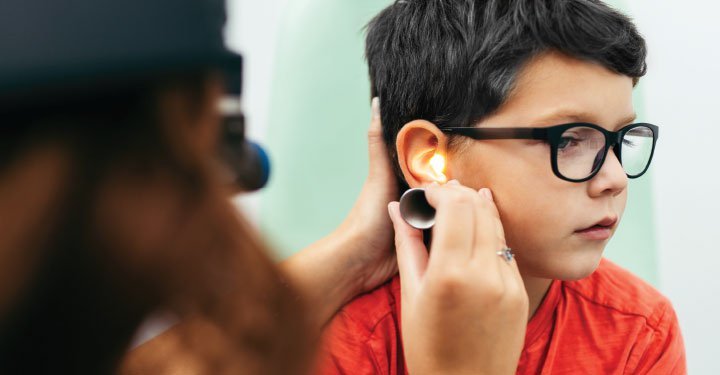
Do you find your child often tugging their ear? Is your child facing problems with balance? Do they have trouble hearing? These are all common signs of an ear infection. Dr Prachi Bhosale Narendra, pediatrician at Apollo Cradle and Children's Hospital, Bengaluru, says, "Four out of six children will have at least one ear infected by their fifth birthday." Read on to learn about the common signs of ear infections, risk factors, treatment, and preventive steps.
What is an ear infection?
An ear infection is an inflammation of the middle ear, which occurs when viruses or bacteria get into the space behind the eardrum. Ear infections are not contagious, but the colds or respiratory infections that lead to ear infections can be contagious. Usually, ear infections clear up on their own. However, it's important to consult a pediatrician to ensure that the infection has healed, and your child feels no pain or discomfort. Anyone can get ear infections, but they're more common in children than adults. Ear infection is one of the main reasons why parents bring their child to a pediatrician, says Dr Narendra.
Types of ear infections
There are three main types of ear infections.
- Acute otitis media is the most common type of ear infection, in which the parts of the middle ear are infected and swollen, and fluid is trapped behind the eardrum. The symptoms include earache and fever.
- Otitis media with effusion is a condition in which the fluid stays trapped behind the eardrum. It usually follows acute otitis media. The symptoms include mild hearing loss and a sensation of fullness in the ear.
- Chronic otitis media with effusion occurs when the fluid remains trapped in the middle ear for a long time. This makes it harder for children to fight new infections, and may even affect hearing.
Why do ear infections occur?
An ear infection usually begins with a sore throat, cold, or other upper respiratory infections. If it's a bacterial infection, the same bacteria can spread to the middle ear through the Eustachian tube (which connects the middle ear to the back of the throat). The Eustachian tube drains fluids from the middle ear into the throat. A cold, sore throat or allergies can make the tube swell, which blocks the mucus from draining, thus causing an ear infection.
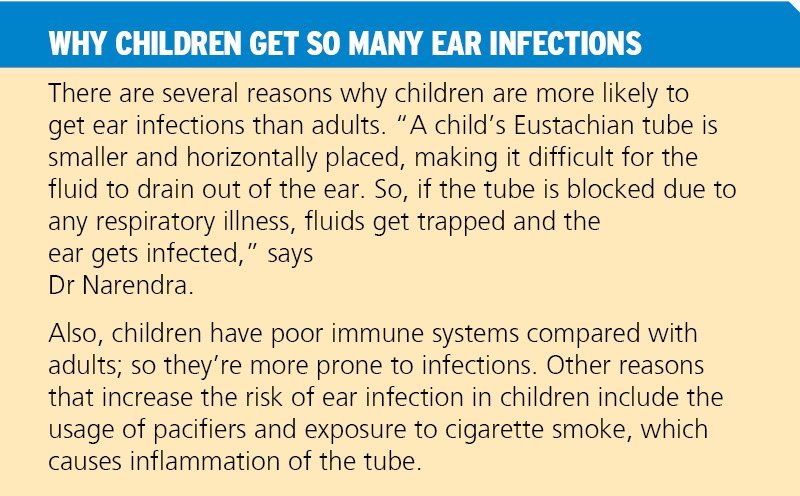
How to identify ear infections in children
Older children may complain of an earache. For younger children who might not be able to say they have an earache, look for these signs:
- Tugging or pulling the ear
- Fussiness
- Fever (mild to high)
- Trouble sleeping
- Fluid draining from the ear
- Problems with balance
- Trouble hearing
- Poor appetite
- Vomiting
Who is at risk for ear infections?
The risk of an ear infection is higher among children who:
- are under age 5 (because these children have shorter Eustachian tubes)
- attend daycare for a long duration
- have allergies
- were not breastfed (breast milk contains antibodies that help fight infections)
- have cleft palates (because of Eustachian tube dysfunction in these children)
How is an ear infection diagnosed?
The doctor will ask a few questions to learn about your child's health. Did they have any respiratory illness recently? Are they pulling their ears? Are they having trouble sleeping? If an infection seems likely, the doctor will examine your child's ear canal, using a lighted instrument called an otoscope. A red and inflamed eardrum indicates infection.
To check the fluid in the middle ear, a pneumatic otoscope (which blows a small amount of air at the eardrum) is used. A healthy eardrum will move back and forth if the fluid is accumulated, the eardrum won't move easily. If the diagnosis is still unclear, another test called tympanometry (which uses sound tones and air pressure) may be used. For frequent and long-lasting ear infections, the doctor might suggest a hearing test, which will be performed by an audiologist.
How is an ear infection treated?
Treatment for ear infections depends on factors such as the age of the child, and the type, severity, and frequency of the infection. The doctor will prescribe medications to relieve pain and fever. If it's a bacterial infection, antibiotics will be prescribed. When antibiotics are prescribed, don't stop the medications abruptly because the infection may come back.
In chronic ear infections, the fluid in the middle ear can remain for months after the infection has cleared. Recurring episodes of ear infections can even cause hearing loss. In such cases, the doctors will recommend ear tubes that can provide immediate relief. An ENT (ear, nose and throat) specialist performs a surgical procedure called myringotomy, in which a small plastic or metal tube is inserted through a tiny incision in the eardrum. The ear tube allows fluids to drain by allowing air into the middle ear.
How to prevent ear infections
Here are some simple precautions to reduce your child's risk of ear infections:
- Make sure your child gets vaccinated against the flu every year. Dr Narendra recommends the 13-valent pneumococcal conjugate vaccine (PCV13) for your child.
- Get your child to wash their hands frequently to prevent the spread of germs.
- Avoid exposing your child to cigarette smoke.
- Keep your child's allergies in check. Inflammation and mucus caused by allergic reactions can block the Eustachian tube.
- Limit your child's exposure to those who have infections.
- Breastfeed your baby during the first 6 to 12 months of life. Antibodies in breast milk can reduce the rate of ear infections.
- To bottle-feed your baby, hold them upright (head higher than stomach). Feeding in the horizontal position can cause fluids to flow back into the Eustachian tube.
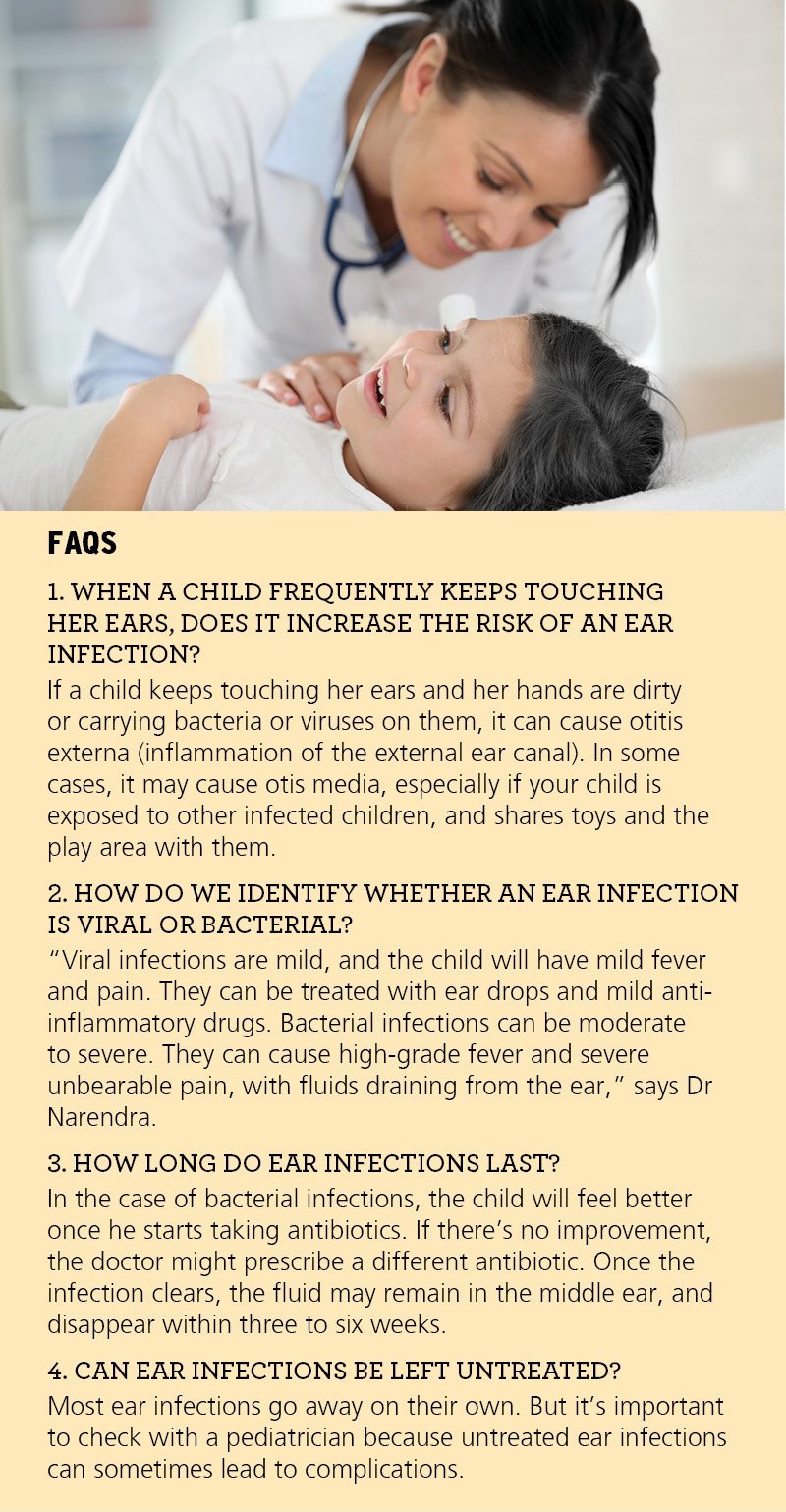
Ear infections are pretty common, and the majority of infections can be effectively treated. So, although there's nothing to worry about when your child experiences symptoms of an ear infection, it's best to talk to your pediatrician at the earliest.






























Comments
Edit
Comment Flag
Cancel Update