
Your Fitness Goals Need Not Stay In 'Lockdown' Mode - Top Tips To Get Fit
Varsha Venkatesh
Is minimum activity and maximum snacking during these stay-at-home days making your family pile on the pounds? A fitness coach explains how everyone can drop the pounds and get moving to better health.

The aroma of freshly baked cookies fills the house as the oven goes Ding. Alerted by the sound, the entire family drops whatever mundane tasks they are doing and crowds around the kitchen counter to get their fair share of the delicious sugary treats. As Lekha, the proud chef of the evening, watches her family polish off the cookies, she notices something that makes her feel a wee bit guilty. Everyone has gained some unhealthy weight around their tummies and waists.
Tips to get fit again
Like Lekha and her family, many of us are stirred by a desire to indulge in tasty treats when we see our favorite influencers sharing easy recipes online. Especially now that we're stuck at home and there are no weekend getaways or meetings with friends to look forward to. So, we naturally turn to fun kitchen adventures, and cooking up a storm with lip-smacking (read unhealthy) snacks. Because of the Coronavirus, gyms, playgrounds, and fitness centers have been shut for a long time. Although some of them have reopened, most people are still wary of returning to the exercise floor.
So it's no surprise that there's a growing concern about the curves and the weight gain that happens when people stay home and eat a lot of comfort food to combat stress. But it's not these love handles you should be worried about. According to the Centers for Disease Control and Prevention (CDC) and other organizations from across the world, obesity is a risk factor for COVID-19 complications. But the good news is that despite the pandemic, it's possible to maintain healthy fitness routines at home.
Here are some of the best tips and tools to help you stay active, become fit, and reduce sedentary time.
1. Have a daily routine
Our comforting routines have been broken, with virtual classes for the children and working from home for the adults. Even typically active families have been forced to stay indoors, leading to boredom and lethargy. Although this may seem to be the new normal, it's not ideal. You can get a grip on your life by building daily routines. And by routines, I don't mean just the fundamentals of daily requirements, such as waking up, taking a shower, or eating your meals.
Start building new routines around the four pillars of health and fitness: exercise, diet, sleep, and stress management. This in turn will provide you with a solid foundation for your goals, and help you make the right choices for your family's health.
2. Exercise regularly
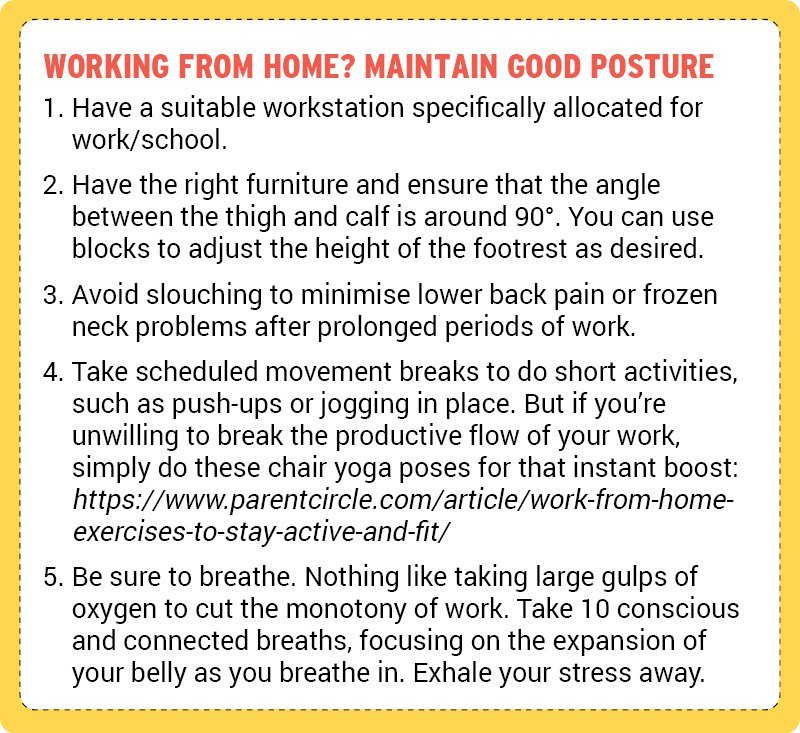
'I am not a health freak', 'I don't feel motivated to exercise', 'I have no time'. I have heard them all and yes, these are all valid excuses. Although we have our limitations, this is a good time to learn to overcome them. We should be stronger than our excuses and start making pockets of time to include movement and exercise. Set an alarm to remind you to take a quick timeout to stretch, a few conscious breaths, and a sip of water.
Here's how you can work out without leaving your house:
- Video on Demand: Several popular fitness brands are offering video-on-demand channels to their loyal followers. Many of the workout videos available online are simple and beginner-friendly.
- Online Coaching: If you prefer training with a community, you can sign up for an online class. Having a supportive community helps you stay motivated, pushes you to work out harder, and encourages you to stay committed to your fitness goals. Luckily, most of the gyms and yoga studios are now offering virtual coaching.
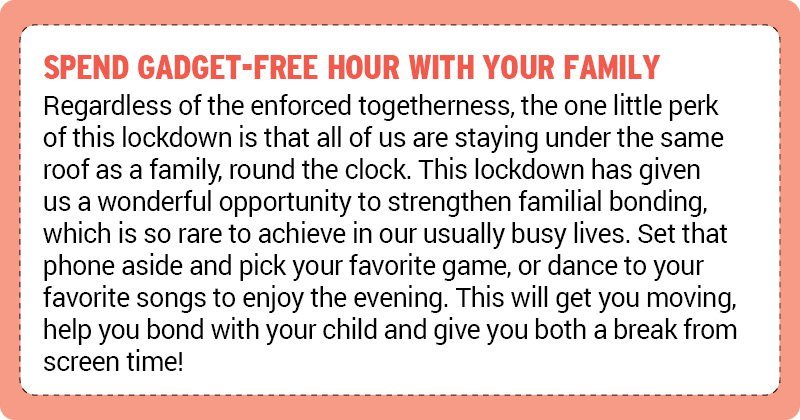
- Make it Fun: Pick a time that is convenient for everyone in the family and engage in physical activities. How about playing games like freeze and melt, tag, jump rope, follow the leader, duck walk, race, or frog leap together? If you have hula hoops, balloons, beach balls, and toys, you can innovate and come up with games that can double up as your exercise for the day!
3. Eat right
Eating right doesn't mean you have to forget those yummy muffins or your favorite ghee parathas. Make a pact together as a family that you'll eat more nutritious and balanced meals full of the goodness of whole grains and fresh veggies and fruits during the week. On the weekends, you can get more experimental and creative, and cook indulgent meals. But remember not to overindulge in sugary and high-fat foods. Moderation is the key to good health.
4. Manage stress
Many studies have proved the disastrous implications of stress on our health and well-being. Under stress, our bodies produce too much cortisol. High levels of cortisol can increase your blood pressure and your risk of a heart attack, weaken your immune system, and disrupt digestive functions. When you move and exercise, your body releases chemicals called endorphins that trigger feelings of positivity and physical well-being, thereby reducing stress.
Just like managing our physical health, we need to maintain good mental hygiene. Some effective ways to manage stress include getting enough sleep each night and practicing mindfulness, self-care, deep breathing and meditation. From taking warm baths and walking, to spending time in nature or with pets, everyone has different ways to blow off some steam. Figure out strategies that work for you. Read funny books or watch comedy movies to have a good laugh.
A happy family is a well-hydrated family
Adults typically need to drink at least eight glasses (2 litres) of water a day. Getting enough H2O is crucial to keep you healthy and hydrated. Water protects your muscles and organs, regulates body temperature, maintains the functions of the digestive and excretory systems, and makes your skin glow! You might think you're having fluids in the form of milk, tea, coffee, or fresh juices, but nothing like a good glass of clean water. You can get your whole family to participate in a water tracker challenge. Get creative and crafty by making your family water tracker chart and placing it on your fridge.
These are all simple, doable steps. Start today! And share your success stories with us at editorial@parentcircle.in
Varsha Venkatesh is a yoga practitioner and a fitness and lifestyle coach. She is the founder of Yogavriksha, Chennai.
























Comments
Edit
Comment Flag
Cancel Update