
Take Care, Stay Calm And Carry On: Navigating Parenting Through Challenging Times
Divya Sainathan
Divya Sainathan is a writer and editor with a special interest in early childhood education.
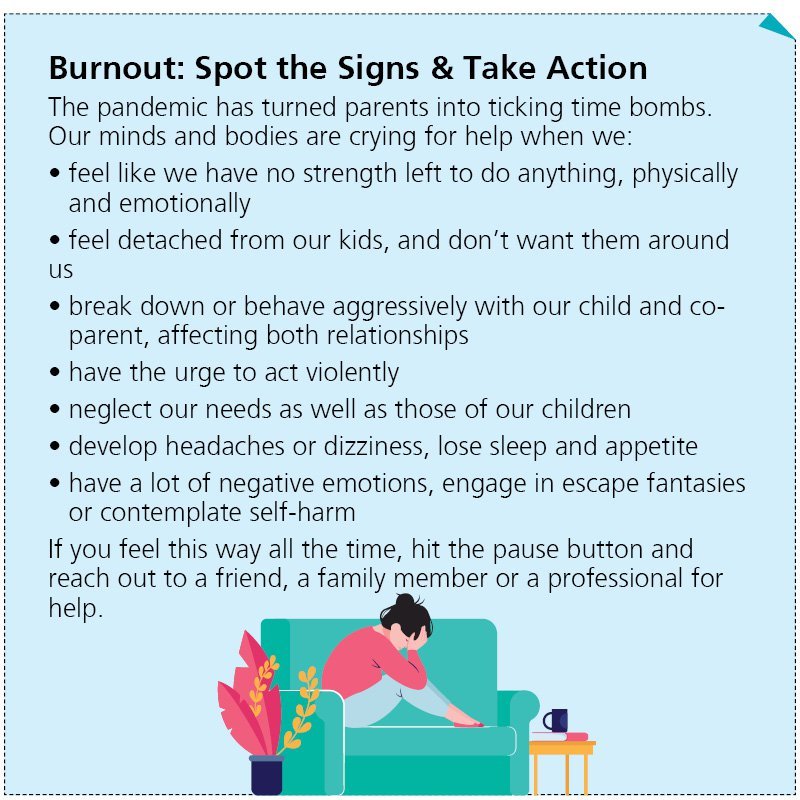
The COVID-19 pandemic has pushed several parents to breaking point. If we don't give ourselves some love first, we cannot steer the family ship across troubled waters

"Shyam, I'm going to take the iPad away in five minutes. You've been playing games on it all day!"
Priya Karthik warned her 8-year-old son as she flipped a chapatti on the tawa while taking a work call on her phone. Fast-forward five minutes, the child refused to relinquish the iPad, a chapatti has been burnt to a crisp and the cellphone rings again as another call for help comes through from a colleague.
"I felt so exhausted and frustrated at that point that I took it out on the only available target, my son. I yelled at him, snatched the iPad, threatened to cut off several other privileges, and kicked his toy car viciously on my way back to the kitchen. The poor child had no idea what was happening. And this isn't even a one-off thing anymore. I snap like this at least once a day, mostly around dinnertime, when all my problems come to a head," confesses Priya.
The hunger, fatigue, sleep deprivation, fear, and stress of working from home, running the house, and parenting during the pandemic have left many of us feeling off-balance and inadequate. So many things have gone out the window—work-life balance, parenting goals, screen limits, healthy lifestyle choices, and routines. We can't help but ask ourselves how long will this go on and how long can we keep this up.
The reality is that the pandemic way of life is likely to continue for the foreseeable future—working from home, school closures, social distancing, and DIY days are going to be around for a while.
Dr Sulata Shenoy, an experienced psychologist based in Bengaluru, shares some practical self-care tips to help us calm down and power through these difficult times.
Streamline your day
The pandemic has blurred the lines between work and family life. Ask Raji Arun, a working mom of two school-age children. "Our employers interpret work from home as being available round the clock. Family members assume that the women of the house are available for household chores 24x7. Both parties don't mind disturbing us at any possible time. It's exasperating!" she complains.
Dr Shenoy stresses the importance of scheduling to give structure to your day. If you let things slide for too long, hoping they will return to normal, it will be much more difficult to manage. You cannot have haphazard timings for everybody. Scheduling helps everyone have a clear idea of how each family member will spend their time. The sooner you get into a routine, the better.
Routines may sound boring, but they work. Set the time you and your spouse will log into work and, if you can, set your log-off time as well. Agree upon a window of time for meals. Schedule the rest of your day around these set timings, throw in bedtime and division of chores, and you'll have a routine.
Take care of your body
As caregivers, parents need to take care of their own physical and mental health first. According to Dr Shenoy, mental health builds on your physical health. "Mental health doesn't come just like that. You first have to eat properly, sleep well, and exercise."
The breakfast you skipped to accompany your child through their online class or the all-nighter you pulled for work can leave you more depleted than you think. Don't be surprised if you find yourself angrier, crankier, and more exhausted banging pots and pans, grumbling about patriarchy, and venting on your unsuspecting middle-schooler.
Beat the stress
Chennai-based techie Gopi Sridharan knew things were getting out of hand when he began to have two out of his three square meals at his workstation." I work far more at home than I ever did in the office. Even after I sign off for the day, I have a work hangover that keeps me awake way past bedtime," he says.
"We have never been taught how to handle stress or manage pressure. You're just expected to cope without any tools," says Dr Shenoy. She recommends yoga, meditation, and mindfulness activities as healthy coping mechanisms.
Gopi turned to cycling to beat stress and stay healthy. "I leave the house early and get two solid hours and about 35 km of cycling done every morning. It can be tiring, but it's also refreshing and rewarding," he says.
As for me, I just grab my kid as he runs around the house, and steal a hug for a shot of the happy hormone, oxytocin.
Unplug and connect with your family
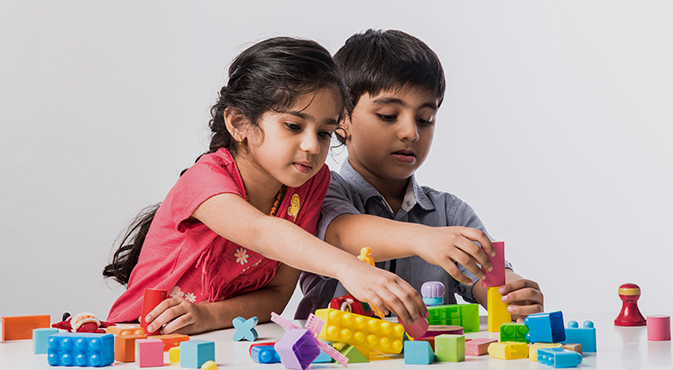
We're always guilt-tripping over not spending quality time with our children or giving them too much screen time. We too are on our phones or computers. Dr Shenoy urges parents to think innovatively and come up with a variety of family activities within the given constraints, ones that don't involve gadgets or screen time.
"It's a difficult balance to strike in these extraordinary times. We need to make some time for arts and crafts or music and dance, something we can turn into a shared family activity. Without our monitoring and guidance, children are likely to turn to what they most enjoy, which could very well be screen time or just lazing around. Families need to come together, have meals together, and do shared activities such as playing board games or reading. Parents need to model these behaviors to their children," Dr Shenoy emphasizes.
Ask for help when you need it
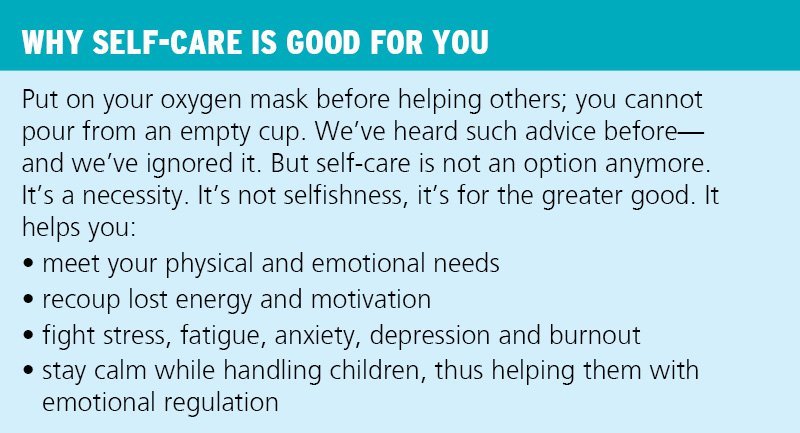
The surest way to wear yourself down in these circumstances is to do everything by yourself.
Dr Shenoy suggests it's okay to ask for help.
- Communicate and delegate responsibilities at home. Decide who will monitor the children, how, and at what times.
- Ask your spouse to wipe down the kitchen counter, feed the pets, or help your child with homework.
- Get your child to put away their toys.
- Request a colleague to cover for you when things get unfairly hectic.
If you don't feel good yourself, speak to a friend or a professional therapist.
Here are some more tips to help you regain your inner balance.
Do the things you love: Find and do the things that recharge you, that infuse you with peace and strength. Swapna Arulraj, an editing professional, has found a mix of things that fill her spirit cup. "Time for self-care has been so elusive since the start of the pandemic. I've had to redefine my me time. I've enrolled in an online yoga class, an hour that is all mine and helps me ease my nerves. I squeeze in a walk before my daughter wakes up, or take her along on her cycle. Some days, I just take the car out for a solitary spin, which really helps!"
Be it a power nap, a steaming cuppa in the morning quiet or some personal grooming, do what works best for you.
Set realistic expectations: When you have many things to take care of, do not dive into the tasks right away. Sit down and make a list. Identify tasks that need your immediate attention and those that can wait. Break up large tasks into smaller ones, and take it one step at a time. The key lies in not overburdening yourself, but in setting achievable goals. Samyukta Rajen, a first-time mom fending for herself in the US, shares, "I have discovered that crowded schedules are unrealistic and stressful when half-met. I don't try to do everything all at once."
Here's what you can do
- Learn to say no to work assignments you can't manage. At home, prioritize and spread your chores across the week. For instance, if you do laundry and grocery shopping on one day, save sweeping and mopping for another.
- Set realistic goals for yourself and your family. For example, sitting together with your family for all meals does sound exciting, but if you're new to this, first try having at least one meal together every day.
- And when it comes to limiting your child's screen time, start small. Try bringing it down overnight from 2 hours to 20 minutes a day, and you're setting yourself up for showdowns and frustration. So, cut screen time by five or ten minutes per day.
Remember to give yourself a pat on the back when you meet your micro-goals!
The COVID-19 pandemic has forced parents to don several hats all at once: caregiver, educator, playmate, partner, cook, housekeeper, and working professional. It's very easy for us to lose our bearings under such pressure. Take a step back, refuel on self-care, and be the parent your children need now.



























Comments
Edit
Comment Flag
Cancel Update