STEAM education is taking learning to the next level. Read on to know how this well-rounded learning philosophy, which encourages creativity and innovation, can help your preschooler be future-ready
Are you looking for ways to help your preschooler explore her world, ask questions, do her own research, make discoveries and solve problems?
Welcome to the world of STEAM education!
Until a few years ago, STEM (science, technology, engineering, and math) education was regarded as a passport to good career opportunities and a successful future.
However, since then, educators have found great value in incorporating arts into STEM education to enhance learning and development. STEAM (science, technology, engineering, arts, and math) is an interdisciplinary approach that explores STEM subjects through inquiry, creative thinking and problem-solving techniques associated with liberal arts. So, while STEAM projects are science-based, they also make room for curiosity, imagination and artistic expression.
As an approach, STEAM education aims to encourage a child's creativity and expression, and develop her statistical and numerical abilities, and problem-solving and critical thinking skills.
Let's now delve a little deeper into STEAM education and learn about its significance for young children.
Benefits of STEAM education for young children
Changing trends in education can make it difficult for you to decide what's best for your child. So, here are a few benefits of STEAM education to help you understand why it's a good idea to introduce your child to this form of learning early on.
Encourages critical thinking: STEAM education encourages students to think critically and arrive at solutions by themselves. In STEAM curriculums, once the instructor has explained a basic concept, students are encouraged to work to apply the information to projects. For example, making butterflies with coffee filters and pipe cleaners, and then dropping the butterflies from a height. This simple STEAM task would entail thinking about what would make the butterflies stay in the air the longest-the size of the wings, the weight of the butterflies or is it something else? Working from a STEAM framework would encourage your preschooler to try new ideas and use her creativity.
Develops problem-solving skills: Creative problem-solving is a valuable skill to nurture in young children, and STEAM projects aim to foster this skill by encouraging children to explore different ways to solve a problem. Children can find solutions by trial and error, inquiry and creative thinking. By removing rigid rules, STEAM empowers children to take risks and move away from conventional methods when it comes to solving problems. For example, consider the simple task of fitting a ball in a box that's too small for it. In STEAM learning, instead of giving instructions, the educators will encourage children to find creative solutions: Can they deflate the ball? Can they extend the cardboard box?
Provides hands-on learning: STEAM takes a hand-on approach to learning. Students learn the fundamentals of a subject along with an understanding of how to apply the concepts in everyday, real-life situations. They work with different materials-in real-world scenarios-to understand how something works or how to build something. For example, have your young child experiment with an apple. Does the apple float or sink in a trough of water? What about when you cut it in half? What happens when you cut it into quarters? What can your child do to make an apple quarter float in the water, much like a boat? How can he build a structure with apple pieces and toothpicks so that it maintains its balance and doesn't fall?
Promotes teamwork: STEAM projects are built around collaboration, which allows children to learn from each other. They require children to work as a team to brainstorm, find solutions, make decisions and divide responsibilities. Working together helps children learn how to communicate with each other, to listen, and to support one another. Another skill they learn is how to use their different skills and strengths to work toward a common goal. For example, if children are working together to build a cardboard structure of a bridge, one child might be good at making the design, another might want to put it together, yet another might want to color the bridge.
Fosters creativity: STEAM provides a safe learning environment that allows children to work at their own pace without fear of failure. STEAM's interdisciplinary projects engage different parts of a child's brain and help him look at a problem through different lenses. For example, ask your young child to build a bridge that is strong enough to allow his toy car to travel across it. This activity will spark his creativity-he'll wonder what materials he can gather from around the house, and try to experiment with different materials (e.g., empty toilet paper rolls, wooden blocks and building blocks).
Why STEAM education should begin in early childhood
Our education system still follows the practice of passive instruction and rote learning.
However, it has been found that when children learn through play, investigation and collaboration, they learn concepts and develop communication, critical thinking and problem-solving skills. This is exactly what STEAM education is all about.
So, the question arises, what's the right age to introduce a child to STEAM education?
According to experts, preschool is the right time to introduce children to STEAM activities. Preschoolers are curious, keen observers and eager to apply what they have been taught-all of which are ideal qualities required for STEAM activities.
How to introduce your preschooler to STEAM education at home
Use simple tools: We use many tools at home, such as pliers or bottle openers or tweezers. You can use these ubiquitous home tools to impart the first science lessons to your child. For example, you can discuss with your preschooler how different birds have different beaks, depending on what they eat. Have your child collect simple tools from around the house to test how she can mimic beaks of different birds:
Pelicans catch fish from water: Use a sieve to pick up the "food" from the water.
Sparrows crack seeds or nuts: Use a clothespin to crack seeds or nuts.
Insect-eating birds (e.g., cuckoo) pick insects: Use tweezers to pick up different objects.
An eagle tears into meat: Use pliers to shred roti, bread or meat.
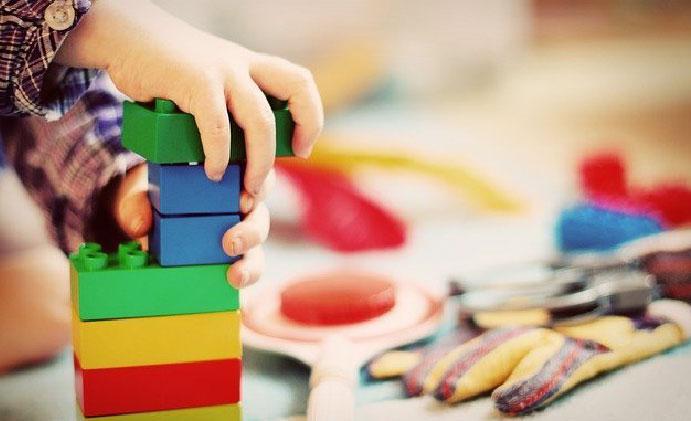
Through toys: You must have bought quite a few toy cars or robots for your child. While she's playing with her toys, get her to think about how the toys work. How does her wind-up toy move? How is it different from her battery-powered car? Getting her toys like construction sets, building blocks or engineer's kit for children will encourage her to learn.
Encourage questions: Whenever you're explaining a concept or a scientific principle, encourage your preschooler to ask Why, What and How questions. If you don't know the answer, then turn it into an opportunity to explore and find the answer together. Look up an encyclopedia on the subject, or go online and explore the websites of different museums around the world. Your child will cherish this learning experience with you.
Provide opportunities to explore: Your young child needs time and opportunities to explore and investigate; so create such opportunities for him. A simple way to do so is to not give the correct answer when your child comes to you with a question. Give him prompts and allow him to explore the question further. For example, if he asks why there's no family vacation this year, you can ask him if it's possible to set up a hammock in the balcony or backyard. Involve your child in making a hammock. Ask him: "What items do we need to make a hammock? What materials can you find from around the house? How high up can you hang it to get on and off it comfortably? What does it need to be tied with to hold a child's (or adult's) weight?" Encourage your child to think of the answers to these questions.
Let your child make a mess: STEAM education is not only about learning from books but also about doing experiments or testing the concepts learned in everyday activities. So, when your child performs experiments, she may create a mess at home. And when she's trying to explore and experiment outdoors, she may get her hands and clothes dirty. This should not become a reason to prevent your child from learning. Instead, tell her it's okay to create a mess at times.
Use appropriate vocabulary: Although your child is young, use appropriate terms to explain concepts or principles to him. This way, you can introduce him to the correct terms and expand his understanding of scientific vocabulary. For example, you could use words such as "structure" or "strength" when he's building a tower, or use words such as "lighter" and "heavier" to compare weight when he's carrying objects in both hands.
Creativity, out-of-the-box thinking, planning and problem-solving are at the heart of STEAM education. The diverse and strong academic foundation laid by STEAM education would not only help a child secure her future but also help our country progress and meet the challenges of the 21st century.
In a nutshell
STEAM education benefits every child, irrespective of his innate interests and abilities, as every child is inquisitive and eager to learn.
While science and technology help find solutions to problems, arts education encourages imagination and creativity. So, STEAM education helps a child gain all-round knowledge.
In the future, the ability to innovate will be considered an essential skill without which success may be elusive. So, encouraging a preschooler to pursue STEAM education can ensure a bright future for her.
What you could do right away
Have your child experiment with building different 2D and 3D shapes using apple slices and toothpicks.
Give your child some straws and pipe cleaners, some pencils, and some plastic blocks. Challenge her to build different types of houses using these different sets of materials.
About the authors:
Written by Arun Sharma and Vani Venugopal on December 7, 2020.
Arun Sharma was associated with the healthcare industry before becoming a full-time writer and editor. A doting father to two preteens, he believes in experiential learning for his children. Also, he loves mountain trekking and nature trips.
Vani Venugopal is a writer and Chief Copy Editor at ParentCircle. She has a master's degree in English Literature from the University of Edinburgh.
About the expert:
Reviewed by Meghna Singhal, PhD on December 7, 2020.
Dr. Singhal is a clinical psychologist and Parenting Coach at ParentCircle. She has a doctorate degree in clinical psychology from NIMHANS (Bangalore) and holds a post-doctorate in parenting from the University of Queensland (Australia).
Join our Circles to share, discuss and learn from fellow parents and experts!
Looking for expert tips and interesting articles on parenting? Subscribe now to our magazine. Connect with us on Facebook | Twitter | Instagram | YouTube
Comments
Bharani M Dec 14, 2020
Jeyakannan RD Dec 11, 2020
Edit
Comment Flag
Cancel Update