
Raising Boys Without Gender Stereotypes: ParentCircle's #RaisingBoys Campaign Initiative
Team ParentCircle
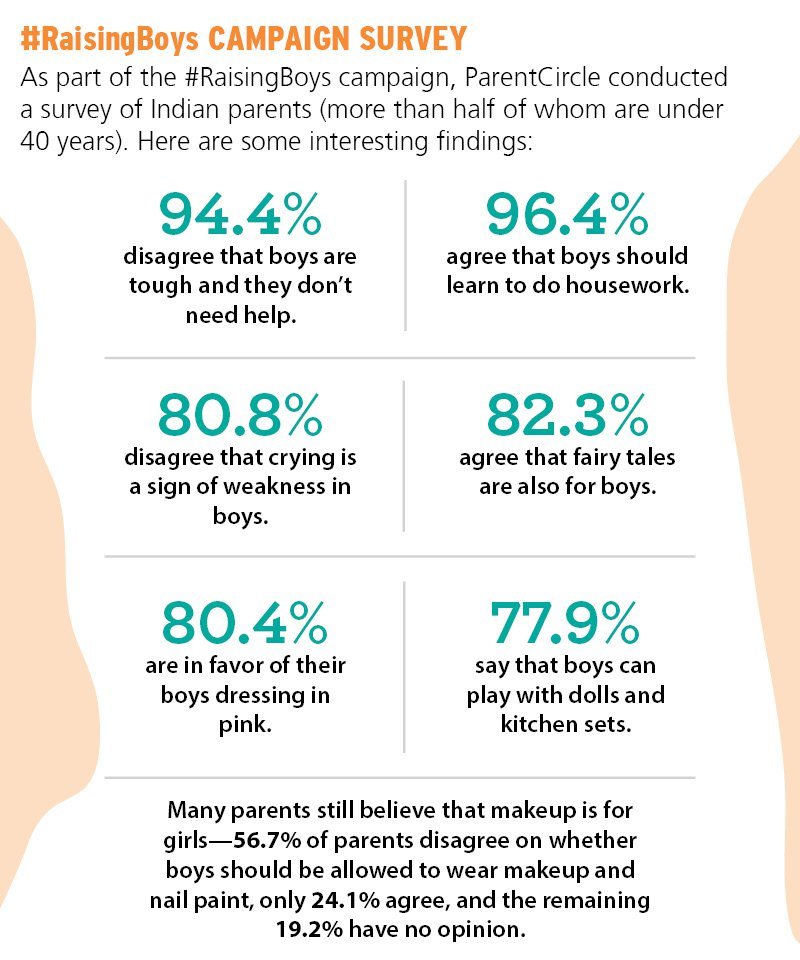
ParentCircle runs an annual month-long campaign on raising boys, which kick-started on National Girl Child Day (January 24, 2021). Here are the highlights of the first impactful campaign.

Through panel discussions, nationwide surveys, parent stories on raising boys, conversations with clinical psychologists, and collaborations with artists challenging gender stereotypes, the ParentCircle #RaisingBoys campaign has sparked meaningful change across the country. Let’s revisit some of our most impactful posts, events, and articles that tackled issues like breaking gender stereotypes, teaching children about consent, and more.
Parent Stories
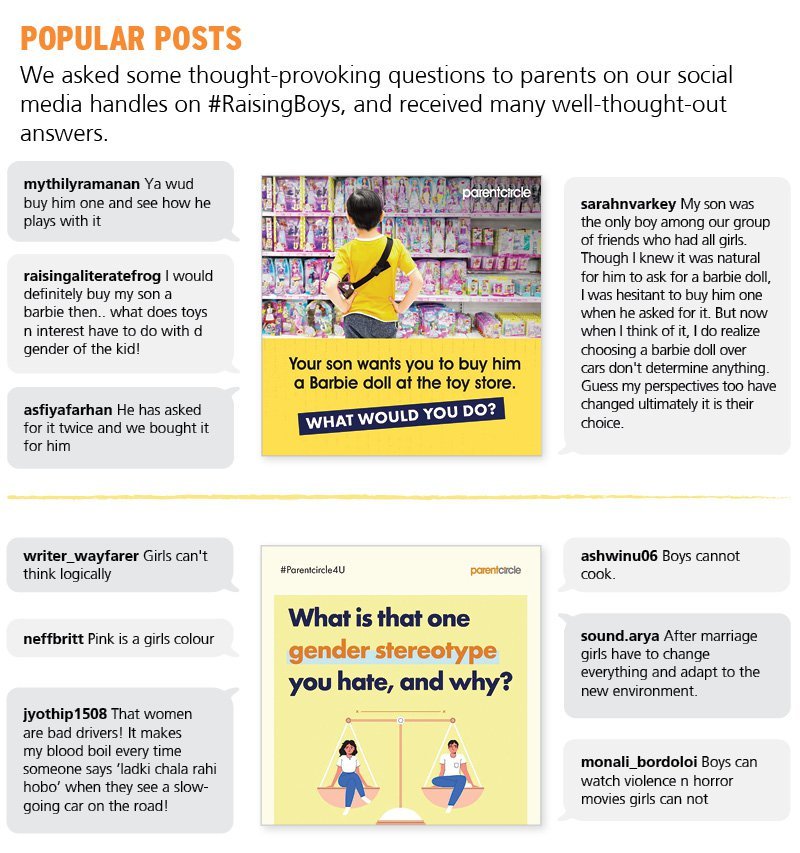
Many parents came forward to share their personal stories of raising their boys. Here are a couple of interesting ones:
Challenging gender stereotypes through everyday parenting
As a mom of two boys (a 6-year-old and a toddler), I have always tried to ensure that my children are not gender-biased, but kids are too intelligent and sometimes surprise you when you least expect it. It was just another day, and I was role-playing with my older son. He was obviously an alien with superpowers, whereas I was representing Homo sapiens and therefore had no special powers whatsoever! In the middle of our game, I tweaked the script to turn into a person who knew some karate techniques. But then, he suddenly said, "Mamma, you can't do that because girls can't fight! Taken aback, I asked him why he said that, and his reply left me shell-shocked. "We see it everywhere, in all movies and stories."
The boys do all the fighting to save the girls, he said with total conviction. From that day onward, I have been making extra effort to find storybooks and movies that portray girl characters as heroes or, as they say, sheroes, to help him develop a broader perspective on society. -Suchithra Pillai
Breaking free from color and style stereotypes
I have never conformed to the idea that pink is for girls and blue is for boys. I have made my children wear all colors. My son wore pink with aplomb and still wears it as a 15-year-old. When my son was around 8 years old, he wanted to make bracelets, and he asked me if I could buy a kit for him. I happily went and bought it for him.
When my son was 7 years old, he decided to grow his hair. Many people told him that it makes him look like a girl and that he should think of cutting it short. One day, he asked us, "Do I really look like a girl?" We asked him what he wanted to do, keep it long or cut it. He said he liked his hair long. And that was it. The idea that girls should have long hair and boys should keep it short is so old-fashioned, and a stereotype we didn't want him to conform to. After a year or so, he insisted on cutting his hair short. It was his choice. Now, he is 15 and is again sporting long hair. He is a confident young man, and negative comments targeting his looks don't bother him anymore. It is like water off a duck's back. -Shilpi Chakraborty
For more such interesting stories from parents, follow our Instagram page: https://www.instagram.com/parentcircle/

Panel Discussion
ParentCircle hosted a panel discussion with experts on a relevant topic in today's world—Talking to Boys and Girls About Consent. The experts included Arundhati Swamy, Counselor and Head of Parent Engagement Programme, ParentCircle; Dr. Nithya Poornima, Associate Professor, Department of Clinical Psychology, NIMHANS; Dr Roopesh BN, Additional Professor, Department of Clinical Psychology, NIMHANS; and Dr. Akhila Keshav, Director, Samvidh Psych Services.
The experts discussed what consent means, why parents need to talk to their children about consent, and how they can discuss it with their children. Here are excerpts from the discussion:
Dr Nithya Poornima: When it comes to touch, as children grow older and by the time they are 10, 11, or 12, they are spending time with their friends. You need to help them understand the importance of asking for permission. "Is it okay if I sit next to you?" "Is it okay if I hold your hand?" And so on. The best way for children to learn this is to observe the behaviors of the adults around them. No matter how much parents talk about consent, if we do not practice it, it's very unlikely for the child to pick up this habit.
Arundhati Swamy: When we seek a child's consent and allow the child to express what is okay with him and what is not, we are building trust in our children. When your child knows that you value her opinion and her wishes, the relationship becomes stronger. So, what do parents seek consent about? It starts with the very simple, day-to-day routine things—allowing your children to decide what clothes they want to wear, how much food they want to eat, asking your children if you can give them a hug or a kiss, not forcing children to spend time with people they may not be comfortable with, giving them their privacy when they are in the washroom. There are so many little areas where we can start seeking consent from our children. Ask your child, "Is it okay? Are you comfortable?" And if they are not comfortable, respect the discomfort they are expressing.
Dr Akhila Keshav: The first thing that consent helps to establish is boundaries. Even a child as young as 1, 2, or 3 years old needs these boundaries to be respected if they have to grow in an environment of mutual respect. When there's a power struggle, the moment we take away consent from a child and say, "You do what I ask you to do," there's one-upmanship in the relationship. Of course, it may be required when discipline is happening. But in most other situations, especially when conversations are happening, or when you are trying to set a new rule, consent becomes important. That opens up a democratic way of discussion. Consent also gives an opportunity to the child to express himself and be heard.
Dr Roopesh BN: The right time to talk about consent is as soon as the child is born. It starts there. Parents can talk directly about consent or you can teach consent indirectly. Many times, you don't have to verbally teach. Let's look at an example. Suppose you are hugging your child, and a neighbor or the child's uncle visits. He wants to hug your child, too. Would you let him hug your child or would you let your child decide? If you let your child decide, your child will understand that he has the right to say no. Similarly, when you are purchasing a dress for your child, you can ask your child her color preference, or when you go to a restaurant, you can check with your child what she wants to eat. These small opportunities lay the foundation for the future, and when there are bigger issues to discuss, this foundation helps.
We hope you enjoyed these snippets of our exciting, thought-provoking campaign. For a more detailed picture of the campaign, please visit our website, social media pages, and our YouTube channel.
Website: https://www.parentcircle.com/
Instagram:https://www.instagram.com/parentcircle/
Facebook:https://www.facebook.com/ParentCirclemagazine/
YouTube: https://www.youtube.com/c/ParentcircleOfficial/videos




























Comments
Edit
Comment Flag
Cancel Update