
Co-Sleeping With Children: Pros, Cons, Risks, And Tips For Better Sleep Habits
Arun Sharma
Cultures around the world have different views on parents co-sleeping with their children. Explore the pros and cons of co-sleeping with children, including benefits, risks, and expert tips to help your child build healthy, independent sleep habits
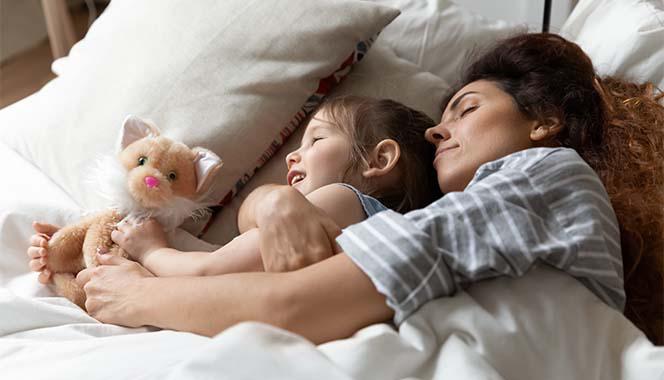
What is co-sleeping, and why families choose it
The practice of parents co-sleeping with their children (sharing a bed with their child or sleeping on separate cots in the same room) is quite old, especially in Eastern cultures where the family is considered above an individual.
In India, most children share a bed with their parents until they are 6-8 years old. Cultural attitudes toward co-sleeping vary widely across countries and families.
With such contrasting cultural perspectives, it’s natural for parents to wonder which one to choose. Let's see what research actually says about co-sleeping.
Parents of babies should follow their pediatrician's advice and established safe sleep guidelines for infants.
Co-sleeping in research: What the experts say
Some experts caution that prolonged co-sleeping may contribute to sleep difficulties, dependency, or disrupted sleep patterns in certain children and parents.
With so much research on co-sleeping, let's look at some of the common pros and cons suggested in most of these studies.
Clearly, co-sleeping is not a one-size-fits-all approach. Let’s first look at why many families choose its benefits.
Pros of co-sleeping with your child
1. Comfort and reassurance at bedtime
Young children are full of energy and don't know how to unwind when they lie down to sleep. As a result, transitioning from wakefulness to sleep becomes difficult for them, and they stay awake. For some families, co-sleeping provides opportunities to comfort children and establish bedtime routines.
2. Improved health and physiological stability
In young children, co-sleeping with the mother makes them feel calm, leading to a regular heart rhythm and a more stable body temperature. Some studies suggest that close physical proximity may help some young children feel calmer and more secure. However, children's sleep needs and responses vary.
3. Strong emotional security and bonding
Some studies have reported positive associations between co-sleeping and children's emotional security, although findings vary across cultures and family contexts. Co-sleeping allows children to cuddle up with their parents.
Even if they don't share the bed but sleep on different cots in the same room, they feel secure, loved, and connected. Also, when they sleep with their parents, it helps them open up and talk about their day or any other specific problem they may have.
Many families report that co-sleeping strengthens feelings of closeness and connection.
4. Better family sleep rhythm
Some families find that sharing a room or bed reduces nighttime disruptions and helps everyone settle more easily. Children who sleep alone may wake up during the night feeling lonely, scared, or anxious from separation anxiety.
But when children sleep beside their parents, such instances are rare. Also, when a family sleeps together, they develop a sleep rhythm of their own, where everyone falls asleep at almost the same time.
While these benefits may feel reassuring, co-sleeping also raises important questions about long-term habits and independence.
It’s about adapting to change and growing independence
"Sleeping separately from parents as they grow up is a sign that the child is seeking to take one more step towards independence.
This step requires the ability to adapt to change. The ability to cope well with change signifies growing maturity in taking small risks, trying something new, and adapting to new experiences. These come from feeling secure and knowing there are caring people to support them through the change.
A child who refuses to try out a new pattern has either got into a habit (and habits are hard to break!) or they're not yet emotionally ready for the change.
Sometimes an older child may need to be firmly coached into sleeping in a separate bed or room. Support the child through the transition, with a reward for their effort.
If your child refuses or becomes extremely distressed about the change, try to understand if they have real or unfounded fears and misgivings.
Often it is because your child knows that if they push hard and long enough, you will relent and give up the idea." - Arundhati Swamy, Family Counselor.
This highlights an important truth—while co-sleeping may work in the early years, gradually helping a child move towards independent sleep is a key part of growing up.
Cons of co-sleeping with your child
1. Sleep and behavioural concerns reported in some studies
Children who co-sleep with their parents may experience more sleep-related challenges than those who sleep independently, although findings can vary across cultures and contexts.
Recent research continues to highlight this association. For instance, a 2024 study published in the European Journal of Pediatrics found that co-sleeping in early life was associated with differences in sleep patterns among preschoolers, including shorter sleep duration and more disturbed nighttime sleep.
Similarly, a study published in Behavioral Sleep Medicine (2020) found that early childhood co-sleeping was associated with increased behavioral difficulties later in childhood and preadolescence, including emotional and sleep-related concerns.
2. Sleep disruptions for some family members
Frequent movements and differing sleep schedules may affect sleep quality for some family members. As a result, they wake up feeling tired and inadequately rested.
Also, children require more hours of sleep than adults. And when parents get out of bed, most children wake up along with them. In some families, differing sleep schedules or frequent nighttime awakenings may affect sleep quality for both parents and children.
3. Greater reliance on parental presence at bedtime
It is generally noted that young children who co-sleep with their parents at night are unable to sleep on their own, even during the daytime. They always require their parents to fall asleep. In some children, reliance on parental presence at bedtime may make it more difficult to establish independent sleep routines.
4. Exposure to adult conversations and stress
In today's busy lifestyle, a few minutes before falling asleep is the only time couples can talk about family or other issues. Assuming that their young child has fallen asleep, couples start discussing their problems. Children sharing a room with parents may overhear conversations or experience stress from adult discussions.
With both advantages and challenges in mind, the decision ultimately comes down to what works best for your child and family.
Co-sleeping: Making the right choice for your family
Now that you know some of the pros and cons of co-sleeping with your child, you are in a better position to make an informed decision.
Questions to consider before choosing co-sleeping
- Does the current sleep arrangement help everyone get adequate rest?
- Is your child comfortable and emotionally secure?
- Are you satisfied with your family's sleep routine?
- Is your child showing readiness for more independence?
- Are changes being introduced gradually and with reassurance?
Every child is different. Some thrive on the comfort and closeness of co-sleeping, while others benefit from learning to sleep independently earlier. What matters most is not following a fixed rule but tuning into your child’s emotional needs, sleep patterns, and readiness for change.
As a parent, your role is to guide, not rush, the transition. With patience, consistency, and reassurance, children learn to adapt and grow more confident with time.
Last updated on: April 01, 2026

























Comments
Edit
Comment Flag
Cancel Update