
FEATURED
Medicines For Babies And Children: Safety Guidelines
Dr Atish Laddad
For a flustered parent, it is easy to make mistakes when giving your child medicines. Want to avoid such a disaster? Check out these guidelines from our expert.

What do you do when your child is sick? Try to comfort her, keep her warm, feed her and give her medications to improve her condition. This last action is done with or without the consultation of a doctor. How do you make sure you're doing the right thing? gives us the framework of the guidelines you must follow when giving your child medication.
Medication for babies:
Check with a doctor every single time you give your child medicines. It is advisable to consult a doctor for most medicines.
1) General thumb-rule for parents
Read the prescription correctly. A lot of times when the doctor prescribes syrup, the pharmacist gives drops; the doctor prescribes drug A, the pharmacist gives a combination drug or some other drug. So, the parent always needs to recheck the prescription.
They need to complete the entire course of the antibiotic because if they give the course for half the duration, it will give rise to drug resistance.
2) How safe is it to give OTC drugs to babies and toddlers?
They can be given provided in right doses. This should be used as a first aid measure as far instance, if the child has a fever at night, he can be given paracetamol but he should see a paediatrician the next day.
3) A lot of parents tend to overdo on OTC drugs. Your comment
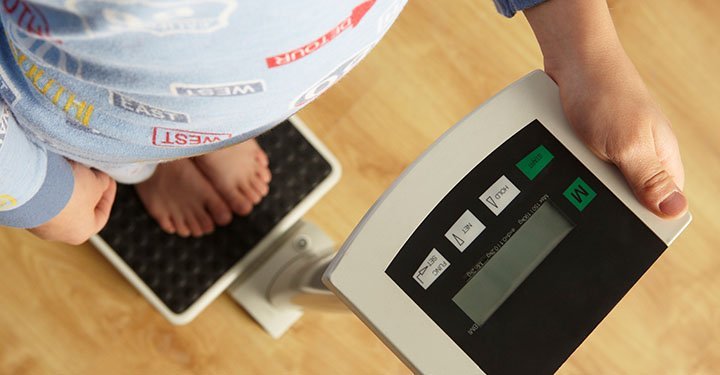
The drug dosage given to a child is based on his weight. The weight keeps changing every 6 months. What parents tend to do is i) There refer the old prescription and give the medicine or ii) they follow the instructions on the packaging.
4) Should the baby be held in a particular position while administering a medicine?
Hold the baby at to 45 degrees, especially if it is a newborn or in the first 6 months.
5) What are the measuring devices parents can use to give medicines?
Parents should use the measuring cups that come with the medicine. They should not use teaspoons Droppers and injections syringes can be used for measurement.
6) How can a parent identify whether the medicine is working or not?
For any medicine to work, give 48 hours. Don't expect the child will become alright as soon as you visit the doctor. If you find additional symptoms to the existing ones, you need to report them to the doctor.
Go through this ClipBook that looks at the different trends in alternative medicine.
7) How long should we wait for the additional symptoms?
Suppose you see a doctor for fever and the next day the child has loose motion or getting breathless then you need to report to the doctor. The doctor may or may not intervene.
8) Are there any general side effects for medicines?
Generally, all paediatric medicines are safe. The inherent ability of a child to process medicine is better than adults. However common side effects are loose motions and acidity.
9) What can be done to prevent acidity?
Follow the Doctor's advice, give the medicines after food if prescribed that way. Don't change the normal diet the child is used to take. The general rule is that, when the child is on medication, stick to the old diet, unless the doctor asks you to change it or restrict something.
For instance, when the child is vomiting a parent may tend to starve the child. But in fact, he should be giving the child more food so that some amount is retained in the body. When a 7 to 8 months old child has a fever, the parent may give him dall water or rice water which is not enough. The child becomes weak and cranky and irritable.
10) Are there any important questions to ask pharmacists while buying medicine?
Parents need to personally counter check the medicine.
11) Is it important to maintain a gap between each dose correctly?
For this you need to follow the doctor's instructions. Packaging instructions are meant for people who do not go to the doctor. But in the case of children, always follow the doctor's prescription. It does not matter, if the timing is awry here and there by an hour or so. But adhere to the timings prescribed by the doctor.
12) How do we check for medicine allergy?
Reactions can be of 2 types:
a) Rashes on the body
b) Gastrointestinal disturbances like loose motion or vomiting.
If you find either of these symptoms, report them to the doctor immediately.
13) Are there any medicines which we should specifically avoid giving a child?
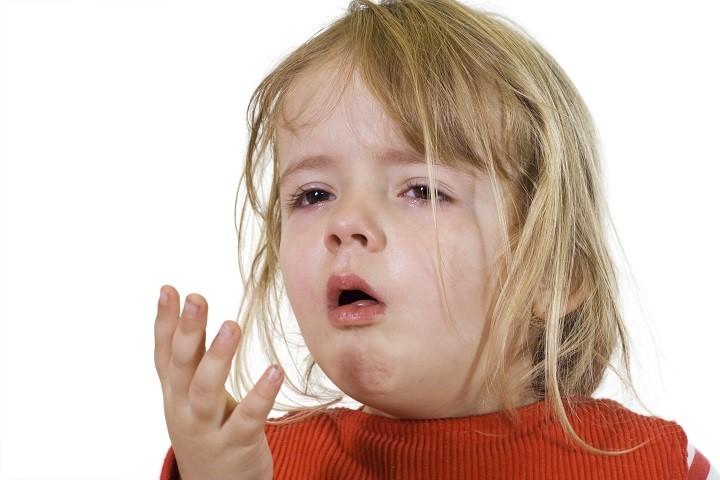
Do not give antibiotics on your own. It is always better to see a doctor before giving children any medicine. Medicines like cough syrup can be started but it is important to see a doctor as soon as possible. More serious medication like anti convulsion should be given only after seeing a doctor.
14) How can parents safely store medicines?
To begin, one should always follow the manufacturers manual. Refrigerate or store in cool dark place as required.
The author is Pediatrician and Founder Member, The Pediatric Network.
Hope you liked this article. To get expert tips and read interesting articles on a wide variety of parenting topics, Subscribe Now to our magazine.
Discover our health and safety program for pre-primary children at The Dot Learning Circle, designed specifically for LKG and UKG students. We focus on building children’s awareness of safety protocols in different situations, understanding personal space and safety, and the importance of getting help when needed. Our engaging curriculum ensures young children learn essential safety skills.
























Comments
Edit
Comment Flag
Cancel Update