
Don’t Overschedule Your Child: Practical Ways To Help Kids Find A Healthy Balance
Divya Sainathan
Divya Sainathan is a writer and editor with a special interest in early childhood education.
Worried about overscheduling your child? Learn the signs of overstructured routines and how to build a healthy balance with playtime, downtime, and family time
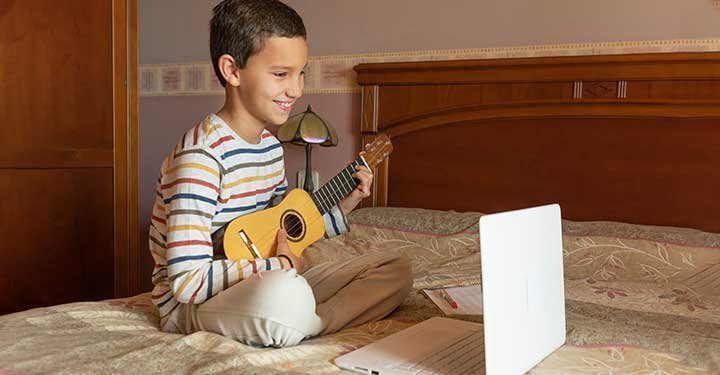
In comes that “ping” (notification) and you digest your friend’s Facebook story or WhatsApp status about her child’s extracurricular pursuits. You immediately feel the urge to expose your child to more skills. This happens at a time when you are already concerned that your child is idling away their “free time,” watching TV, chatting with friends, or just lazing around.
A real-life story about an overscheduled child
Take the example of Savitha Krishna, a stay-at-home mom. Her evenings are hectic. She had signed up her 11-year-old son, Darshan, for spelling-bee training because his teacher felt he showed promise. He also attended Bhagavad Gita classes, which he was rather good at. Savitha had taken great trouble to scout for the best math tutor, even if it was a little farther than she liked. She added swimming to her son’s schedule because she was concerned he did not get enough physical exercise. Savitha was happy to put in all this hard work—after all, Darshan deserved a bright future. On her part, she rested in the afternoons while her son was at school and her husband was at work.
After a busy year, when Savitha thought the family had mastered multitasking, Darshan began having some troubles. He complained of headaches, especially before spell-bee sessions. His swimming instructor told Savitha that Darshan didn’t show much interest or energy at the pool and was merely going through the motions. She put it down to his poor eating; her son seemed to have lost his appetite. He also wanted to sleep in every morning, which made him late for school. It took Savitha a while to realize that her child was overwhelmed and exhausted.
Why parents overschedule their children
This is a common scenario in today’s world. Most parents struggle to come to terms with structuring their child’s routines. They love to squeeze in as much as possible within the 24 hours of a day, but only a handful understand the importance of a healthy balance. While it’s good to help children pursue their interests, you must take care not to go overboard. When too much structuring is imposed on a child’s free time, it can harm their development and well-being.
We sign our children up for a host of activities with the best of intentions. Wouldn’t it be nice to channel their talents and energies into productive and rewarding pursuits? Isn’t it best for them to learn new skills and stand out from a competitive crowd? What harm can come from giving them more opportunities to socialize and make friends?
Signs your child is overscheduled
There’s a difference between giving your child the right amount of exposure and fitting all their leisure into a timetable. How can you tell whether your child is signed up for too many activities? Watch out for some of these signs:
Constantly racing against time
Your child runs on a tight schedule, chugging down meals and snacks in a hurry, changing kits frequently, and scrambling from one class to another.
Being irritable, moody, and grumpy
Tired and overworked kids lash out at everyone just like grown-ups do after a long day. Your child can complain about not having any time for themself or to socialize.
Falling behind at school
Overscheduled children often struggle to complete schoolwork. Their grades drop because the extracurriculars take more time and energy than they can spare for academics. They may even self-sabotage their studies to rebel against overwork.
Not getting enough food or sleep
Disturbed sleep and loss of appetite are classic signs of stress, which can be caused by, among other reasons, too many organized, goal-oriented activities.
Drifting away from close friends
When children are too busy to hang out or catch up with their closest buddies, their friendships take a hit.
Losing interest in things they like
Children can start avoiding all their after-school commitments when their favorite activities become performance-based, and they are too tired to enjoy anything.
How overscheduling affects parents, too
Your child’s after-school activities can overwhelm youIt’s not just your child who experiences stress—you, too, may feel overwhelmed. When you stretch yourself thin while working hard to meet all of your child’s after-school commitments, it’s a sign that you have overscheduled your child. |
Overscheduling: Long-term risks
Overscheduled children have little control over their own time. They depend on their parents to get them to all their activities. They could feel confused and helpless if and when they have free time on their hands.
Crammed schedules, parental expectations, personal goals, and lack of rest and recreation can put undue stress on children. Research indicates that this could lead to mental health problems such as anxiety and depression in the long run.
Children need to relax, unwind, and slow down after a day of intense activity. Reading, sleeping, having a bath, resting, taking a break, lying down, and doing nothing—these little things help children’s bodies and minds to wind down. This kind of downtime is, however, one of the biggest casualties of overscheduling.
Most parents consider screen time as downtime when, in fact, it’s the opposite. Video games and social media demand a child’s attention, social skills, and problem-solving skills. Far from helping a child slow down and sleep, digital devices can overstimulate them and keep them awake. So, if you thought you were solving the issue by replacing a structured activity with screen time, you are only denying the child time to rest physically and mentally.
While mapping out their child’s after-school hours, many parents do not make allowances for free, unstructured playtime. This could deprive children of vital self-discoveries and learning experiences. Every child must indulge in self-directed play, making up their own games and letting their imagination run riot. Such playtime is crucial to their development—it fosters independence, creativity, confidence, leadership, and teamwork. It also helps build their cognitive, emotional, and social skills.
Why downtime and free play are essential for children
Things that we might consider wasteful and superfluous are actually essential and indispensable to our children’s well-being. We must factor this into the decisions we make about our children’s time and engagement.
How to choose the right activities for your child
Many parents believe they shouldn’t let their children get bored. In our efforts to thwart boredom, we might be tempted to involve our children in “meaningful” or “fulfilling” programs. But we have to realize that our children have ideas of their own. Here are some things to consider before signing children up for an enrichment class:
Age, development, temperament
- Younger children don’t need as many scheduled activities as older children.
- Kindergarteners and early graders don’t need any structured activity.
- Primary schoolers can handle one or two per week.
- Older children can juggle up to three different activities.
We must also be careful to give children things that challenge them but aren’t difficult enough to make them doubt themselves.
Interests and preferences
If we encourage our children to follow their passions, they will be motivated learners. Let children take the lead in choosing their extracurriculars, be it social programs (club activities, scouts, and guides), artistic pursuits (music, dance, painting, theater), or physical activities (sports, athletics, fitness). Now and then, check with them if they are enjoying what they have chosen.
Motivation
Extracurricular activities can be fun, interesting, and stimulating. But a child’s interests can change over time. And if we focus on performance and results, even sports and games can become burdensome. A stressbuster shouldn’t turn into a source of stress. We need to stay tuned to our children’s evolving interests and help them stay motivated. We must constantly ask ourselves: “Who is more eager to get to an activity—our children or us?”
Priorities
How do you greet your child when they come home from school? By asking, “Did you have fun?” or “How did you do today?” What is more important to you—family meals or a reputed class taught far away that ends late? Our words, actions, and decisions tell our children what we consider important. We want to send the message that while performance is important, we value health and family more. We must be prepared to cut back on sessions or drop activities when they encroach on mealtimes, bedtime, or family time.
Limits
We must weigh the worth of an activity against the time and effort it takes, whether it caters to our child’s needs and abilities, and whether it impinges on our responsibilities at work and home. Also, whether the parent has the resources to drive the child to the activity.
When done right, structured activities can arm children with essential life skills while honing their talents and boosting their self-esteem. Sundar Srinivasan, who has two daughters aged 6 and 10, says, “My daughters come home from school, relax for a while, do homework, and then they are off to a class each day of the week. Their classes have made a real difference, especially in badminton. My girls are fitter, healthier, and more creative than ever. It’s worth trading one hour of screen time for an activity a day.”
The most important point to note here is that Sundar draws the line at one hour and one activity per day, though not more.
How to restore balance in your child’s daily routine
It’s not easy to be like Sundar, but it’s possible. Dr. Denise Pope, a senior lecturer at the Stanford Graduate School of Education, prescribes “PDF”—Playtime, Downtime, and Family time—as the antidote to the stresses of an overly busy childhood. To restore balance to our children’s lives, we must reinstate the very things that they were too busy for in the first place.
Playtime: Encourage free and self-directed play
When was the last time you let your child just be, without meddling in their play, setting up games, or charting out their playdates? Children are at their best when they are allowed to play freely, with no plan, agenda, or adult interference. They get to decide the who-what-when-where-how of playing. This calls for creativity, problem-solving, experimentation, negotiation, patience, communication, teamwork, and courage. The character-building prowess of a structured activity pales in comparison with a lazy afternoon spent pottering about in the garden with random objects.
Downtime: Prioritise rest and relaxation
Our bodies and brains need a breather every day to refresh themselves. Sleep is vital for learning, memory, attention, and emotional control. It also boosts the immune system, helps repair muscle wear and tear, and promotes the release of growth hormones. Lack of sleep can lead to serious health issues such as obesity, diabetes, hypertension, cardiovascular disease, anxiety, and depression.
Downtime is not limited to adequate sleep. Soothing and destressing activities with no goal or structure can also translate into downtime. It could be reading, listening to music, daydreaming, or simply relaxing on the couch. An after-school snack-and-rest break can make all the difference to a child’s extracurricular calendar. Bedtime routines such as warm baths and story sessions, which help children decompress, are an integral part of downtime. Reclamation of downtime plays a significant role in the fight against the perils of overscheduling.
Family time: Build connection through shared moments
We must not allow a schedule of activities to reduce our family unit into a cohabiting team of chauffeur-chefs and workhorses. There’s so much more to it. Family time is a powerhouse of support, empathy, and belonging. It allows us to take an interest in and truly understand the most important people in our lives. We can look our children in the eye, listen to their accounts of their day, hear out their concerns, and learn about things that spark their passion.
Inalienable, uninterrupted family time, even a 20-minute screen-free dinner, can go a long way in building our children’s sense of trust, belonging, and security. Loosely structured activities such as game nights, picnics, or outings qualify as family time too. Many of these also check the boxes for child-directed playtime or downtime.
Dr. Pope’s formula of PDF helps us recalibrate our values and commitments to devote time to things that really matter.
Rethinking success and productivity for our children
We need to change our perspective
It’s perfectly natural for parents to have high hopes for their children and to see the boundless talent and potential in them. We would like to replace our children’s doodling sessions with art classes, their friendly neighborhood games with sports coaching, or their fun song-and-dance impromptu with music/dance classes. How about holding our horses till the idea comes from the children themselves? And while we are at it, why not reflect on our parenting and detoxify?
Look beyond conventional definitions of success
We must broaden our understanding to value emotional regulation, empathy, self-engagement, independent problem-solving, and stress management on par with excellence at school and in extracurricular activities.
Delink children’s worth from their performance in activities
We do not want to put too much pressure on our kids. Nor do we want to take the fun out of sports, games, or other activities, which are meant to make them feel good. Our unconditional love and support bolster our children’s self-esteem, which will eventually result in greater motivation and better performance, academically or otherwise.
Protect the sanctity of health, relationships, freedom, rest, and play
Let us consider scheduling our children’s day around these things, instead of the other way around.
We feel such an oppressive, compulsive urge to give purpose and direction to our children’s days. But the truth is, we do not have to account for every single moment of our children’s lives. It would do them and us a world of good if we let them take charge of some of their time, if not all.
Key takeaways for parents
- Structured activities are good for children, but overscheduling can be detrimental to their health and development.
- Children show many signs when a packed schedule of school and extracurricular work takes a toll on them.
- We must consider several factors before choosing to sign up our children for structured activities.
- We must ensure that our children get adequate PDF (Playtime, Downtime, and Family time) daily.
- We need to change our attitude toward success, skills, productivity, usefulness, meaning, and purpose. We must stop equating sleep with wastefulness and boredom with nothingness.
Practical steps to reduce overscheduling
What you can do right away
- Schedule family time of about 20–30 minutes on a daily basis. Make sure you have at least one meal a day together, discussing “nonproductive” things. Make an effort to just sit in a room together, even if you don’t interact with each other.
- Earmark time for unstructured play and relaxation. You could consider making it toy-free or outdoor, giving your children a chance to engage themselves.
- Set screen curfews and sleep reminders, so that your children don’t take their devices to bed. Make mealtimes and family time screen-free.
- Support your children in sustaining friendships and social relationships. Be open to playdates, sleepovers, game nights, and day trips that your children can have with their friends.
- Check in on your children regularly to see if they enjoy their after-school activities.

































Comments
Edit
Comment Flag
Cancel Update