
How To Raise An Environmentally Conscious Child: Expert Parenting Tips And Real-Life Stories
Aruna Raghuram
Two urban families who expose their children to farm life talk about its positive impact. An environment educator recounts how children influence green living
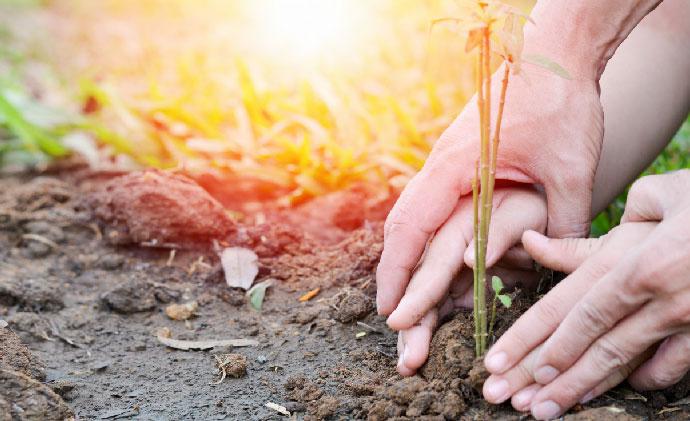
In the hustle and bustle of modern life, how do you get your child to connect with nature? Surrounded by malls and consumed by gadgets, how do you make your child environment-conscious? Well, two families who live in Bengaluru are managing to do just that.
They take their children regularly to their respective farms in Thally, around 60 km away. Raghu Venkat runs a start-up called Actyv. His wife, Dr. Tricha Anjali, teaches analytics at IIIT-B. They have twin daughters, Nora and Niya.
Arthi Krishna is a software engineer who now teaches Carnatic music. Her husband Krishnakumar is an IT consultant and yoga instructor. The couple dote on their twins, Kavya and Kaushik.
We had a chat with Raghu and Arthi to find out more about their eco-friendly lifestyles.
Q1. How is the experience of living on a farm with your children?
Raghu: On the farm, we have huge trees and Kangeyam cows, a native breed. The children enjoy roaming through the fields, planting seeds, and playing with the cows. This way, they can connect with nature. My children take to life on the farm as naturally as they do their life in the city.
We practice natural farming. Castor is planted to attract insects and keep them away from other plants. We also grow only what is natively suited to the land conditions and seasons. For instance, I don't grow roses, cauliflower, or cabbage. We have a natural pond and also practice rainwater harvesting. Swales (trenches on contoured land) have been dug on the farm track, and the water goes into these to increase groundwater retention. We make good use of recycled water and solar energy. My next experiment is going to be bio-gas.
Since we don't have a refrigerator or microwave oven on the farm, we eat only fresh food. This way, we reinforce natural living.
Growth promoters and biofertilizers are made from cow urine and dung and other ingredients available on the farm. We do our own vermicomposting and use natural pesticides. The underlying philosophy is that in nature, there are insects, plants, and creatures that are inherently good and help balance the ecosystem. By using artificial fertilizers and chemicals, we are destroying the very fabric of this earth. Our children get to see this firsthand.
Arthi: Living on the farm is simple living close to nature. There is a well, trenches for water, and lots of trees. We go for nature walks and spend time bonding. No gadgets on the farm! But somehow, we just don't get bored. It is very peaceful at the farm. In the city, we do so much and still feel restless. At the farm, everything seems to slow down. My children have become experts at climbing trees and plucking mangoes. They don't worry about getting dirty. Their best friends are the animals around, mostly cows and dogs. They are comfortable sharing bathroom space with frogs! One of the biggest things is that we lead a practically plastic-free life. Leftover food is given to the cows, and waste management happens automatically. We have a soak pit for drainage and use solar panels. We have only a few bulbs and no fans. The house is constructed in such a way that we minimize the use of electricity. Most nights, we spread our mattresses under a tent in the field, as the children enjoy this.
We practice natural farming and grow rice, pulses, turmeric, groundnuts and greens, and other vegetables. We follow a self-sustaining model by selling produce to other families to meet our expenses. We plan to grow chilies and make chili powder. Our motto for self-sufficiency: Nothing comes into the farm and nothing goes out.
Q2. What are the eco-friendly practices you adopt in your urban life?
Raghu: Even in our urban life, we maintain our connection with nature. My children have the same kind of freedom in my house in Bengaluru as they do on the farm. They have been surrounded by animals from a young age. We have a garden and the children are encouraged to pet stray dogs. We adopted a stray a few years ago.
I am liberal about buying my children books (they read a lot) and toys, but I make sure I pass them on to other children later. At the company I run, I have a person to pick up lunch for the staff in a tiffin carrier. I do not employ food delivery services as they use too much plastic.
Arthi: In the city, too, we live an environmentally friendly life, but in a smaller way. Instead of visiting malls, we go for treks or visit beaches. Our vacations are spent in natural surroundings. I started a waste segregation drive in our society. The cleaning materials and toiletries we use are eco-friendly products.
We encourage farmers to go organic and have formed an organic consumption group in our apartment complex. This way, we aim to become a sort of conduit between farms and urban communities. Our children appreciate the purpose of these efforts.
Q3. How do you explain to your children the need to be environment-conscious?
Raghu: Our children get the fundamentals of eco-friendly living from what they see around them. They feel a connection with the environment.
Our children have a love for all living things. At the farm, we teach them the importance of earthworms, spiders, ants, and bees, and how everything has a place in the ecosystem. That's why I tell my children not to even step on an ant. I explain to them why we do not spray chemicals to get rid of termites.
Sometimes, they ask tough questions like: You say everything should go back to the ground, but how come we cremate our dead rather than bury them? I have to come up with answers that satisfy them.
Arthi: We want our children to move away from me-centric living, thinking only of their own needs. We want them to realize that they are part of a bigger, green world and that their actions impact others. This way, they will be motivated to adopt eco-centric living practices.
We are nature lovers and have tried to instill this love in our children. Only when you love something will you want to protect it. Also, my children study in a school called Prakriya, which imparts considerable green wisdom to them. The school reinforces what we tell them.
Q4. How do your children show eco-friendly behavior?
Raghu: Our children have learned about sustainability from the farm. They know where food comes from. As they know how difficult it is to grow food, they are very particular about not wasting it. They are used to eating the vegetables that we grow on the farm. They know the value of water they wash their hands near a plant to ensure better use of water.
My children observe the natural farming practices we adopt on our farm. They have become interested in natural farming too. For instance, they recently watched some videos and suggested ways to space the sowing of potato sections. They also discuss with us things like how we can consume most of the onion and plant the top to regenerate it!
Arthi: My daughter Kavya is very particular about keeping sanitary napkin waste minimal. She mostly uses sanitary pads made of cloth. This is her own initiative. My children love reading. They make regular trips by metro to a bookshop, give their old books to the shop, and buy second-hand ones. Also, our children are very particular about not littering, they take part in clean-up drives.
Even when they were young, they would use newspapers to wrap the gifts they gave. We have stopped the return gift concept in our family as it encourages consumerism. Birthday parties are more about having a good time together and playing interesting games. As a family, we practice moderation. Our kids ask for very little. From childhood, we have insisted that they know the difference between needs and wants. If they ask for something, we don't buy it immediately. We ask them after a week whether they still want it. Very often they say: No.
There are also organizations dedicated to providing practical advice on sustainable living.
Hands-on green parenting
The CERC-ENVIS resource partner (the Environmental Information System (ENVIS) at Consumer Education and Research Centre, Ahmedabad CERC) stresses that from the moment we are born, we leave a large carbon footprint. From toys to diapers, many things that parents buy for children eventually end up in the landfill. That's why it is important to make eco-friendly parenting decisions.
Some suggestions:
- Teach your child the basics: Tell children to turn off the tap while brushing their teeth and switch off lights and fans before leaving a room. Give them reusable water bottles, not plastic ones, and encourage little children to color or write on the blank reverse sides of used sheets of paper or flyers.
- Buy green toys: Buy toys made of natural materials and avoid plastic. Visit craft fairs selling products made from naturally grown produce that are biodegradable and compostable. Check the labeling information on games, puzzles, books, and toys to make sure they are made of eco-friendly materials. Buy fewer toys. Instead, look for items at home that can be turned into toys. Donate toys your child has outgrown.
- Help your child make the best out of waste: Do not throw away waste material as a matter of routine. Old newspapers can be made into paper bags, and plastic bottles can be cut in half and used as pen holders. Teach your children the importance of recycling.
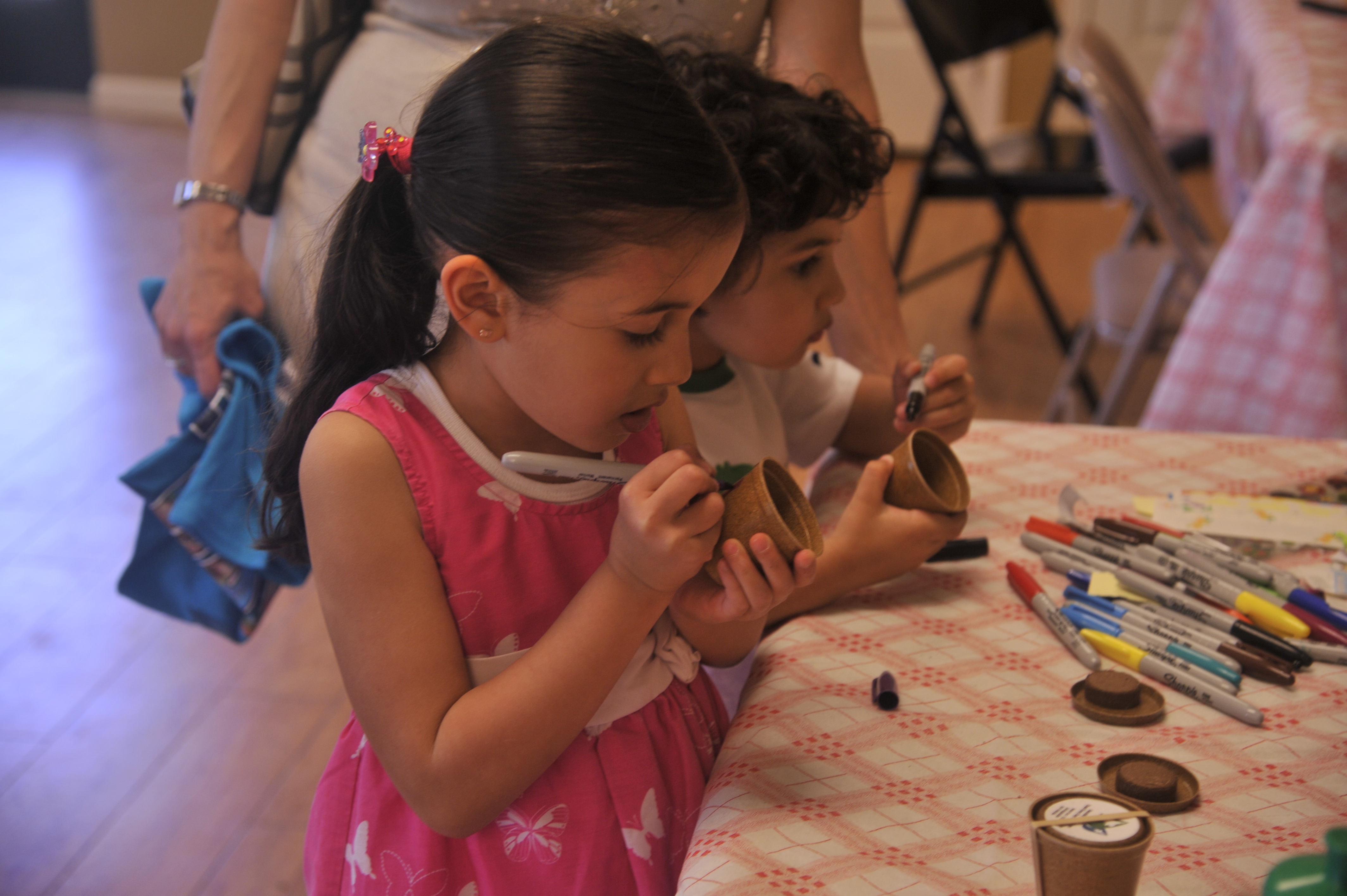
- Encourage gardening: Visit community gardens, nurseries, and local markets. Help children identify different plants, vegetables, and fruits. Select plants with large, brightly colored flowers and vegetables that grow quickly when you want to introduce your child to gardening. Planting the seeds, watering the plants, and harvesting the produce will give them immense satisfaction and increase their appreciation of nature.
Out of the mouths of children
We hold the world in trust for future generations. It's our responsibility as parents to practice and pass on an eco-friendly way of life. But sometimes, our little ones can teach us a lesson or two!
ParentCircle interacted with Hitarth Pandya, founder of Vadodara-based KEDI (Kids for Environmental Development Initiatives).
Pandya dedicated the Inspiring Climate Educator Award for 2019 to his army of eco-friendly children. Here, he highlights how children can make their parents think eco-friendly!
Children learn about the environment in two ways: from environmental science textbooks in school and their own observations of their homes and surroundings. Family members and peer groups are major sources of learning. The environmental science (EVS) curriculum in schools is not always practical or relevant. During my journey to make environmental education simple and actionable, I have come across several instances where children have taught their parents lessons in sustainable living.
We had a heart-to-heart discussion on World No Plastic Day on July 3, 2019. As many as 30 students told me how they had urged their parents to stop accepting plastic bags from vegetable vendors. On another occasion, a Grade 5 student explained how she had convinced her mother not to remove a pigeon's nest from the balcony. That day, this little girl taught her mother a basic lesson in compassion towards all living beings. One child reported that he had suggested to his father that they minimize the use of air conditioners. Another kid told me he had asked his father why he did not switch off the ignition of the car at a traffic signal, as there was a long wait.
Now, for what parents can do.
Tell your children that planting a tulsi does not come under the tree plantation category. Take them to a park and let them hug a tree, touch the leaves, and feel the temperature difference between the park and the rest of the city. They will go on to become environmentally conscious and battle global warming.
Teach yourself about the local fauna and flora and impart this knowledge to your child. And above all, irrespective of where you stay, grow your own vegetables. It can be in pots, bottles, or other small containers. This will make a tremendously positive impression on your child's psyche. Living amid greenery is the best way to teach environmental consciousness.
All ancient cultures respected the interconnectedness of life. Our own traditions emphasize reverence for nature and the wisdom of keeping our needs simple and protecting life in all its diversity. As parents, let's make sure that our children enjoy nature and its blessings.
In a Nutshell
|
What you can do right away
- Plan vacations that will help you instill a love for nature in your child
- Practice moderation as a family, avoid consumerism, to reduce your carbon footprint
- Involve your child in gardening; encourage learning by doing

























Comments
Edit
Comment Flag
Cancel Update