
Breastfeeding Stories: Four Mothers Share Their Honest And Unfiltered Experiences
Team ParentCircle
ParentCircle empowers parents to raise successful children through holistic parenting.
Discover the raw and inspiring breastfeeding stories of four mothers. From struggles to triumphs, they reveal the challenges and choices faced on their unique paths.

Yes, the world needs more awareness about breastfeeding. Yes, it’s the most essential thing for a newborn. But no, new moms don’t need to validate their choice of not breastfeeding their baby. These real stories of struggle shared by moms tell us how despite all the awareness drives, moms who face breastfeeding challenges for some reason have to still beg for society’s understanding, support and acceptance
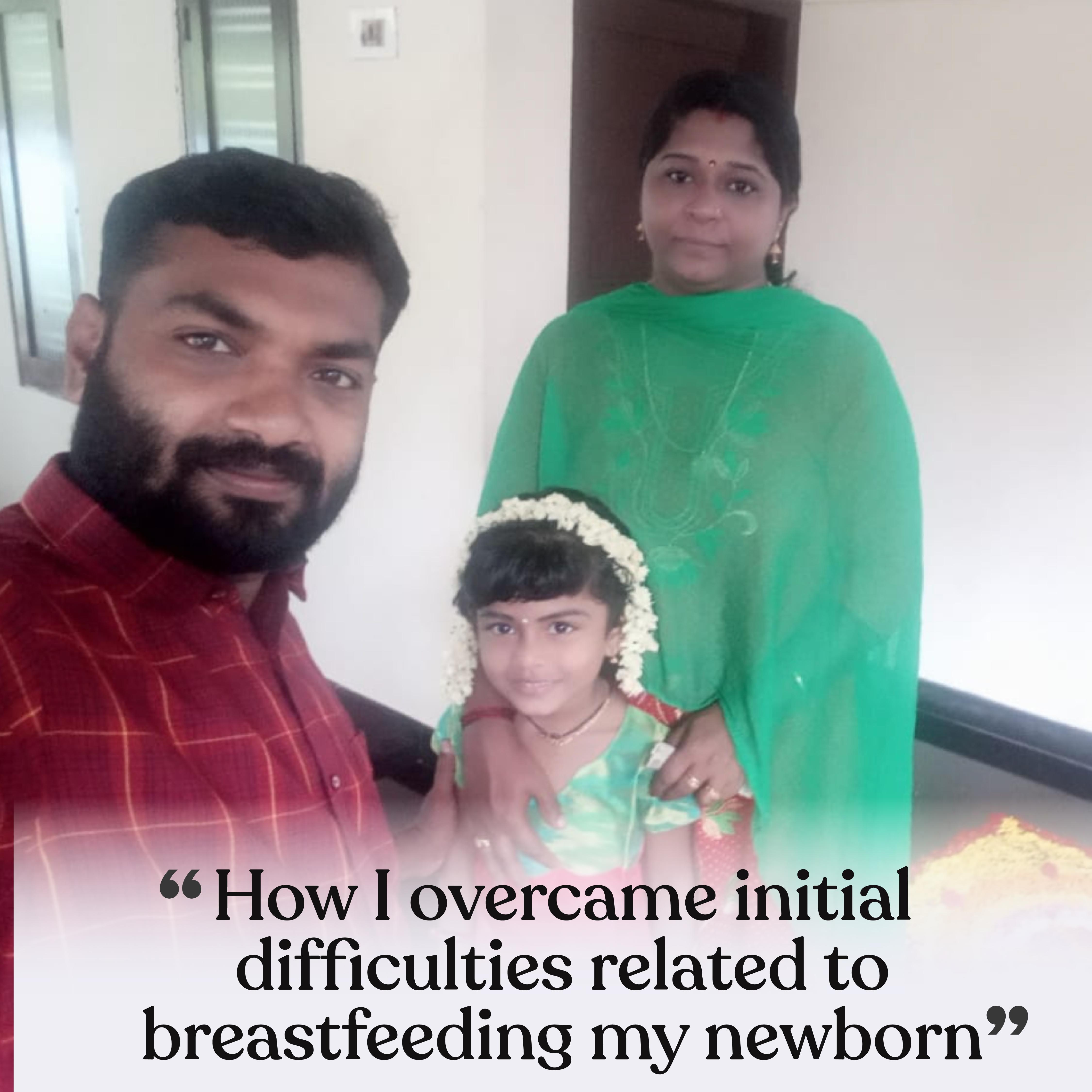
#1. When Radha Hit A Breastfeeding Roadblock
My pregnancy went off smoothly, but my struggles began when it was time for delivery. I endured two and a half days of labor pain, and toward the end, I was fatigued beyond imagination to deliver normally. Even at that moment, my heart went out to my just-to-be-born child. As the labor extended, the doctor discovered that my baby’s heart rate had slowed down. Everyone panicked, and I was immediately wheeled in for an emergency cesarean. My boy was born safely, but our ordeal was far from over. After delivery, doctors declared that the baby had swallowed meconium inside the womb, which combined with the slower heart rate, could be a cause for concern, so he had to be kept under observation for some time.
My heart dropped when I heard this because this meant my baby would miss the Golden Hour of breastfeeding. I had heard so much about it, and I was so determined to give him all the nutrients required for his growth and development—but that was not to be. I could finally feed my baby only after three hours of delivery. That’s how, with doctors, nurses, lactation specialist, nutritionist and my family milling around me, I started my breastfeeding journey from the hospital bed. But even though I was dead tired from the ordeal of delivery, I instantly connected with my child.
My doctor and lactation specialist shared tons of information with me at that time, but my tired brain was not able to process it. So, they gave me pamphlets to read about breastfeeding, and we came home. That was when I realized all the reading material, though fine, was quite bookish, and I had no one to actually show me how to hold my baby properly to feed him. And so my baby didn’t know how to latch properly, was not getting enough milk and was crying most of the time. I, on the other hand, had to deal with breast engorgement and pain—making it harder for me to feed him.
Soon, well-meaning advice began to pour in from everywhere—immediate family, distant relations, friends, even neighbors! Some asked me to start formula so that he doesn’t go hungry, others I’m sure were judging me. But I was determined to breastfeed my baby. Within days, I ensured the home environment was relaxed and comfortable for both me and my baby. I asked a lactation specialist to come home, and after she calmly explained all the myths around breastfeeding and told me how to help the baby latch on for a proper feed, things began to get better.
My son is one year and one month old now, and I have had an uneventful breastfeeding journey so far. But my initial experience made me realize that despite all the awareness and reading, most of us know little about the real deal of breastfeeding until we face the roadblocks. Here’s what I want to tell all the expectant mothers out there: If initially it does not go as you had dreamed up and looked forward to, don’t get dejected and give up. There is always a way around these things—and as the mother, you know what’s best for your child, so make those choices boldly.
– Radha R, Bengaluru
#2. What Shruthi Learned About Breastfeeding
“Is she breastfeeding her babies, or are they being bottle-fed?”
I heard an aunt (whom I probably met just five times in my entire adult life) ask my mother from the other end of the phone. My mother glanced at me before telling the aunt, “She’s breastfeeding the twins and topping up with formula.” “Oh!” the lady retorted. “I hope she’s getting enough milk!” At this point, worried that I might grab the phone and say something, my mom skillfully changed the topic.
But neither was that the first and only question of its kind that me and my family were asked, nor, I am sure, am I the only new mother to overhear such conversations. Most mothers would have dealt with such things at the start of their motherhood journey. For me, this short conversation provided a window to understanding how much pressure a woman faces to breastfeed her baby. I assume it’s tough for any mother, but for one with a 7-year-long fertility treatment journey like mine, it was so much more troubling. Long before this, even before we started the fertility treatment, I had begun to feel that I had to prove to the world that I could be a “mother.” And then, I was determined to ensure that my body could take care of the babies I needed help making. So, with my nipples bleeding, breast engorgement, leaking, pain and postpartum depression, I set out on a mission to feed my twins until they turn 1.
In the initial days, I had to nurse every two hours. And there were two of them, so I would feed one, drink some “milk-increasing concoctions” given to me by my mom, pump, and take a 15- to 20-minute nap before I had to nurse the other. This went on in an endless loop. During one of these pumping sessions, I felt so bad as I lay in bed with my breasts out in full view of the family members, who just didn’t seem to care for my privacy. Joking apart, that day I felt really bad for all the cows out there! In fact, had chocolate been made only of milk, I’d have vowed to give it up altogether at that moment! On the other hand, I had to be “milked,” and the prospect of someone fixing the pump on me and collecting the milk while I painfully tried to grab some extra minutes of sleep seemed relaxing at that point in time.
I soon started obsessing about the amount of milk I produced, and believe me, it was an unhealthy mental status. I wasn’t in the right headspace to enjoy my children’s company. I loved them, but all I could think about was increasing my milk supply. Here are all the things I tried to increase lactation:
- My Japa (skilled household help to look after the newborn and mother) made me ajwain water, makhana kheer, roasted almonds and gave me lots of milk to drink
- A friend suggested some health bars I could eat to increase lactation
- My mother-in-law got me some Ayurvedic supplements to drink multiple times a day
- Family members called me from everywhere to give me tips, and understanding their good intentions, I readily tried them all, at the cost of my mental peace and sanity!
At times like this, it’s important to have a strong support system, and luckily I had it. There are four people I’m ever so grateful for—my mom, sister, cousin (a fellow IVF mom and a doctor), and my husband. They assured me that I don’t need to put this pressure on myself and that my kids are healthy and will continue to be so even if I choose to solely feed them formula.
It took a lot of convincing, much support, conversations and cajoling, but finally, I did it! I stopped breastfeeding completely at four months. My kids didn’t seem to care and took to formula quite well. But I was mentally torn, teetering between being happy one minute and feeling guilty the next.
But today, 19 months later, I can tell all new mommies one thing: Your kids will thrive with formula too. So, if that’s the path you need to take, go for it. The bottom line is, breastfed or formula-fed, the child shouldn’t go hungry!
– Shruthi Pendyala, Bengaluru
#3. When Zahra Realized That Breastfeeding Is Complicated
Like many expectant mothers, I eagerly anticipated that special connection and its benefits to both my baby and me. I had always seen breastfeeding portrayed as a beautiful and natural experience, fostering a strong bond between mother and child, and I wanted to experience all of it. However, reality had other plans.
Shortly after giving birth, I encountered numerous challenges that made breastfeeding a difficult and frustrating journey. From latching issues and low milk supply to intense pain and exhaustion, each day became a constant battle. Despite seeking help from lactation consultants, attending support groups, and trying different techniques, breastfeeding remained an uphill struggle. I was so stressed, upset and guilty that it began impacting my mental and emotional well-being. I realized that the pressure to exclusively breastfeed was affecting my ability to bond with my baby, and continuing down this path could have long-term consequences for both of us.
And so, after careful consideration and discussions with healthcare professionals, I made the difficult decision to transition to alternative feeding methods. It was not a choice I took lightly, as I knew of the countless benefits of breastfeeding. I also faced criticism and judgment from many around me. However, the firm belief that I was doing what was best for my baby and myself kept me going.
Now, whenever I come across breastfeeding women, I understand their journey, and respect and support their choices without judgment. However, I always maintain that breastfeeding is the best source of nutrition and nourishment for a newborn. Breastfeeding should be celebrated and encouraged, and all myths and negativity around it should be done away with. It is nature’s way of helping a newborn thrive and there’s no question about it.
As we commemorate World Breastfeeding Week, even though I want us mothers to celebrate the diversity of feeding methods and empower mothers to make the best decisions for themselves and their babies, I want to let you all know that my experience with my firstborn hasn’t fazed my keenness to breastfeed my second child one bit. I’m pregnant again, and I’m hoping that by God’s grace, this time, my breastfeeding journey will be uneventful, and that I will be able to nurse my child for a long time. I’m so looking forward to that moment …
– Zahra Jani, Mumbai
#4. How A Lactation Consultant Supported Varsha’s Breastfeeding Journey
Though mine was a last-minute C-section delivery, my breastfeeding journey began as scheduled—within an hour of the child’s birth. So, the Golden Hour was done and I relaxed. However, the initial days at the hospital became quite challenging. I had issues with position and latch, and learned that I have flat or inverted nipples, and needed accessories to correct that and feed the baby successfully.
My mother and husband, Kiran, were my rock during this time, but some things left a permanent scar. For instance, throughout my life, I would carry the guilt of being forced by a hospital nurse to give formula to my two-day old baby. Thinking there must be some medical reason, I did that, but after feeding my baby formula, she insisted I shouldn’t tell the doctor! The nurses then went on to tell me that my milk wasn’t sufficient—a nurse would hold my breast and squeeze it so hard that the milk would be light orange in color, and I would cry in pain. But I bore all that for my baby, and then I learned to express my milk and give it to my son with a spoon.
Once home, my cousin offered to lend me her electric breast pump. I continued to express and feed my son, as I had a nipple problem. But I always wondered if breastfeeding alone was enough for him. Then one night my baby just cried and never slept, so we rushed him to a hospital and the senior nurse there asked me if my small breasts produced sufficient milk for my baby. “Give him formula 2–3 times a day,” she advised. When I said, “But my breasts are engorged,” the nurse bluntly replied, “Don’t starve your baby.”
I was heartbroken, but forced myself to give him formula once a day for the next two days, when the time for our scheduled visit to the pediatrician came up. My boy’s weight was correct, and when I asked the doctor if that was because I had fed him formula twice, the doctor said no, the baby was born healthy. He also said I could continue breastfeeding without formula—I was elated!
When my son began to regularly breastfeed, I developed sore nipples. I was then advised to meet a lactation specialist, and it was after a consultation with her that breastfeeding became such a pleasure for me. After just two sessions, all the pain was forgotten, and my baby and I were fine. After one such session, the specialist asked me if I’d like to become a lactation counselor. I thought about all that I had gone through for a week, and said yes!
Things were fine for the next seven months, but then, due to some financial issues, I had to take up a job. I was about to become an LLLI (La Leche League International) leader. But once I started working, I started my lactation practice part-time. I also got trained by the BPNI (Breastfeeding Promotion Network of India) through their Infant and Young Child Feeding Counseling Specialist program. After I received the certificate, I formally started my journey as a full-time lactation counselor.
I realized I was also growing along with my son. And as a specialist, I regularly used a breast pump and donated to a breast milk bank, but never used it for my son. I pumped milk only for donating purposes, as I was a regular breast milk donor. For our son’s first birthday, we had gone to Tirupati, when he wanted to be fed—poor child, he cried his lungs out, as there was no such facility there at that time.
Over the years, whenever we went out, Kiran and I had a family code—whenever Drona (my son) wanted to breastfeed, he’d go to his dad and take him to the car parking area. Kiran would make things ready and then call me. In fact, as days went by and my son grew, breastfeeding turned out to be a great supporting technique in parenting. Years passed and he had stopped asking to be nursed. I thought he had weaned off when all of a sudden, he came to me. He was looking for some emotional support—he had lost his tooth the previous night. When COVID-19 hit the world, I would like to think that breastfeeding kept our child emotionally secure and the three of us safe.
It was only toward the start of 2022, that I have had no demand for breastfeeding, and I think that finally, at 7 years and 10 months, my son has finally weaned off breastfeeding!
– Varsha Satyan, Chennai
Benefits Of Breastfeeding Until Natural Weaning1. The child continues to get immunity and antibodies that will keep them fairly free from common ailments 2. The child will receive emotional support and will feel secure and comforted 3. The child will gain more self-confidence since they are emotionally and physically in a happy space |
Never Ever# Use a nipple puller or syringe to pull out your nipples. When a baby suckles, the nipple will automatically come out. # Use a hot water bottle/bag for warm compress for breast engorgement. (*see the tips below) # Use a breast pump (manual/electric) to check your milk supply. Pumping output is only based on the suction capacity of the pump used, and the pump is not a device to measure the mother’s breast milk quantity. # Wear a feeding bra and feeding dress. Lack of skin-to-skin creates a gap between mother and baby. It also reduces the grip of the mother’s hold on the baby. |
*Quick Tips To Ease Breast Engorgement
|
Also Read: Breastfeeding Articles

























Comments
Edit
Comment Flag
Cancel Update