
5 Ways to unlock the benefits of teaching children their mother tongue
Sarika Chuni
Fluency in the mother tongue helps a child develop broad literacy skills and an appreciation of cultural values.
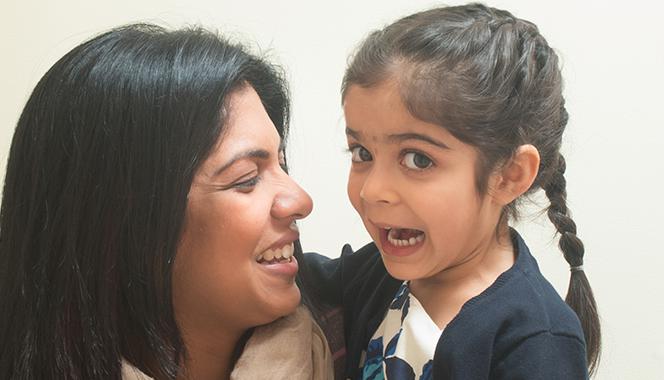
"If you talk to a man in a language he understands, that goes to his head. If you talk to him in his language, that goes to his heart" - Nelson Mandela, South African anti-apartheid revolutionary and political leader
A child's mother tongue is the first language he learns, and it comes as naturally to him as walking. Mother tongue does not simply mean the language spoken by the mother, but the language that is spoken by the child's caretakers and sometimes, even the community.
According to the Second Language Literacy Instruction - A Position Statement of the International Reading Association published in 2001, 'Literacy learning is easiest when schools provide initial literacy instruction in a child's home language. Such instruction is consistent with building on children's strengths and with connecting unfamiliar material to the familiar to maximize learning efficiency. Literacy skills developed in the home language can then be applied to learning to read and write in a second language, which results in students who have become literate and gained proficiency in two (or perhaps more) languages.'
From an Indian context, learning the mother tongue becomes even more helpful, since a majority of Indian regional languages, including Hindi, are phonologically transparent. This means that the words are pronounced exactly the way in which they are written. This is different from English, which is a comparatively opaque language.
A strong base in the mother tongue equips a child with phonological skills that helps him master reading and writing through phonological decoding and encoding in other languages. This is possible because the child acquires the spoken language organically and can easily relate to the sounds of the spoken language with the written alphabet.
When children learn a concept in their mother tongue, they don't have to spend time or thought on first acquiring proficiency in the language the concept is taught in. They are able to utilize their cognition for critical thinking and higher-order learning. These skills are especially helpful to them in formal education, where they find it easier to interpret their learning in a second language.
Learning the language of the community is not only imperative for social integration but also helps develop a strong sense of belonging and builds self-confidence.
Several developing and multi-lingual countries in Africa and East Asia have adopted the bilingual model of teaching in their schools with a successful impact on academic performance.
India, however, still hasn't been able to achieve the fine balance between encouraging literacy of both the first language - the mother tongue, and the second language - English. Children face difficulties in reading and writing English because their basic phonological awareness has not been enhanced through building proficiency in their mother tongue.
Therefore, it is important that parents encourage their children to speak, read and write in their mother tongue as it helps build neurological pathways that aid linguistic growth in later years.
Parents can aid mother-tongue literacy in the following ways:
- Early and consistent exposure - Since the mother tongue is the first language of your child, the easiest way to get him started on his learning is by freely speaking your native language around him at home.
- Cultural folk tales - Narrating cultural folk tales and mythological stories in your mother tongue not only develops your child's oral and vocabulary skills but also inculcates cultural values in her. Traditionally, this role was taken by the grandparents. However, with an increasing number of nuclear households, parents need to make an effort to fill this gap in their child's life by telling them stories.
- Reading material - Providing children access to reading material in their mother tongue is also essential for developing their reading and writing skills. It is important that your child has access to this material even when he isn't being actively taught reading and writing. Mere visual exposure to the print language helps him form an intuitive relationship between the spoken and written language. A variety of children's magazines, comics, and storybooks can be used for this purpose.
- Audio-visual content - Watching TV serials or cartoons in your native language and exposing your child to music in your mother tongue not only builds her vocabulary but also gives her an idea of the ways in which different messages can be conveyed using one language like voice modulation, tonality, and pronunciation. The audio-visual content must thus be simple and give exposure to the language's vocabulary.
- Creative expression - Because of the insistence on learning English, children are often discouraged from expressing their thoughts and ideas in their mother tongue. Such initial stifling of their creative output manifests as a mental block later on in their scholastic life. Encouraging your child to employ her native language for spoken or written creative expression is extremely important. Not only does this build her reading and writing skills, but it also helps in improving her critical thinking skills. Getting children to narrate or write little poems or stories or encouraging them to participate in dramatic activities in their mother tongue are all different ways in which effective learning can be achieved.
It is also important that you, as parents, feel proud of your native language. Children will always perceive and assimilate the love and respect you have for your mother tongue and carry the knowledge forward in their adult life.
























Comments
Edit
Comment Flag
Cancel Update