
How to Help Your Teen Cope With Cyberbullying. Here Are Some Useful Tips
Dr Debarati Halder
Whatsapp, Facebook and Instagram are the main reasons why teens want smartphones. While these have advantages, parents should ensure children don't become victims of revenge porn or online harassment

Smartphones are the 'most wanted' gift by teenagers. They want to use them to chat with friends, share photographs and update their circles about themselves. To do this, they install messaging apps like Whatsapp and open accounts with Facebook and Instagram. They want their parents to give them 'digital privacy'. Our teenagers can indeed teach us a lot about these apps and their uses. I know of youngsters who have taught their grandparents the magic of the Internet. Some have picked up wonderful craft ideas from YouTube, while others have created groups to chat as well as study together virtually. And, a few have created useful apps themselves. But, it's not all good, always. Tech-savvy children are not immune to cybercriminals. They can be easy victims of several sorts of online offenses and harassment. Cyberbullying is too common a problem.
Chat messages, emails and objectionable photographs are often posted in the public domain to, in some cases, irreparably, damage the reputation of the adversary.
As a result, it is important for children to know what they can and can't share with their peers in the digital world to prevent themselves from landing in trouble.
Forms of cyberbullying
Teenagers are prone to posting comments about others in anger, or with the intention of teasing, which can make the target feel hurt, insulted, annoyed, angry, or threatened. A child may be victimized by a whole group of 'friends' or classmates for issues ranging from body shape to style of dressing, from academic performance to food habits, and also for his own social media updates.
Vulnerable children
Are all children prone to fall victim to cyberbullying? No. The situation is the same as in other kinds of bullying. Some children are mentally strong and positive. But, some may be more vulnerable than others due to various reasons. Children with low self-esteem and those who are physically handicapped, from disturbed families, or suffering from broken relationships are the most susceptible. Such children may present a happy front, even teasing others, but that doesn't mean they can withstand bullying. They may not be able to take criticism, they may feel deeply hurt when teased or be completely broken when their friends (including virtual friends) remove them from Web groups.
Symptoms to watch for in your teen
- Being angry, insulted, or hurt
- Exhibiting signs of depression
- Becoming withdrawn
- Being unusually short-tempered
- Most significantly, getting extremely angry if a parent tries to access the mobile phone
'Irrational' coping mechanisms
If your child is a victim of cyberbullying, you need to be aware of the various ways in which they may respond to the problem. You must be aware that they may even hit back virtually.
A research paper titled, 'Irrational Coping Theory and Positive Criminology: A Framework to Protect Victims of Cyber Crime', was co-authored by me and Jaisankar K. It was published in the book Positive Criminology (2015) edited by N Ronel and D Segev. In this paper, I built up an 'irrational coping theory' and documented observations of the online behavior of cybercrime victims, including victims of bullying, stalking, etc. Here are some things I found:
- Victims may counter-bullying by writing extremely offensive posts about the bully or creating fake avatars of the bully
- They may go to the extent of hacking the bully's account
- In certain cases, the victim may take an extreme step like attempting or committing suicide or trying to physically hurt the bully
I call such reactions 'irrational' because these may lead to the escalation of the problem for the victim and turn him into a perpetrator himself.
How parents can help
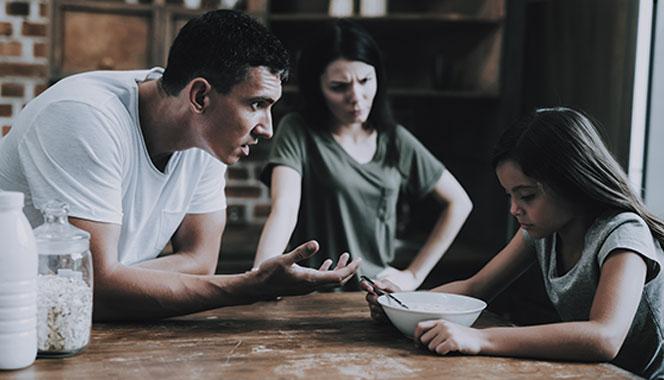
- Be a friend and not a frenemy. Teenagers will not easily open up about problems in their cyber world. If you notice symptoms that indicate your child is being cyberbullied, do not scold them for giving room for bullying. Instead, you can tell them how you yourself were bullied as a child. Once your teenager knows that you have gone through a similar experience, they may confide in you about their problems. Discuss the experience with them, and try to understand what they are going through.
- Teach your child to take criticism positively. This will make the child mentally strong. They will be able to cope better with bullying which involves pointing out shortcomings in a hurtful way.
- Train your child not to retaliate violently or negatively to cyberbullying. They should never be encouraged to take up any negative mechanism like writing back to the bully, creating fake avatars of the bully, or generating hatred for the bully in public. Guide them instead to turn the negative energy generated by bullying into a positive force. Encourage them to draw the pain or write about it. Help them make a promise to themselves not to follow the bully's example.
- Make sure yours is a close-knit family. This will be a big help. Sharing and caring within a family unit releases tensions and heals pain faster. Family members must extend complete support to the teenager irrespective of whether they understand what cyberspace is and how cyberbullying can take place.
- Let your child enjoy their digital privacy under your care and guidance. Do not discourage them from using the Internet, as this may backfire. Help them learn from her experience of cyberbullying.
Some positive coping mechanisms
- Guide the child and help them ignore the bully and block him out.
- Help them report harassment to the Web platforms where the harassment has taken place.
- Encourage them to build a positive circle of chosen and trusted friends - ideally, the parent should be a part of that group, not forcefully, but because the teenager's confidence has been won.
- Facilitate the child to consult a counselor about how to cope with bullying positively.
- Encourage the child to think about starting a group to support other victims of bullying and help them cope in a positive way.
Dr Debarati Halder is the Honorary Managing Director of the Centre for Cyber Victim Counselling (www.cybervictims.org). She is also working as Professor & Head of the Department of Research, Unitedworld School of Law, Karnavati University, Gandhinagar, Gujarat. She can be reached at ccvcindia@gmail.com
Discover our health and safety program for pre-primary children at The Dot Learning Circle, designed specifically for LKG and UKG students. We focus on building children’s awareness of safety protocols in different situations, understanding personal space and safety, and the importance of getting help when needed. Our engaging curriculum ensures young children learn essential safety skills.





























Comments
Edit
Comment Flag
Cancel Update