
How to approach conversations about loss of loved ones with children
Sonali Khan
Sonali Khan is a ParentCircle Author has knowledge about parenting.
The death of a beloved grandparent or parent can be a traumatic experience for children. Although we may not be able to prevent it, we can help our children cope with grief in a healthy way.
The last two years have not been very kind to those who lost their loved ones suddenly to the pandemic, amidst all the chaos and uncertainty. The fact is, it’s never possible for someone to be fully prepared for the death of a loved one. While adults find it tough to cope with loss, it’s even tougher for children, as they may not equate death with permanent loss.
Talking to your child about loss and grief can be challenging because as a parent you always want to protect your little one from complicated, painful situations. But the absence of a beloved grandmother or parent can cause confusion, sadness or anxiety in your child. Besides, they may have tons of questions to ask you. This is why no matter how “normal” your child seems despite the tragedy, it’s best to talk to them and find out what’s going on in their mind. In such situations, the best way to support your child is to allow them to express their feelings and to reassure them about your safety and that of other surviving family members.
Here’s how you can help children heal and move forward in their lives without fear while also helping them honor the memory of their loved ones.
How to answer the question ‘What happened?’
There’s no easy way to talk to children about death. However, it’s important to explain it to them in an honest and sensitive manner. You can talk to them in a quiet place, to help them feel safe and calm. Talking to your child can help create an open, comforting environment that allows them to ask questions and also express their thoughts and feelings.
You can begin by talking about what death is. For example, you can say, “When a person dies, it means that their body stops working. The heart stops beating, and the body stops moving, eating, and breathing.”
As young children may not realize that death is permanent, they’ll ask questions like, “When will Nani be back?” or “I want to show Papa this drawing I made.” You may think that saying “She has gone to a place far away” or “He has gone into a long sleep” is gentler, but these explanations can also confuse young children, who often think literally. They may think that looking for the “lost” loved one can bring them back. So, reaffirm the facts gently and reassert that the loved ones they lost don’t have a way of coming back.
Reassure your worried child
Children go through big waves of emotions when something as traumatic as death happens in their lives. They may experience intense anger, sadness, frustration or anxiety. Some of them may build a story around the incident and believe that it might have happened because of a certain reason. They may have difficulty separating the facts from their imagination, which may lead them to derive inaccurate conclusions.
For instance, they may blame themselves for a close one’s death thinking, “If only I had listened to Papa that day, he would not have died.” This could create a feeling of guilt, and even make the child think that they could bring the deceased back by being on their best behavior. Remind them that they were not responsible in any way for the death of the person, and that nothing can be done to reverse the loss.
Also, it’s natural for children to feel angry or disappointed with the family member they lost, for leaving them alone. To help children cope, allow them to express their feelings, so that they know it’s okay to feel sad. You can say, “I know you’re upset that Mom is no more. I feel upset too.”
Children may also develop a strong fear about their own safety or that of the surviving parent and other family members. Address their fear and let them know that you’ll be there to take care of them. For example, you can say, “No one can promise that one won’t die, but we can take care of ourselves by staying healthy and strong. I expect us to be together for a long time.”
It’s okay to ask for help
Grief is a very complex emotion that is not easy for children to cope with. Sometimes their responses can be harsh when they are trying to cope with the death of a loved one. Some children may have nightmares or scary thoughts, in general or about the way their loved one died, and they might stop talking about the deceased person completely. Some children may also have trouble sleeping, have poor concentration, show irritability, or develop new fears. If such behavioral patterns persist and occur to a degree that concerns you, then it’s best to seek professional help.
Moving forward
It may not be possible to be fully prepared to handle your emotions and the child’s, but with time it will get easier. Remind children that while change is difficult for everyone, you will be around to help them get through the challenges along the way. As children grow older, they may develop their own views, so it’s important that you give them all the information they need so that they don’t assume things. Remember that while things might not be the same anymore, maintaining a schedule can help children overcome the challenges they face during difficult times.
It’s also important to reminisce the memories children shared with the person they lost. Along with your child, cook and dedicate the person’s favorite meal, paying homage to them. Or look at pictures of the time your child spent with them, or talk about the happy memories they shared together.
Remember, grieving is a slow process that takes time. While feelings attached with the loss of a loved one may never completely go away, the pain may become easier to endure with time. At some point, you may notice that you and your family are taking “grief breaks”—moments when you forget your grief. Slowly, new stories will begin to take shape through your family’s ups and downs. Remember to give yourself and your children permission to feel happy again. Be assured that the memory of your loved one will live on in the hearts of your family.
About the author:
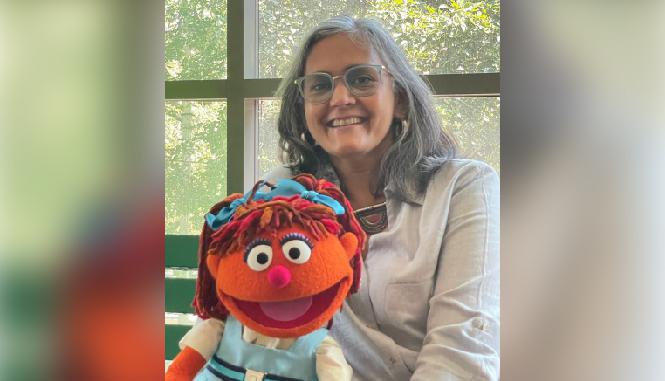
Sonali Khan is Managing Director at Sesame Workshop India. To view her profile, click here





























Comments
Ashwin Dewan Sep 5, 2022
Such an insightful article that deals with a sensitive topic in a graceful manner. Kudos to the author.
TheFunnyindia Sep 5, 2022
When kids are depressed it is very hard for someone to know what's going on in their minds... Thanks for sharing..
Thanks guys for sharing. It is really very hard to convey such message to kids, when they are too attached to someone who is lost.
Jyothi Prabhakar Sep 5, 2022
A very useful article for every parent. Thanks for this
Edit
Comment Flag
Cancel Update