
Supporting Your Child's Mental Well-being: Essential Strategies For Reducing Stress
Divya Ramesh
author parentcircle author parentcircle author parentcircle author parentcircle author parentcircle author parentcircle author parentcircle author parentcircle author parentcircle author parentcircle
What can you do to minimise your child's stress and keep them happy during this unprecedented crisis?
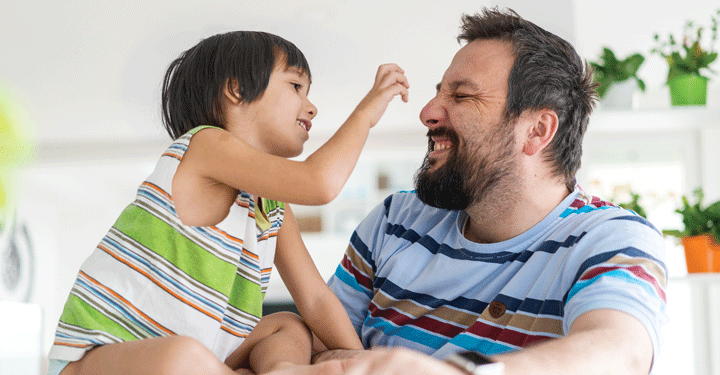
School closures, no social interactions, boredom, fear of infection, and emerging research shows that the pandemic is taking a heavy toll on children's mental health. With World Mental Health Day (10 October) coming up, let's look at how you can put the bright smile back on your child's face.
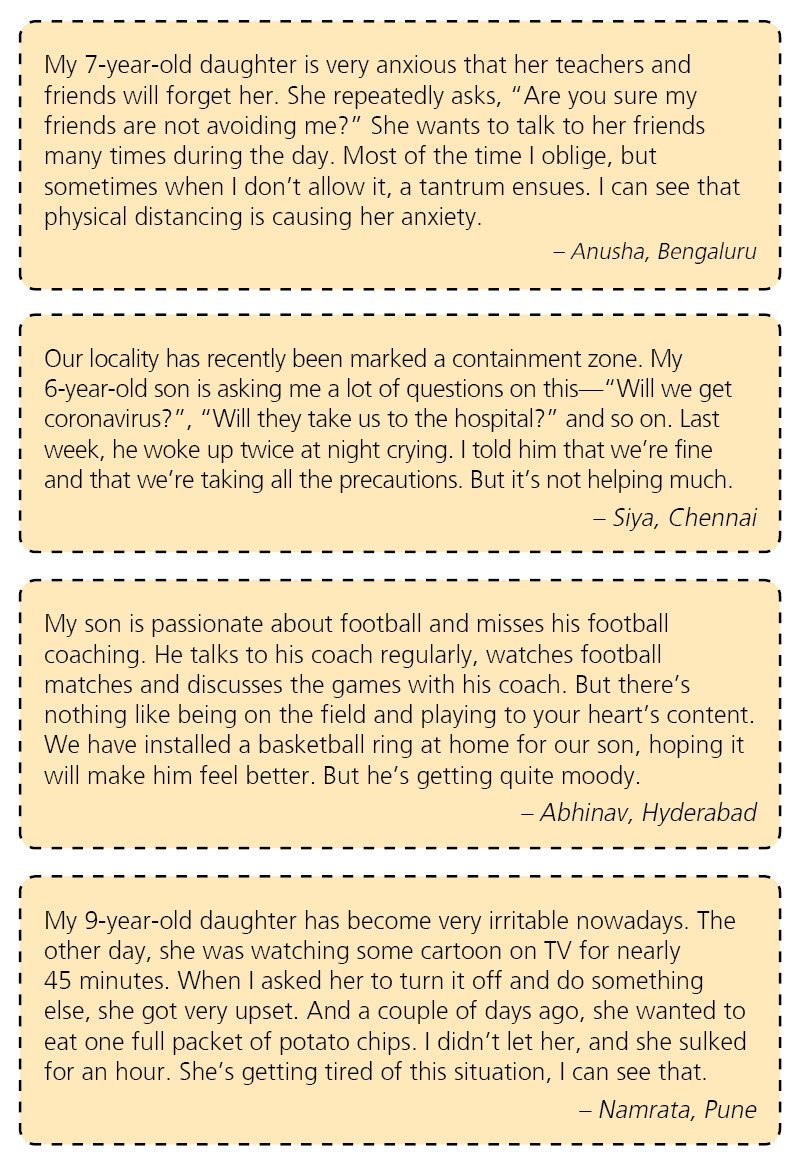
First, let's hear from some parents on what's troubling their children.
Parent Speak
Sigh! Times are tough for everyone. But there are things you can do to keep your child happy. That's not all. You can even use this pandemic as an opportunity to build resilience and a positive outlook in your child.
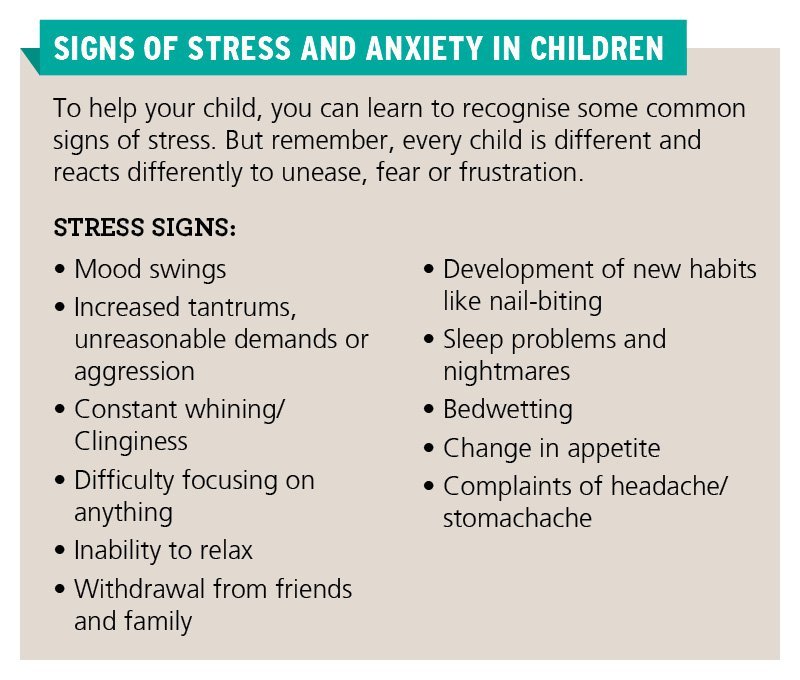
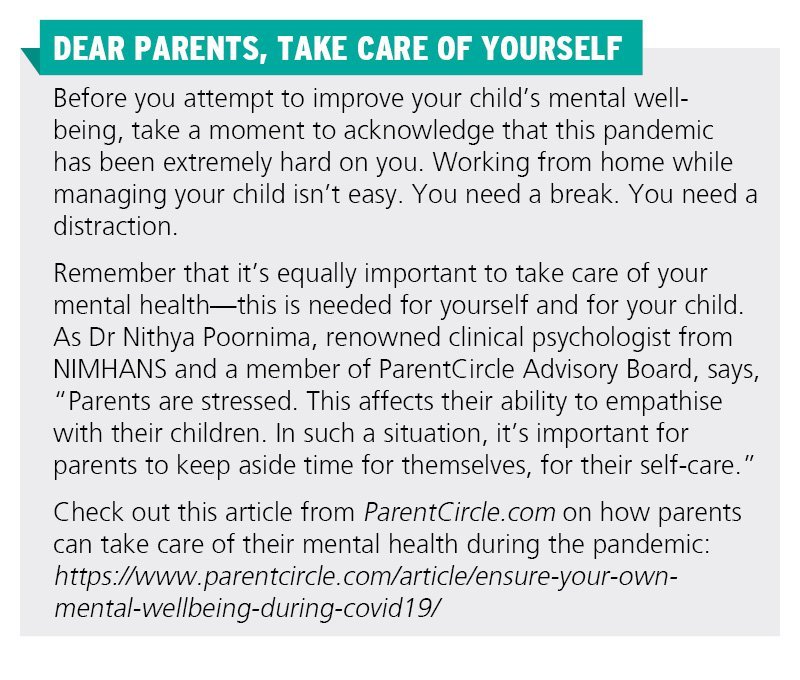
Expert Take
From anxiety about the pandemic to frustration over being cooped up inside, children are facing multiple challenges. Dr Poornima has shared some general guidelines for parents on how these challenges can be approached. As each child is unique and is in a different situation, use the relevant guidelines to help find the best solution to your problem.
Managing your child's frustration
- First, acknowledge that this is a very unusual and exasperating situation for your child (and for all of us!).
- Have an open, friendly conversation with your child and discuss what's bothering them. Start by talking about your feelings.
- Help your child learn safe ways to get the frustration out, for example, let them scribble wildly on a sheet of newspaper or act like little lions, etc.
- Once the pent-up frustration is out, see what you can do to keep your child's frustration to a minimum. Exasperated with their daily routine? How about a new activity every day for about 20 minutes? That would be something new to look forward to. Try dancing or baking something delicious together. Is your child fed up with being inside the house all day? Take them to the park early in the morning when it isn't teeming with people. Or drive along the beach for some fresh air.
Helping your child deal with social distancing
- Help your child accept that there has been a change. (Often, many of us are in denial and we keep trying to replicate old routines.) It also helps to remember that everyone (including your child's friends, teachers and cousins) is in this together.
- Once your child has accepted the situation, sit down to discuss how best you can tackle the problem. Example: Let's suppose your child is missing their music lessons. First, talk to them and find out what exactly they miss: Their friends? Their music teacher? Music? The thrill of singing in front of others? Once you have established what they enjoy about their music classes, let them dedicate some time to it. For instance, if they miss singing in front of their friends, try organising a weekly online video call, where all the children can participate and display their singing talent.
- And last but not least, help your child keep in touch with their friends virtually.
Helping your child cope with anxiety
Your child may worry about themselves or their parents, or grandparents, contracting the virus. And this is a valid fear, given the current state of the pandemic in our country. Here's how you can deal with their fears:
- Don't brush aside their worries. Instead, acknowledge their fears. If you simply say, "There's nothing to worry about," it will only aggravate their worries.
- Calmly reassure your child and make sure you keep your anxiety in check while talking to them. You can say, "I know you're worried. But we're taking all the necessary precautions. Also, COVID-19 infection is mild for most people, and most of them have recovered from the infection. Hopefully, a vaccine will be developed in some time and the situation will get better."
- You can also make pandemic talk engaging for your child by creating a story about the virus. Play is a great way for them to express their concerns, ask questions and relieve their stress. So encourage him to pretend-play various scenarios.
- Give your child age-appropriate information and turn the TV news off when they are around.
Handling your child's overeating habit
Research has shown that people who are bored often tend to eat more. If your child has fallen into the boredom eating trap, you can take these steps:
- Buy fewer junk foods. A blanket ban on junk food may not work, so limit their intake of fries and pastries.
- Children love munching on spicy and crunchy snacks. So think of alternatives, maybe crispy chickpeas or baked veggie chips?
- Discuss with your child and decide which days of the week a little bit of junk food can be allowed.
- Set up an alarm to remind them that they have had enough junk food for the day.
- Praise them when they don't ask for more junk food than agreed.
- Talk to them and make them understand the ill effects of overeating. And if they love to munch and watch TV (which is usually very common), help them realise that at least one activity that they are doing is mindless.
Supporting your teen through the crisis
- Adolescents love freedom, and friends have a unique place in their lives. Regardless of how much parents try, they cannot take the special place reserved for friends. Allow your child to use technology optimally to connect with their friends. (Keep an eye from the sidelines to ensure they follow all online safety protocols.)
- You can encourage your teen to watch a movie simultaneously with their friends and connect over the phone. It may not replace the fun and joy of sitting together and catching a movie over a big tub of popcorn, but given the situation, this can be a good option.
- Many fun games, including dumb charades and a quiz, can be played virtually. Talk to your teen and agree on a time limit for these online games, and let them enjoy with their friends!
- The pandemic is a great opportunity for parents and teens to form fresh bonds. If you feel your teen is not comfortable spending too much time with you or talking about their life to you, you can start in a small way. For example, you can organise a game or a movie night once a week. Or redecorate a small portion of your house, or read a short story together and have a discussion on it.
Building resilience in your child
The pandemic has cast a pall of gloom on all of us, but every cloud has a silver lining. If there's one positive emerging out of this crisis, it's the opportunity this pandemic has created for us to reinvent ourselves! Dr Poornima considers the pandemic the largest practical lesson that teaches how to take things as they come. That's an indisputable statement. This pandemic is a great chance for you to build resilience in your child.
But first, what is resilience? It's the ability to bounce back from challenges and failures. Setbacks shake some people, while others learn to adapt quickly. Here's how you can make your child emotionally strong:
Love with no strings attached: Being loved by parents is the most important factor in building resilience in children. Let your child know that you love them, irrespective of their abilities or achievements. Hug your child, notice your child's efforts, praise them, give them your undivided attention and spend time playing or reading together. Rina, a mother of a 3-year-old, says, "I show my love for my daughter in the most obvious way, by saying I love you to them at least 10 times in a day."
Have open conversations: Talk to your child regularly about their friends, relationships, feelings, and fears. Listen without judgment, and share your feelings too. Give your child the freedom to come and talk to you about anything under the sun.
Show empathy: When your child is worried, scared or angry, don't belittle or ignore their feelings. Comfort them and assure them that you are there to support them. You could say: "It must be so hard for you to be away from your friends. Let's see how we can make you feel better."
Help with self-regulation: If your child can manage their emotions, they'll be able to cope with challenges better.
- Help your child name their emotions. For example, when they are angry, you could say: "Are you upset because you can't go to the park?"
- Praise your child when they manage to keep their emotions in check: "I loved how you patiently waited for my meeting to end."
- Try to be a good role model and keep calm in tough situations.
- Ragini, a mother of a toddler, says, "I try to prepare my child for challenging situations, and that helps them react calmly in most situations. For example, when it's near dinnertime, I say, 'You can play for five more minutes, then you need to sit down for dinner,' and that helps."
Encourage problem solving and decision making:
- Involve your child in daily decisions, what to cook or how to organise the wardrobe.
- Assign small responsibilities to your child and praise them when they do a good job.
- Encourage them to find more than one solution to any problem. Kevin, a father of a 6-year-old, says, "When my child complains of boredom, I ask her to think of at least three ways she can beat boredom. She comes up with some options, and then we pick the best activity."
- Don't rush to provide solutions to your child's problems. If they are having difficulty finding a way out, you could say: "Come, let's problem-solve together. Let's think of new ways to have fun."
Support in dealing with setbacks:
- Allow your child to make mistakes and let them know that everyone bungles.
- Share inspiring stories of famous personalities (e.g., Ratan Tata, Shah Rukh Khan or JK Rowling) who faced big failures before making it big.
- You can encourage your child to use this time to try out new things, maybe a new kind of painting or a new dish. And if the result is a mess, that is okay!
- When your child fails in a competition or test, don't shame them or make fun of them. Encourage them to explore what went wrong and focus on the next step.
Nurture a positive mindset:
- Encourage your child to start every day with a positive thought. They can even write it down in some place.
- Dharini, a mother of a 10-year-old, says, "I have asked my daughter to list down all the positive things in her life, our weekend movie time together, technology making it possible for her to connect with her friends during this pandemic, and so on. She has pinned this list on her desk. When she feels low, I ask her to quickly scan this list."
- Encourage your child to try to turn negative thoughts into positive ones. For example, instead of 'I haven't seen my friends since March,' it can be, 'I have been virtually connecting with my friends since March and will meet them as soon as the pandemic ends.'
Support healthy relationships: Knowing that others value them will go a long way in increasing your child's confidence and self-esteem. Help your child build supportive relationships. When the family relationships are filled with kindness, care, and gratitude, your child will show more support and understanding in their friendships. You can also encourage them to take part in team activities (virtually for now).
Do check out this comprehensive article on how you can build resilience in your child: https://www.parentcircle.com/covid-19-building-resilience-in-children-during-lock-down/article

The pandemic is turning out to be trying, no doubt. But with some effort, you can keep your child unruffled and cheerful. Along with all the points discussed, ensure your child eats and sleeps well.






























Comments
Edit
Comment Flag
Cancel Update