
The Benefits of Capsule Endoscopy
Tasneem Sariya
Are you suffering from unexplained bleeding in your digestive tract? Tried various methods and ways to find the cause but failed to? In this and similar other cases, capsule endoscopy might help
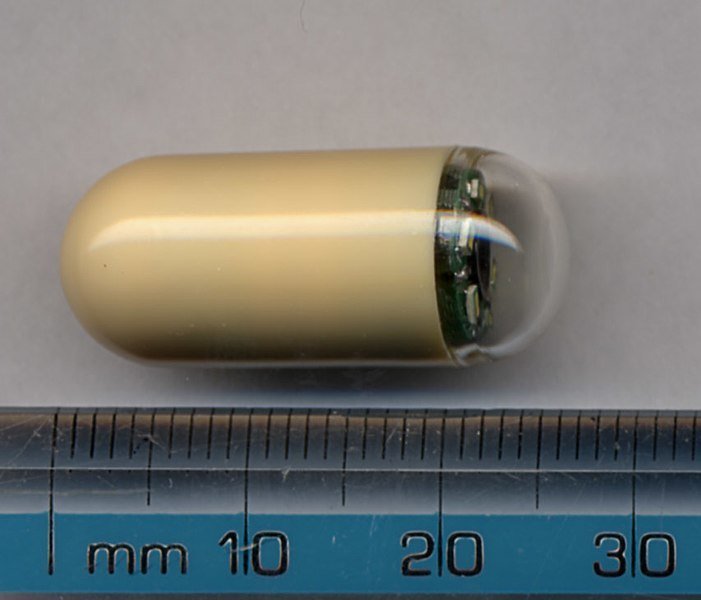
Capsule Endoscopy: Know what it is
Capsule Endoscopy is the procedure that entails the swallowing of a tiny size capsule which contains a camera. The camera from within the capsule takes pictures of the gastrointestinal tract and transmits it to the recorder on the patient's body. The images help doctors diagnose and treat a multiple of intestinal diseases and disorders.
Capsule Endoscopy is becoming increasingly popular since it can allow doctors to see parts of the patient's smaller intestine which could not be tracked earlier by the conventional methods of colonoscopy or EGD (esophagogastroduodenoscopy). EGD or traditional endoscopy is when a long tube with a camera at one end is inserted through the throat or rectum.
Capsule Endoscopy: Why and how is it done?
When you want to visualize the intestine, the upper intestine, food pipe, stomach and a small part of the intestine can be seen using an endoscope from the top end, whereas the large intestine can be seen from a colonoscope which is from the bottom end. But it still leaves about 20 feet of the small intestine that we cannot explore because the endoscope doesn't reach there. So the idea of capsule endoscopy is that you swallow a capsule that contains a camera and the patient wears a belt with a recording device on it, and the next day morning the patient passes the capsule in his stool. All this time the camera in the capsule is transmitting images of the intestine to the recorder. So it is extremely good for the diagnosis of all small intestinal illness.
Benefits of Capsule Endoscopy
- The entire small intestine and lining can be viewed through images. That capsule endoscopy is the only way to view parts of the small intestine that could not be earlier seen by doctors using other endoscopy methods, speaks about its growing influence in the medical world. Illnesses related to the small intestine can be viewed only through capsule endoscopy.
- There is negligible to the non-existent risk involved in the process. The procedure involves no risks and has no side effects, unlike traditional endoscopy where a sore throat was highly common. There are no risks unless there is a narrowing of the intestine, which causes a blockage.
- The procedure is relatively painless. The patient undergoes no form of pain during or after the procedure. It just requires the patient to swallow the capsule which passes off in the stool the following day. Moreover, it does not require anaesthesia or the patient to be admitted to the hospital.
- Easy and hassle-free approach. Capsule endoscopy is as simple as swallowing the pill and wearing the recorder belt for some hours.
- The endoscopes do not reach that area and a CT scan does not look at the lining of the intestine. The scans will only tell if it is cancer or a narrowing of the intestines, but it will not look at the lining. Many diseases are due to the lining of the intestines being abnormal, like an ulcer or a bleeding, or an infection or enteritis and there is no way of detecting it except through capsule endoscopy.
Note: The only people who we can't do this in are those who have a narrowing of the intestines or a blockage in the intestine. In case of a narrowing in the intestine or blockage, there are chances of the capsule getting stuck.
Drawbacks of capsule endoscopy
It is relatively expensive. It costs somewhere between 40000 to 60000 rupees making the high cost a deterrent. All the capsules are imported and are made in either Israel or China. No local manufacturer makes them. So the only problem may be the cost. Otherwise, there is zero risk unless there is a narrowing of the intestine.
Why is the monitoring device attached to the patient?
The capsule has the camera which by wireless transmits the images to the recorder. So if the recorder is in the doctor's office and patient 10km away the wireless signal won't work. It's a small 3-inch device that we put as a belt on the patient and he spends the whole day with that.
Can the procedure be used on children?
It is not for children below 12 years because the capsule is fairly large, about two and a half centimetres and it may get stuck in the intestine. So currently, it is being used only on adults.
Hence, capsule endoscopy is definitely a significant feather added in the cap of efficient and harmless procedures in the medical field. It is a worthy combination of technology and medical sciences to help gain information to diagnose and treat patients.
With inputs from to Dr. Roy Patankar, Director and Gastroenterologist, of Zen Multispeciality Hospital, Chennai.
Hope you liked this article. To get expert tips and read interesting articles on a wide variety of parenting topics, Subscribe Now to our magazine.


























Comments
which year this was published?
Edit
Comment Flag
Cancel Update