
The importance of grandparent-grandchild bond
Team ParentCircle

Noted American writer Alex Haley said, "Nobody can do for little children what grandparents do. Grandparents sort of sprinkle stardust over the lives of little children." How true! There couldn't be anything in the world that is so blissful as the love and affection shared by grandparents and grandchildren.
This bond, as research indicates, is truly beneficial to both grandparents and grandchildren in many ways. An article by Ami Albernaz titled, 'Close grandparent-grandchild relationships have healthy benefits', published in the bostonglobe.com, throws light on the importance of this bond. According to the article, "For grandparents, relationships with grandchildren provide connection with a much younger generation and exposure to different ideas, which might otherwise be limited. For grandkids, grandparents can offer life wisdom that they can put into practice as they navigate young adulthood."
Because of their slow pace of life, grandparents have enough time to devote to their grandchildren. This helps them connect with their grandchildren in a better way and make them feel special.
Although it's impossible to talk in detail about the many positives of having grandparents, our ClipBook brings to you a few important ones.
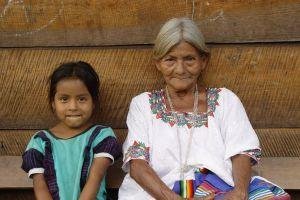
The Vital Importance of the Grandparent-Grandchild Bond
It has only been about 20 years since Dr. William Sears coined the term "Attachment Parenting" in reference to a set of nurturing parenting practices, such as babywearing and breastfeeding.
Today, Attachment Parenting International has helped to expand this approach to parenting to include children beyond the infant years and to secondary attachment figures including grandparents.
The Value of Secondary Attachment to a Child
Mothers have long since been the focus of Attachment Parenting information, the role of secondary attachments cannot be ignored. According to the article "Back to the Future: How Early Attachments Shape Your Relationships" in the Summer 2007 issue of , all attachments whether parent-child or grandparent-grandchild play a crucial role in shaping what a child's perspective of what "normal" relationships are like.
"It refers to the 'image' of love people carry inside them that consists of the positive and negative characteristics of all their childhood caretakers," according to the article's author and Imago Relationship Therapy therapist Rod Kochtitzky. As adults, "we are left with someone who both loves us in the ways we were loved in our family of origin and also hurts us in ways that we were hurt in our families."
Obviously, grandparents whose grandchildren live with them or are being raised by them play a vital role as primary caregivers to those grandchildren.
But even grandparents whose grandchildren do not live with them have a critical role in supporting their grandchildren's parents. Grandparents can be great sources of parenting tips - and affordable childcare - to their grandchildren's parents.
But it is those whose grandchildren who are in high risk situations, such as poverty and stressful family events, who can really make a difference in helping to shape a child's sense of normalcy in relationships.
For example, the 2007 article "The Protective Role of Grandparents" by Kate Fogarty, PhD, in the University of Florida's newsletter, explored the effect of a healthy grandparent-grandchild bond on the negative effects of maternal depression on parenting and a child's functioning.
According to Fogarty, compared to non-depressed mothers, those with depression typically have minimal, inconsistent responses to their children's needs; express more negative than positive emotions toward their children; and are less engaged when interacting with their children.
These parenting behaviors lead to inhibited cognitive development and increased behavior problems in the children of all ages. Teenagers feel these effects especially strongly, because they influence their social and academic functioning. Furthermore, school-aged children and teenagers of depressed mothers are significantly more likely to be depressed as adults.
Fogarty then referenced a study (Silverstein & Ruiz, 2006, "Breaking the Chain: How Grandparents Moderate the Transmission of Maternal Depression to Their Grandchildren," published in , 55) showing that the stronger the attachment of the grandchild to a grandparent, the less likely the child of a depressed mother is to experience depression in adulthood.
The Silverstein study listed these elements to be crucial in developing a strong grandparent-grandchild relationship:
A strong emotional bond with the grandparent effectively models a healthy relationship, lessening the negative effects of parenting by a depressed mother, who is often the primary caregiver. Imagine the very positive effect grandparents can have in their grandchildren's lives, if they're already receiving a healthy relationship model at home.
Interactions Shape the Brain, Young or Old
Daniel Goleman, PhD, discovered that every person-to-person interaction literally shapes the human brain - and that the more important the relationship, the more profound the effect of those interactions on brain development. This research was reviewed in Mark Matousek's article "We're Wired to Connect," originally published in the January/February 2007 issue of and later reprinted in the Summer 2007 issue of .
"Young or old, people can affect our personalities," writes Matousek. "...Anger-prone people, for example, can 'infect' themselves with calmness by spending time with mellower individuals, absorbing less aggressive behavior and thereby sharpening social intelligence."
Matousek quoted Goleman in crediting his two-year-old grandchild in helping to maintain his emotional health, likening time spent with her as "a vitamin" or "an elixir." Think of the influence of his emotions on an impressionable toddler!
Besides modeling what constitutes a "normal" relationship, grandparents provide children with a sense of safety and protection, a link to their cultural heritage and family history, and a companion in play and exploration, according to an article by Mary Gavin, MD, on http://kidshealth.org entitled "Bonding with Grandparents."
Roma Hanks, PhD, speaks highly of the role of grandparents in her article "Connecting the Generations: The New Role of Grandparents," published in the 1997 issue of at Mobile, Alabama: "It is my belief that grandparenting is the most important family role of the new century. ...Today, there is a growing alliance of grandparents who will positively influence the lives of their grandchildren and the younger generations in their society, some by providing urgently needed daily care, others by building deep emotional connections with their grandchildren."More at: theattachedfamily.com
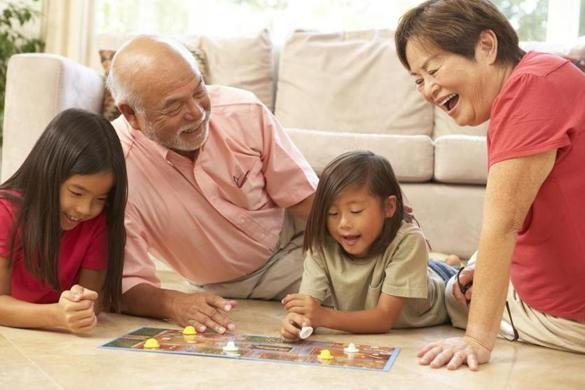
Close grandparent-grandchild relationships have healthy benefits
An overwhelming amount of psychology and social science research is devoted to parent-child dynamics. But even in our nuclear-family age, that's not the only bond children have with adults. In the last year, significant new findings have emerged to shed light on the important benefits of children's relationships with their grandparents - for the people on both sides of the equation.
A study by Boston College researchers found that emotionally close ties between grandparents and adult grandchildren reduced depressive symptoms in both groups. The study, published online last year in the journal The Gerontologist, included 374 grandparents and 356 adult grandchildren who were taking part in a larger study. The researchers looked at data collected over a 19-year period.
Close grandparent-grandchild relationships are often a marker of strong family ties overall, but these intergenerational bonds also come with their own distinctive benefits, said lead author Sara Moorman, an associate professor of sociology at Boston College. As people are living longer, these bonds are becoming even more important.
For grandparents, relationships with grandchildren provide connection with a much younger generation and exposure to different ideas, which might otherwise be limited. For grandkids, grandparents can offer life wisdom that they can put into practice as they navigate young adulthood.
"Grandparents have a wealth of experience - they'll often tell stories about their lives and how things worked when they were young, and once kids become adults, they're able to maximize those lessons," said Moorman, who said her study is a tribute to her own grandmother. Grandparents also can offer their grandchildren a first-hand historical perspective that enriches their lives and understanding of the past.
Earlier research has shown links between strong grandparent-grandchild bonds and adjustment and pro-social behavior among kids. A study of English children ages 11-16, for instance, found that close grandparent-grandchild relationships were associated with benefits including fewer emotional and behavioral problems and fewer difficulties with peers. These relationships also helped to reduce the adverse impacts of experiences such as parent breakups and being bullied.
For grandparents, involvement with grandchildren may help to keep them mentally sharp. An Australian study published earlier this year found that grandmothers who spent time watching their grandkids performed better on cognitive tests than did grandmothers who didn't, and than women who didn't have grandchildren. (Interestingly, though, minding grandkids one day per week was linked to better test performance than watching them more often.)
Of course, relationships between grandparents and grandchildren are shaped by the larger family context. A study of Israeli teens published in September found that the closer teens were with their parents, the more they benefited from strong relationships with their grandparents. Specifically, among teens who reported being very close to their parents, strong bonds with grandparents were more effective in reducing emotional and behavioral problems.
Grandparents tend to complement good-quality relationships with parents, and both of these relationships reduce adjustment difficulties in adolescents, study author Shalhevet Attar-Schwartz of the Hebrew University of Jerusalem said in an e-mail. Because parents bridge the generation gap between grandparents and grandchildren, they help to shape these relationships and can influence the strength of grandparent-grandchild bond.
"Parents should be aware of their role as gatekeepers in the relationship between their children and their parents," Attar-Schwartz said. "They should also be aware of grandparents' potential to be an important resource in their children's lives, especially if the family is undergoing a change, such as divorce or remarriage, or if the child is undergoing a painful or challenging experience. . . . Sometimes children feel that it is easier to open up to their grandparents and share their difficulties and dilemmas with them."More at: www.bostonglobe.com
The Importance Of Grandparent And Grandchild Bond
Grandparents are a blessing to their grandchildren. They bring with them years of experience which helps them play a vital role in making important decisions. Grandparents also add a lot of cheer and happiness to the family, especially during family functions and special occasions. They also fit in beautifully with the changing trends of today's families. Ask any child who lives with her grandparents and she will tell you how she enjoys being friends with her grandpa and grandma.
Uma Maheshwari, a Senior Executive, Human Resources, with Ford India says, "We live as a joint family, with my mother-in-law, father-in-law, my husband's brother and his family, all in one house. It's really a great feeling to be a part of such a lovely home. My in-laws have taken up the responsibility of bringing up my children, by teaching them good habits and manners."
Senior educationist and parenting expert Meena Swaminathan feels the relationship between grandparents and grandchildren has been constantly changing over the years. "Today's grandparents need to work really hard to keep pace with the knowledge of their grandchildren. With information available at their fingertips, children are so clever and that makes the job of these elders a lot tougher. But, it's good to see that the older generation is responding well too," she says.
Jayaraman, a senior management consultant and his wife Rukmani Jayaraman, a personality development trainer, look forward to holidays to reunite with their granddaughters who live in Singapore. The little ones, 12-year-old Geethika and 9-year-old Thrithi, are always excited about listening to mythological stories from their grandparents. Jayaraman says, "I want to teach my grandchildren Tamil. For this, I narrate them, in Tamil, stories from our mythology. But at times, I tone down the violence in the stories, so that I don't scare them. For example, I don't go into the details of Lakshmana cutting off Shurpanaka's nose, as it won't go well with children."
Grandparents also try to nurture the creativity and special talents of the little ones in every possible way. In fact, they take pride in their intelligence and smartness. Rukmani Jayaraman encourages her grandchildren to create tiny little craft toys. Renowned writer and Sahitya Academy award winner Indira Parthasarathy is quite ecstatic about his 16-year-old granddaughter Apoorva's writing and oratory skills. He had been narrating her stories of Ramayana, Mahabharata, and plays by Shakespeare, and feels this has helped in nourishing her literary skills.
It's quite a beautiful feeling to see how grandparents get along with their grandchildren, forgetting all their age-related health set-backs and inconveniences. They act as beacons of light to the young minds and nurture them with love and care. The relationship between grandparents and grandchildren is like a beautiful friendship that defies both age and the generation gap.More at: www.parentcircle.com

10 Things Grandchildren Can Learn From Their Grandparents
Grandparents are full of wisdom to share with younger generations -- here are ideas for things to talk about.The relationship between a grandchild and grandparent is a very special one. While grandparents act as an authority figure and provide unconditional love, they also get to spoil their grandkids in a ...
More at: www.care.com
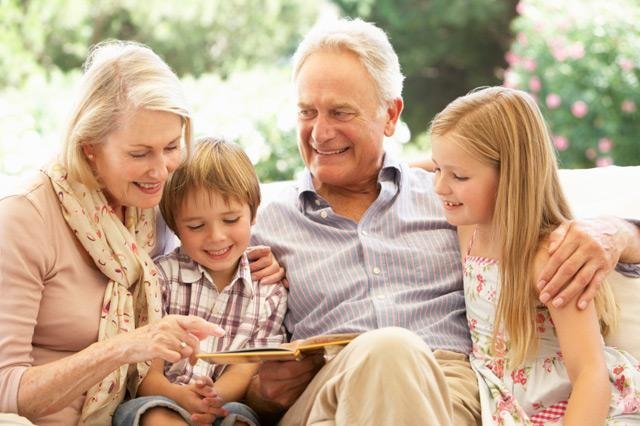
The Huge Influence of Grandparents on their Grandchildren's Lives
Spending time with their parents is very important for kids, but spending time with their grandparents can be equally important and beneficial. Grandparents can awaken interests and emotions in kids that no other relative is capable of, and the connection children can create with someone that much older than them is definitely something that will shape up their personalities.
There is nothing like a good story
Grandparents are always full of amazing stories and children love to hear them. It is always fun for kids to imagine their older relatives as kids and listen to their adventures when they were little. Of course, with wisdom that comes with years, grandparents are bound to tell the most engaging stories that will always have some good moral that kids will pick up on, especially if they know that someone close to them actually had that experience and that it is not just talk. Basically, by listening to grandparents' stories, children can make their first step of learning from other people's mistakes and mischievousness.
Truthfulness can be learned from someone trustworthy
Grandparents are usually softer with their grandchildren than parents and therefore a bond of trust can easily be created between them. If children know that they can always tell something in confidence to their grandparents they will gradually develop the ability to be more open and honest with others, especially since grandparents will always seem understanding but fair, and explain when it is necessary to share the with parents. This way, kids will feel safe while at the same time learn the importance of telling the truth. Of course, there is nothing more fun than having some innocent secrets that only grandparents and kids would know.
When going over old photo albums and showing photos of them as children and their parents, grandparents can instill some good values in their grandchildren, especially with a casual background story that would not seem deliberate or pressuring. For example, they can talk about old ways and relationships between elders and children in their time with a lot of enjoyment in their manner of speech, thus encouraging children to be more respectful, patient and responsible in their own time as well. Of course, parents were stricter back then and kids will feel grateful too for the ways things are nowadays and have more love for their parents and grandparents.
If the grandparents live in countryside, different town or even different house, this is a great opportunity for children to experience different settings and have fun . Not to mention that memento boxes of grandparents are a real treasure for young kids. There is always something interesting to find in the attic, basement or big yard at the country. Running around discovering where everything is and looking for old-fashioned things while making up or imagining stories behind them will encourage more physical activity in children as well as creative thinking.
Grandparents can show that learning is fun
By considering grandparents good playtime partners, children will accept them easier as study partners, too. Both parents and grandparents can use this opportunity to spark some hobbies and study habits in children. For example, grandparents can encourage the love of math and numbers by showing kids how are and ask the children to show them how to play these games online. Children will feel responsible and proud when explaining something they know while having fun playing something that will improve their logic skill.
When helping busy parents at work, grandparents can become an exceptional and irreplaceable influence in children's lives. Kids will not only have great time, but they will also learn something new, useful and important when it comes to their family, proper behavior and world around them.
. She loves cooking, baking, sewing, spending quality time with her daughters and she's passionate for writing. Her motto is: "Live the life you love, love the life you live." Find her on .More at: www.senioroutlooktoday.com

Why Grandparents Can Influence Grandchildren
Brad is a strong, clean-cut rancher in his early thirties, married with children. He loves spending a day on a horse. He knows cattle-how to pick them at the sale barn, how to work them, and how to manage the pastures in order to put weight on them. Ranching is his joy, what he lives and breathes. Where did this lifeblood come from? It's clear that he is his grandfather extended into another generation.
With emotion in his voice, Brad told me about his growing-up years. There had been good times with his father, but he always felt that he could never please his dad no matter what he accomplished. His older brother had always been the apple of his father's eye. Most likely Brad would have turned rebellious and self-destructive except for one factor: as a young boy, he had a grandfather who loved and accepted him just the way he was. His grandfather was his hero, and that changed his life.
Brad was the tag-along on his grandfather's ranch. As he matured, his grandfather's strengths and interest began to show up more and more in him. The relationship with his father gradually improved, but he said his brother is the one who's somewhat like his father. Then, with a glint of pride in his eyes, he proclaimed, "And I am just like my granddad." The similarities go much further than the love of ranching. He holds his granddad's attitudes, beliefs, and approach to life. His tenacity and stamina to face some of life's difficult challenges came from his granddad.
There are many others whose lives have been influenced and molded by grandparents. I have heard story after story of men and women whose lives would have looked totally different if it were not for the presence of their grandparents. In some ways the influence of grandmothers and grandfathers may be different, but they are both there, and both have a powerful effect.
I believe there are two major factors that make grandparent/grandchild relationships so powerful and influential:
The generations are drawn together by a strong force-largely because of complimentary needs of their life stages-and it is activated by the arrival of the first grandchild. There is a large range of ages at which people become grandparents, so each relationship will be different. Today, few grandparents look like the white-haired old man on the mountainside that we read about in the book Heidi. Many grandparents are still busy with their careers.
But many are at a point in life where the kids have left home, they are more established, more reflective, and life is slowing down at least a little bit. Usually they have time available to spend with grandchildren. Their life perspective shifts from looking at how far they have come, to how much time they have left. They begin to think about what they want to do with the rest of their lives that would be meaningful. They may have even thought about the idea of legacy.
This change in life orientation was illustrated to me in a discussion with a college student who returned from the weekend at home with her parents and her sister, who had a new baby. She said, "I could not believe my dad-he actually insisted on holding my nephew. I had never seen him hold a baby in my whole life!"
In interviews I found many grandparents had a "healthy obsession" with their grandchildren. They thought about them all the time, they called them just to hear their voice, their refrigerators were plastered with art work, and they had pictures of the grandkids all over the living room. Grandparents planned their lives around going to their events or going to visit them. Grandparents have an irrational love of grandchildren; that's part of the beauty of the relationship.
Link this with children who crave attention and thrive on someone showing interest in them, and you get that magnetic pull. Grandchildren soak up all the nurturance they can find. They love having someone who will play a game with them or look at the book they are reading or will listen to them interpret their latest drawing.
For example, last week two of my grandsons begged me to go up in the woods with them to see the latest fort they had built out of a few sticks and limbs they had gathered. They were excited to have someone take the time to see what was important to them and what they had accomplished. They glowed at my simple act of observing their Daniel Boone lean-to. These complimentary roles-their need for attention and my having the time and interest to enter their world-pull the generations together.
Beyond achievement, grandchildren desperately need someone who thinks they are wonderful just for existing. I had one grandfather tell me that whenever his grandson comes over, the first thing he says is, "Come here, boy, let me lay my eyes on you." After admiringly looking him over, he then gives him a big hug. I think that is called unconditional acceptance. Other than grandparents, where do we get unconditional acceptance?
Parents are busy raising their children and correcting them, as they need to do. They are in the corrector role, vigilant about looking for what needs changed and bringing discipline to those situations. They feel the pressure to properly raise the children. Grandparents feel much less pressure. Grandparents are more in the "just enjoy being there" role.
This can be seen when the whole family goes out to dinner. The parents are concerned: Did Susie eat her vegetables? Is she showing proper manners? Did she drop food on the floor? Is she climbing all over the booth? On the other hand, her grandparents are just enjoying the chance to be there with her. Parents and grandparents both play vitally important roles, they're just different-and Susie can feel the difference.
That love and unconditional acceptance gives grandparents unique opportunities to influence grandchildren. It happens through the power of the relationship and all the modeling and teaching-both formal and informal-that goes on, like in my example with Brad, the rancher.
What do you value that you might be able to pass on to the grandkids that can make a difference in their lives? Are there needs you see that you might be able to help meet, even if you can't do everything? Do you regularly show them unconditional acceptance, where you love them just as they are? Have you considered changing some of your routines in ways that might even boost your input in their lives? If you could change one thing in the time you have with them, what would it be?
Those of us who have grandchildren think grandparents are the greatest invention of all time. We just need to appreciate the power of the role we have been handed and enjoy the opportunity we have to do something of significance with it.
Judd Swihart and his wife Nancy are parents of three grown children and grandparents of eleven grandchildren. Judd has conducted research on the grandparent-grandchild relationship for his Ph.D. dissertation, and he's a member of the Advisory Board for the National Association of Grandparenting. He and Nancy have individually authored or co-authored six books on family relationships.More at: www.grandsmatter.org
5 Easy Ways Grandparents Can Be Involved in Character Building
When I was growing up, my grandmother was a huge influence in my life. I looked up to her and listened to her stories with an intensity that I rarely paid others. I watched the way she interacted with others and respected her in a different way than I did my own parents.
The beauty of extended family is that each family member has a unique relationship with a child, which differs to the relationship the child will have with immediate family members. Aunties, uncles, cousins, grandparents and parents will all have their own special way to encourage and challenge a child, and these relationships will work together to build a child's character.
Grandparents, of course, play their most important role by modelling. The way they speak to their grandchild, offer advice, and the way they live their own lives will leave a lasting impression on their grandchildren. But that is a whole article (or book) in itself. Here are a few easy ways grandparents can be involved in helping their grandchildren build character.
Probably the simplest way to help a grandchild build character to give meaningful gifts. Birthdays and holidays never seem to end but that doesn't mean kids need to receive things for pure entertainment. I recommend tons of character building books on the blog (here are over 30+ concept books and here are some recommended storybooks) and there are lots of games, CDs, room decor and resource ideas on this page if you are looking for gift ideas.
The second way to help grandkids build character is to organise experiences that will encourage them to grow. My own grandmother sent me to a music camp where I developed confidence to sing and dance on stage. We went on hikes, visiited arts exhibitions, attended musical performances and more. One year she even took my sister and I on a train trip to another state and the conversations on the train alone were extremely valuable to me at that time in my life. Experiences with grandparents, big and small, are treasured and remembered by grandchildren. It can be something as simple as going to the library, baking together, or even drinking lemonade on the back porch. Exposing kids to different opportunities and coaching them through challenges is priceless.
One of my readers Lynne who is also a grandmother says, "Virtues are the language of our souls and I consciously look for creative and energetic ways to bring out the best in my Grandchildren and myself." Lynne used to be a teacher and has many ways she incorporates virtues into her home. Here are some of her ideas that you can enjoy with grandkids.
"I like to create at least one Virtue Placemat for each of my seven Grandchildren every year. It is a photo of them (sometimes set up) but it mentions a virtue that they have been using. I print off the photo with the virtue in A4 size then get it laminated so it is water proof and can be used as their placemat on the table for dinner time. The great thing about it is it is obvious who it belongs to and over the years they build up a little portfolio of their virtues. The simpler it is the more powerful and it must always match a virtue they have been doing or an action taken. (It never works when it is used as discipline tool.)
Anyone can create Booties & Blessings which are perfect for a newborn. Buy or make a pair of babies booties and add a "blessing." Here is an example of a blessing I created from the Virtues Project (printed out and given with the booties). "With these booties comes the blessing of: KINDNESS. Kindness is caring that springs from compassion. You are warm and friendly and ready to help, listening for the needs beneath the words. You are also kind to yourself. DETERMINATION. Determination is the power of intent that drives your dreams. It is the strength of will to act with resolve and focus your energy on a purpose. The purity of Kindness and determination can bring light to the world. These booties have been lovingly made by a Grandmother from 100% pure wool and sheep skin.
It may also be nice to teach older grandchildren how to make these booties to give to newborn cousins, neighbours, or friends!
The last idea is picking a random Virtues Affirmation Scroll rolled up and in a heart box. These can be picked out any time - not only with the grandkids but during workshops, with clients, or other gatherings!" You can find Virtue Affirmations on the cards available here.
What other ways can grandparents be involved in character education when kids are young? Please share your ideas and experiences in the comments!
You may also enjoy...More at: www.momentsaday.com
Bonding with grandparents
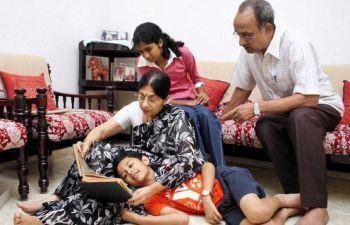
In India where joint family system still exists, there are many of us who have had great memories of growing up with our grandparents. We were lucky enough to have them around to comfort and pamper us. We shared good times with our grandparents playing, reading books and listening to family stories and parables.
However, in the modern times, with the ever-increasing number of nuclear families and tight schedules, the distance in relationship has increased. Despite the growing tight schedule and physical distances it is important to maintain a closer bond with your kids and your parents.
The bond between the grand parent and the grandchild is very special and it is important to foster a close relationship between them. It has been proved that grandparents can have a very positive influence over the behavioral and social development of the child.
If you live in a joint family you can leave your child under their care for a brief period. Staying alone with grandparents for sometimes increases the family bonding. If they stay away from you but at a driving distance it is advised to make frequent visits to meet them with your children to increase the bond. Invite grandparents too on holidays and weekends to spend time with the family.
If it is not possible to make frequent visits, anticipating and planning the next trip to meet your parents can help your child to regard that time as special.
Invite your parents to participate in special events like birthday party, annual function or sports day in school. Grandparents love to see their grandchildren perform and children also feel proud to have them around.
It is important to place photographs of your parents in the room and point out to them very often. You can view your family album with your kids and page through it while; naming the family member.
If your parents stay far away and it is not possible to visit often call them regularly and encourage children to speak often.
Many grandparents have special skills such as cooking, paper quilting, painting etc and would love to pass it to their grandchildren. Younger and older children love to learn new things from their grandparents
If your child shows special interest in art, encourage them to make greeting card for special occasions like Grandparent's day or a simple "I love you" card to make them feel happy and proud.
A warm bonding with grandparents encourages child's healthy development. Children who share a strong bonding with the grandparents have fewer behavioral problems and increases social skills.
Your parents can be great role models and spending quality time with them strengthens family values and children learn to share things and accept responsibility.
Grandparents provide unconditional love and always make their grandchild feel safe. Children gain additional support from them which increase their confidence.
They have a lot of spare time to spend and read books. Children love to hear stories of their family and grandparents love to share family stories with their grandchildren. Such dedicated attention helps to improve their learning skills and their overall development.
It takes immense efforts to maintain a close grandparent - grandchild relationship. Grandparents are an important part of every child's life as they are good listeners and offer unconditional love. An affectionate and strong bond between the two can enhance the lives of both generations.More at: www.medimanage.com



















Comments
Edit
Comment Flag
Cancel Update