
Scolding Children To Discipline Them: What Parents Need To Know About Harsh Words
S Divya Prabha
Do you often scold your child to discipline them? Learn how harsh words affect children and discover calmer ways to set limits

Compared to adults, children exhibit a different kind of energy. Most of the time, they are active and playful, noisy, and enjoy everything they do. Parents also enjoy watching their lively children express joyful emotions, play, talk, and imagine.
Why parents end up scolding their children
However, it's natural for parents to overreact to a child's playfulness or misbehavior, especially when preoccupied or overwhelmed with work, tired, or emotionally triggered. Scolding is a common reaction.
Instead, what if parents were patient and tried to understand the reason behind a child's actions? Easier said than done! Understanding a child's emotions and feelings requires parents to regulate their own emotions. For example, when you feel your temper rising, take a deep breath to pause before reacting. It can help you listen to what your child needs and still set clear limits on their behavior.
When parents feel overwhelmed
What may be happening: “I’m exhausted, stressed, and running out of patience.”
What may follow: “Why won’t you listen? How many times should I tell you?”
Recognizing these triggers can help you pause before reacting.
Firm correction is different from harsh discipline
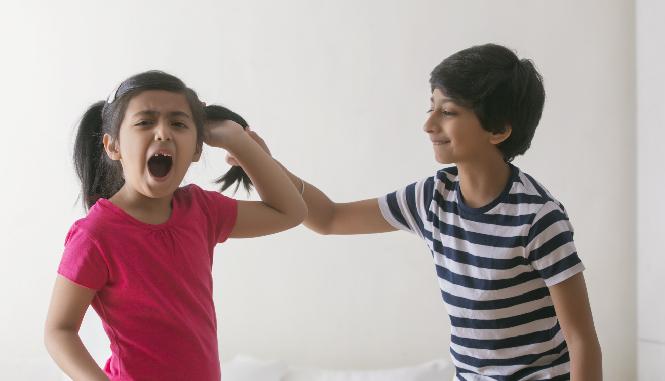
Firm correction: “We don’t hit. If you’re angry, tell me what happened.”
Firm correction sets a clear boundary and respects your child.
Harsh discipline: “How many times have I told you? Stop behaving like this! You never listen.”
Harsh discipline conveys anger, blame, or humiliation. It does not teach your child what to do differently.
The American Academy of Pediatrics recommends positive discipline and advises parents against using threats, insults, humiliation, or shame to discipline children.
When correction becomes hurtful
Correction: “You made a mistake. Let’s see how we can fix it.”
Correcting behavior without hurting your child's self-worth makes your child more receptive to correction.
Shaming: “What is wrong with you? You always spoil everything.”
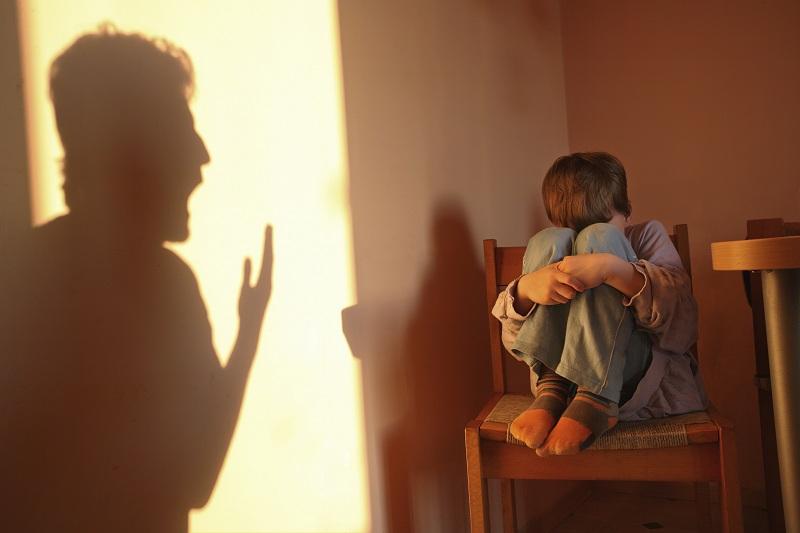
Frequent yelling, insults, shaming, or humiliation can make children feel fearful, ashamed, or rejected.
The World Health Organization (WHO) recommends parenting interventions that reduce harsh parenting and strengthen parent-child relationships.
Regulate yourself before you react
Pause: “I’m getting angry. Let me take a moment before I respond.”
React: “I’ve had enough! Stop this right now!”
Taking a few deep breaths, lowering your voice, or stepping away briefly can help you calm down. Once you feel calmer, you can address the behavior feeling less angry and more supportive.
Children learn by watching, not by being yelled at
Children are great imitators. For example, if you shout in frustration or disagreement, they will learn to shout back; if you scold them, they will learn to do the same to someone else.
Take a moment to reflect on the behavior your child observes in you. It's not about having to be perfect. Rather, it's about showing your child how you handle difficult emotions respectfully.
When does scolding become harmful?
Getting irritated occasionally does not make you a bad parent. Your child will test your patience. Repeated shouting, insults, humiliation, threats, ridicule, or other harsh language can hurt your child’s sense of safety and self-worth. While some children may hide the hurt, others may express it openly. Persistent harsh parenting has also been associated with emotional and behavioral difficulties in children.
So, you're not being a bad parent if you scold your child. The important question to ask yourself is, "Am I doing it repeatedly? What can I do about it?"
Myths and facts about scolding children
MYTH | FACT |
| Parents never hurt their children emotionally | Repeated harsh words can hurt a child emotionally |
| Scolding helps discipline a child | It may stop behavior briefly but doesn’t teach better behavior |
| Scolding in public makes children listen | It can make children feel embarrassed and humiliated. |
| Scolding makes children tell the truth | Fear may make children hide the truth |
Scolding helps control a child’s behavior | Fear may lead to obedience, but does not teach self-control. |
Good parents never get angry with their children | All parents get angry; how they respond matters |
Scolding ensures children always listen | Calm, consistent limits encourage cooperation |
Why scolding does not teach discipline
Discipline is not simply about making a child obedient. It is about helping a child understand boundaries, manage emotions, make better choices, and gradually develop self-control.
“Yelling silences your message. Speak quietly so your children can hear your words instead of just your voice.” — L.R. Knost, poet, author, independent child development researcher.
Build connection before you correct
A warm and trusting relationship makes a child want to cooperate. Here are some simple ways to build connection with your child:
- Wake up your child calmly and pleasantly. It gives them a good start to the day.
- Encourage your child to help with chores and appreciate their efforts.
- Correct your child firmly, but give appropriate reasons and explanations.
- Make mealtimes pleasant and a good time for family bonding.
- Make bedtime routines calm and soothing. It prepares your child for a good night’s rest.
- Stop using harsh and hurtful words. Instead, describe what you feel and express your concerns.
- Take your child aside and correct them. It helps them feel safe and respected.
- Send your child to school with a smile. It creates a happy frame of mind for both of you.
- Receive your child from school with joy. It helps you reconnect with your child.
Connecting with your child encourages you to discipline them respectfully.
How to set boundaries without scolding
Children need clear boundaries and limits to help them know what is expected of them.
Try these simple techniques:
- State the rule clearly: “We do not hit.”
- Explain briefly: “Hitting hurts people.”
- Name what your child can do instead: “Tell me you are angry. You can use your words.”
- Be consistent: Try to respond to the same behavior in similar ways.
- Correct privately: Avoid embarrassing your child in front of others.
- Stay calm: Your child feels emotionally safe.
- Reconnect afterwards: Reassure your child that you love them while still making the boundary clear.
Your aim must be to demonstrate how strong emotions can be handled without hurting or humiliating another person.
Parent checklist: Before you scold your child
- Pause and calm yourself before responding.
- Ask yourself what your child is trying to communicate.
- Separate the child from the behavior: correct the behavior, not the child’s character.
- State the boundary clearly and calmly.
- Explain what your child can do instead.
- Avoid shouting, insults, threats, and humiliation.
- Correct your child privately when possible.
- If you lose your temper, apologize to repair the relationship afterwards.
- Remember, discipline is about teaching, not getting a child to obey.
Dr. S. Divya Prabha is a counseling psychologist, certified professional supervisor and the founder of Steps Foundations (Psychological Support Services). With over a decade of experience as a school psychologist, she conducts workshops and training programmes on positive parenting, child protection, stress management and mental health. She is also a certified Cognitive Behaviour Therapist (CBT).
Need more information? Trusted resources:
- WHO: Guidelines on parenting interventions to prevent maltreatment and enhance parent–child relationships with children aged 0–17 years WHO parenting guidelines
- American Academy of Pediatrics: Effective Discipline to Raise Healthy Children AAP guidance on effective discipline
- WHO: Child maltreatment WHO child maltreatment guidance
Last updated on: August 04, 2026






















Comments
खरंच उमंग पतन लड़ल
Manikandan Dec 4, 2025
Good article
Advamed Sep 1, 2025
This is such an eye-opening article! As parents, we often think scolding is the easiest way to discipline, but we don’t realize the long-term impact it can leave on a child’s emotions and confidence. I really liked how this piece explained that children learn by imitating us—if we shout, they’ll shout too. Positive parenting definitely takes more patience, but it builds trust and respect in the long run. A calm word works better than a hundred harsh ones.
Harsh Kumar Aug 26, 2025
Nice Article.
It's still a parent's job to teach their kids accountability, and sometimes calling them out is necessary. It may include "scolding" your kid in a way that is not aggressive or hurtful. Stop treating your child like they're weak little angels made of glass. Treat them like real capable human beings who need your guidance, because they do, and sometimes it includes calling them out and holding them accountable.
Angel Dec 2, 2024
I agree it's a parent's job to teach kids accountability, and its also a parents' job to make them feel loved.
The article wasn't about not guiding them, the key words for scolding behaviour throughout the article is 'consistent,' 'in public,' 'it /could/ cause emotional distress.'
Instead of scolding out of anger, it must be out of love, and the child needs to feel loved - if the child does not feel love it may lead to behavioural problems such as abandonment issues.
Shabana Anjum Nov 8, 2024
my mom always scold even when my lil sis cries its not fair. Scold the right person so its fair the next time my mom scolds me i will stund up for my self and then tell her the way to calm urself hopfully i dont get toasted by my mom
Angel Dec 2, 2024
@Shabana Anjum
Even if you get toasted I believe in you, prioritize your safety and also do what's right for yourself
I have been scolded by my mum everyday... and I have this strange feeling of just wanting to end all I worked on.
I suppose it's an issue of environment, but I don't know anyone who handles routines this way sucessfully with children. Especially waking up and going to bed. Even NT kids, but for kids with special needs, incl. ADHD this is not very helpful. Maybe I'm just expecting too much from an article. 🙈
In an apartment/shared living space setting as most people live in, it is extra difficult to cope with lack of sleep when people around you can get you kicked out for a noisy child. Or more often, noisy neighbors that keep the child awake and they can't wear ear plugs etc. Some special needs children just do not get it. No matter what your tone, images, etc.
I think the article makes sense for some cases of very healthy privledged families but I don't see what the point is. I can't imagine someone from such a place looking up this information. They would likely already have it. 😓
-

1This I relate to so much my son is 3 and still on waitlist for evaluation for autism, my manager is constantly receiving complaints from above neighbors and below and it’s so difficult. My son is a BOY runs jumps and all of the above and has tantrums, some times at 1 am because he just doesn’t not want to settle down and go to sleep. It has been hard my manager has told my mom she could stay many times she could have a cheaper apartment, so long as I leave… I hate it here. There’s other people with 4 or 5 kids and apparently we are the only ones in here who get complaints about my 1 child. It’s insanely ridiculous. I came to this article to be reassured, now I’m just feeling like I’m failing all the way around.
Parents also only focus on the bad things about the child, not the good things.
Definitely important to praise good. I'm sad I don't see this more often among parents.
However It's important to remember balance. It can be difficult depending on the child and parent. It's a relationship. I know sometimes parents don't put effort into understanding their child is their own individual. They are born with their own genetic code, mind, etc.
A parent's guidance can only go so far if they don't understand their child. Especially difficult for people with children that have disabilities that cause a lack of communication.
sunil kumar Nov 20, 2021
-

1Show all 14 comments
Edit
Comment Flag
Cancel Update