
5 Outdoor Activities And Games For Children With Autism That Offer Great Play Benefits
Aarthi Arun
Outdoor play benefits all children, and it can improve behavior, social skills and attention in children with autism spectrum disorder. Time to show your child the joy of great outdoors
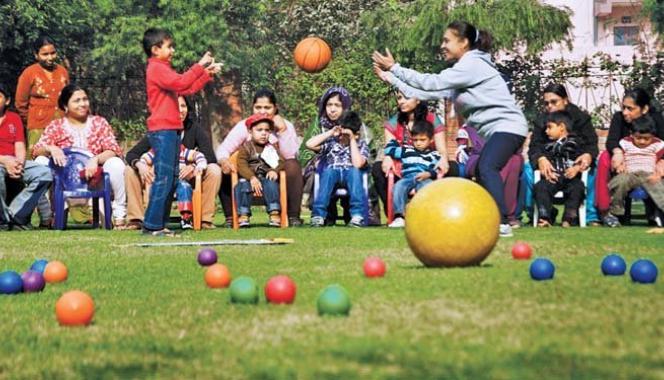
Playing is synonymous with childhood — it is through play that your child interacts and learns about the world around them. And, outdoor play is essential for a child's physical wellness and emotional well-being. But, a child with autism spectrum disorder (ASD) is usually restricted to the comfort of the indoors because they can get overwhelmed in a new environment.
Anecdotal evidence suggests that playing outdoors can bridge the gaps in communication, social skills, and sensory processing in children with ASD. Also, according to a study titled, The Benefits of Outdoor Activities for Children with Autism by the National Taiwan University, Taipei, outdoor play improves communication, cognition, emotion, and physical activities. The study further adds that playing in sand and grass can reduce a child's sensitivity. So, take your child outdoors and have some fun in the sun.
Here are five activities for your child to enjoy and hone their skills
Treasure hunt
Treasure hunting is not only exciting for your child, but it is also great for sensory stimulation. The idea is to expose your child to different sensory items that they can explore by seeing, smelling, and touching.
| Things Needed |
|
How to play
Head to a nearby park or a beach and ask your child to collect different treasures based on:
- color (green leaves, pink flowers, etc.)
- shape (round or oval fruits)
- texture (smooth or rough stones)
- size (short or long sticks, small or big shells)
Write different categories on the pieces of paper and stick them on the baskets. Ask your child to sort the objects and place them in appropriate baskets.
Obstacle course
This play involves following simple directions, running, and jumping over things, so it will help your child's language processing, understanding, and exercising their large muscles.
| Things Needed |
|
How to play
Line up sticks or toy traffic cones in an open area. Ask your child to jump over the stick or cone. Depending on your child's physical abilities, you can tweak this game to walk around or gently hop over the obstacle. You can also make this a multi-step game by adding activities like dancing or a fun exercise after crossing each obstacle. Take your game to the next level by playing music in the background it can also be therapeutic for your child.
Hide-and-seek
This classic game remains a classic for good reasons: one, it is sure to bring out the giggles and two, it ignites your child's problem-solving and social skills. You can make it as easy or as difficult according to your child's age and abilities.
| Things Needed |
|
How to play
Hide an object and give your child a hint to find it. Leave a trail of clues leading to the object for an older child. Make physical movements like bending down, climbing up, and crouching a part of this game by hiding the object at unusual places. This game doesn't need a vast space to play, just some imagination. You can indulge in this game in your backyard or apartment complex.
Follow the leader
It is difficult to gain attention and get involved in the play of a child with ASD. So, an imitation game like Follow the Leader is your best bet to get into your child's world and play. Many studies show that imitative play improves communication, play skills, and social behavior in children with ASD.
| Things Needed |
|
How to play
Start by imitating your child's actions. They may not notice it in the beginning but continue imitating it, and soon, they will be hooked. Remember, it's important to let your child lead the game so that they will be motivated to try new things. You can slowly take over and your child can follow you.
You can also place a mirror before your child, where they can see both of your actions.
Bubbles
Who doesn't like bubbles? They are inexpensive (you can also try a homemade version), easy to carry around, and can provide hours of sheer fun. Besides being a sensory activity, playing with bubbles improves attention, and physical activity and provides a chance for you to interact and bond with your child.
| Things Needed |
|
How to play
For a young child, blow some bubbles and let her catch them. Talk to her about the size, texture, and colors of the bubbles. An older child can try to blow bubbles, which will strengthen her oral muscles. Offer her bubble blowers in different sizes to make the activity more exciting.




























Comments
Edit
Comment Flag
Cancel Update