
Tiger Man Of India: We Have A Moral Obligation To Hold Nature In Trust
Sindhu Shivalingam
Noted Wildlife Biologist and former Director of the Centre for Wildlife Studies, Dr Ullas Karanth, explains what we need to do to save the wild planet
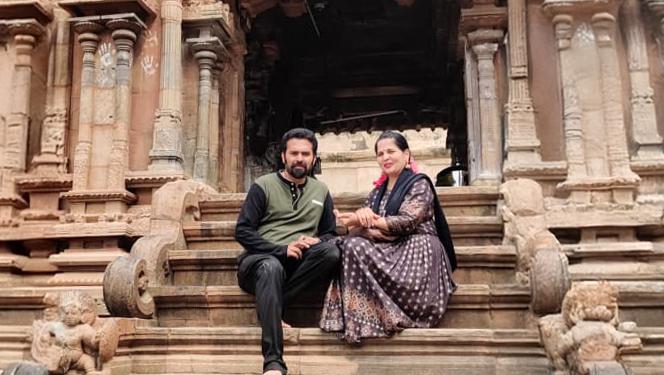
Dr Ullas Karanth, a world-renowned senior conservation scientist, started his career as an engineer and then went on to pursue his interest in wildlife. He has spent nearly half a century working on and studying tigers across India. His experience, extensive research, and field study make him an unmistakable authority on tigers not just in India, but worldwide. George Beals Schaller, a preeminent wildlife biologist, has been quoted as saying "No one, anywhere, has done better research and conservation on large carnivores than Ullas". Dr Karanth has published several scientific research papers and well-acclaimed books on tigers including 'A View from the Machan and The Way of the Tiger'. He was conferred the prestigious Padma Shri in 2012 for his great feats in wildlife conservation.
In a candid conversation with ParentCircle, Dr Karanth shares his views on several topics ranging from sustainable living, and raising environmentally conscious children to careers in wildlife conservation. He also talks about his journey as a conservationist. Read on to hear his thoughts.
Q. You've spent decades studying the life of tigers while also pioneering applications like camera trapping. Little children have a great fascination for these majestic beasts which are under threat. What should children know about tigers, their needs, and their way of life?
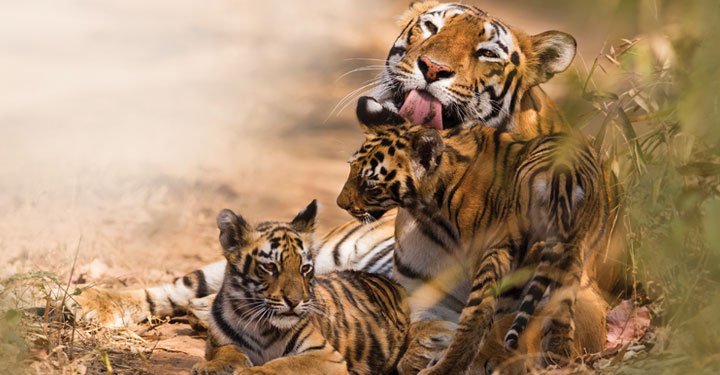
Tigers are large, meat-eating animals. A tiger must eat 50 deer-sized prey animals per year, which means it needs 500 prey animals just to survive, along with a large area to support itself and its prey animals. Tigers live at low population densities, but they require large home ranges. They also kill livestock and sometimes can kill people. So, we need to set aside large, protected sanctuaries of thousands of square kilometers to have conflict-free, viable tiger populations. We need to make room for them in our crowded landscapes by withdrawing from at least some parts of their habitat which we have encroached on over the past few hundred years.
Q. The focus needs to shift to sustainable living.
To me, the key issue is that protected nature now occupies less than 10% of land globally, and in India, it is less than 5%. We cannot be living sustainably if we extract and destroy these protected areas. Yet, human needs for food, shelter, and other resources are increasing. To meet these human needs, we should use the best of science and technology without disturbing the protected natural areas that we are left with now. Living an extremely minimalistic life in the name of going back to basics is not a solution, however green that sounds. There are complex issues with no simple thumb-rule solutions. Overall, I think rejecting science and technology is not going to lead to sustainability. Making room for nature is an important part of sustainability.
Q. We live in an era of fast-paced development. So, is there still hope for the wild in the country?
Of course. We should not be wasteful and reckless in resource use. Modern technologies can provide better substitutes for resources that we are depleting nature for. As people move out of wild lands and rural landscapes to take up other occupations, they adopt different ways of generating energy and producing food and other materials. This will create opportunities to reduce earlier dependencies on forests and wildlife habitats, giving scope for wildlife and habitats to recover.
Q. So, our future generations would have to continue this pursuit. What can children do, as volunteers, when it comes to conservation?
Wildlife conservation involves dealing with difficult contradictions between our (human) interests and needs and those of the wildlife. I don't think it is an area for voluntary activities for small children. In my opinion, nature exploration activities, such as teaching children bird watching, going on trips to see animals, showing them wildlife films and so on, are more appropriate activities for children, instead of the wildlife conservation space, which is riddled with problems.
Q. In this context, how can one raise children to be environmentally conscious?
Parents can inspire environmental consciousness in their children by teaching them some forms of action, such as keeping themselves and their surroundings clean. These are the first steps parents should take, before making their children think about mega complex issues such as global warming.
Q. You talked about the importance of keeping surroundings clean. That's one major challenge when it comes to travel in India, particularly to a forest or a protected area.
A protected area is meant for wildlife species that survive there. Visitors should not view it as a recreational area. It is not meant for partying, noise, music, games, littering, etc. If those are things you want to do, you should not go there at all. Visit any protected area only to silently and intelligently watch nature. Do not feed animals, either domestic or wild. It is not like going to a cricket match for fun.
Q. The zoo is one avenue for early exposure to wildlife for children, but some argue holding animals in captivity is not right. What's your take on the subject?
I think properly managed zoos and aquariums that keep the right kind of species have an important role in exposing children to nature. They are important educational tools if they are run well. The idea that all animals in zoos can be released into the wild and can thrive outside happily is a notion that is neither true nor scientific. Many of these animals would not exist at all if there were no zoos. Also, when a species in the wild has declined to very low numbers or has become extinct, captive animals can be a source of new animals if conditions improve and they need to be restored in the wild. But those are only very rare cases.
Q. Interesting perspective indeed. Many children are fascinated by wildlife and dream of a career in it. However, it is a common idea that a career in wildlife isn't always lucrative. Is that true?
Career options are far more limited in the wildlife field than in other major fields. The only positive is that your work becomes play if you are hard-wired to enjoy nature, but not many students are. Furthermore, a true conservationist's life is not a cozy one because one ends up opposing things that a majority of people want to do. If a student is sure of that deeper, long-term interest in nature, only then should they think of this as a career option. Many teens think a career in wildlife is glamorous. But it is not and if a student chooses this path without knowing this, it can be a problem later.
Q. What then are the different career options in the field of wildlife conservation?
Some possible careers in wildlife include working as forest officers at various levels, becoming wildlife researchers and working in conservation NGOs, becoming wildlife tour guides, etc.
Q. What does it take to become a conservationist or a wildlife expert?
Toughness in the field, deep interest in animals, enjoyment of solitude, and at least a college degree in wildlife biology or allied fields.
Q. Besides holding a job in wildlife conservation, are there other jobs that can indirectly help the cause?
One can free up time almost in any profession, and/or donate money intelligently to address conservation problems, but only after fully understanding the issues. For example, lawyers, journalists, civil servants, businessmen, technocrats, and photographers all have the talent and skills to contribute to solutions related to conservation issues. But in each conservation context, the right solution needs to be analyzed and understood. Showing the right solution is primarily the role of a well-trained, professional conservationist.
Q. And that you are. What inspired you to take up a career in wildlife?
I was always interested in wildlife right from my childhood. Since there were no careers in wildlife back in those days, I chose to become an engineer. Over the years, I gradually got into conservation as a hobby and then went back to college to get degrees in wildlife biology. I then became a professional tiger biologist.
Q. What does a wildlife expert like you do on a regular day at work?
- When I was more active in research, I used to stay in the forests for long periods and collect data on wildlife by observing animals, using different techniques. Key elements of my routine were answering questions like:
- How many prey animals are there in an area?
- How many tigers are there in an area?
- How do they behave towards each other?
- How do they hunt their prey?
After sufficient data are collected, I would analyze them and publish my findings. Based on the results, I could also make suggestions on how to improve conservation practices. It is a very slow process indeed.
Q. Given your extensive work on tigers, have you had any close encounters or any memorable experiences that you can share?
I have had many exciting encounters. I have seen tigers hunt, spotted rare species of birds and animals for the first time, and so on. There are far too many to list here. But, sitting 10 feet off the ground and shooting at a tiger below with a dart gun to tranquilize it is perhaps the most exciting thing I have done. However, I was never threatened by tigers, because I was careful and had acquired skills. Walking in forests is dangerous. People who do not have the necessary skills can end up committing blunders and even risk getting killed. I have been careful and so I have remained safe.
Q. You've recently been awarded the prestigious George Schaller Lifetime Achievement Award. What does this award mean to you?
Although I have won several other awards, the George Schaller Award is very special to me. Dr George Schaller is my inspiration and the reason I chose to become a wildlife biologist. He also mentored my career and recruited me to work for the Wildlife Conservation Society way back in 1988, thus launching my professional career.
Q. Your message to parents and children.
Tigers and other wild creatures are beautiful. This wild nature has evolved over millions of years, even before humans came on this planet. Once these wild creatures are gone, we cannot create them again however advanced we are technologically. Our generation has no right to destroy them. We have a moral obligation to hold nature in trust for future generations to enjoy and cherish.

![Shianne [STUDENT] Skeens [STUDENT]](https://lh3.googleusercontent.com/a/ACg8ocLdg7K0Ss71i588Qd0XtSM_679Xv8agmHMZD2Xuyqjx=s96-c "Shianne [STUDENT] Skeens [STUDENT]")
![Zara [STUDENT] Fierstos [STUDENT]](https://lh3.googleusercontent.com/a/ACg8ocIf9njts3dGpHed81Zs_Qg30OLvdk7SdU7mYURT-sur=s96-c "Zara [STUDENT] Fierstos [STUDENT]")
![Nolan [STUDENT] Young [STUDENT]](https://lh3.googleusercontent.com/a/ACg8ocIR1AHjjeN5tukl8RQntdntnVEj0AZKuqwgdfEI1_dp16E=s96-c "Nolan [STUDENT] Young [STUDENT]")





























Comments
Edit
Comment Flag
Cancel Update