
How Coloring Supports Your Toddler's Creativity, Fine Motor Skills And Confidence
Aparna Vikram
author parentcircle author parentcircle author parentcircle author parentcircle author parentcircle author parentcircle
Discover how colouring activities help your toddler develop creativity, fine motor skills, hand-eye coordination, and confidence. Plus, get age-wise tips and practical advice for encouraging reluctant children
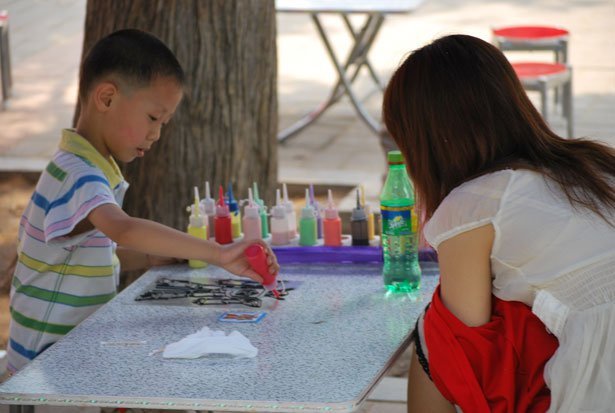
"Artists are just children who refuse to put down their crayons," says Al Hirschfield, the famous American caricaturist.
Why colouring is important for young children
Colouring is an activity we encourage our children to take up from a very young age, both at home and at school. On one hand, it is a good way to keep the little ones engaged; on the other, it can support fine motor development and encourage imagination and creative expression. Preschools and primary schools set aside time for such activities and observe children's development in fine motor, visual-motor, and creative skills, rather than artistic talent.
Let us look at what science has to say about children and colours. Research suggests that babies and toddlers are often drawn to bright, high-contrast colours, although colour preferences vary from child to child.
The ability to hold coloring tools and color a sheet strengthens fine motor control necessary for a better pincer grip at a later stage.
Coming back to the child's reaction to colouring supplies: the spectrum ranges from 'grab everything in the kit and colour everything in sight' to pouting and throwing tantrums. Everything in between is manageable.
For parents whose children are colour 'extremists', we present a plan of action. It involves commitment on your part, though!
When your child loves coloring
What happens
- No holds barred! Your child might colour everything, from the wall, the mirror, and the forehead of a sleeping grandpa.
- Your child may devote too much time to coloring and ignore other activities.
What you can do:
Take it outdoors
If you are tired of clearing the mess your child makes with the colouring supplies, take them outside.
- Spread sheets of old newspaper or towels on the porch or balcony, give them an apron, and let them enjoy.
- Set rules in the form of a game, instead of issuing them as commands. Your child may contain coloring within the prescribed area. They may also be motivated to clean up once the activity is over.
Use a protected wall as a canvas
It is a good idea to stick a few chart papers across the walls at a height your child can reach. Children love to tear paper, so be prepared for the sheets to be ripped off initially. But soon, your child will get to love this new canvas space. When you want to see your pristine walls, take down the double-taped sheets. This way you won't stifle your child's creativity, while also protecting your walls.
Offer alternative play materials
Consider introducing another activity with similar benefits, such as play dough or paper craft. Both these activities will enhance fine motor skills and develop understanding of shapes and structures, while retaining the fun factor.
When your child does not enjoy coloring
What happens
Your child does not enjoy colouring or painting. At the sight of a crayon box, they disappear.
What you can do
Choose the right tools
- If your child does not show interest in colouring activities, it may help to check the supplies and vary them.
- Children get put off by colouring sheets that adults insist they must shade to perfection. Allow them to color freely; avoid criticism.
Understand your child's needs
- Children who have not yet mastered the grip may enjoy alternatives such as finger painting, sponge painting or using large paintbrushes before moving on to crayons. The objective is to get them interested in colouring.
- Some children who enjoy active play may initially find it difficult to sit for long with coloring activities. After all, it requires patience and focus. Parents can engage the child by making up stories about colors. And if you make your child the hero of the story, they'll like it even better.
Encourage free expression
Do not nag your child to colour within the lines or choose what you think are the right colours for different objects. If they want to colour an elephant purple with shades of blue mixed in it, so be it. If you enforce your choice of colours, they may lose whatever little interest they have in the activity.
You can always ask why they chose a particular colour after they have finished coloring, but take care not to mock their reasons or choice. Adults are conditioned to conform to rules, but children are free thinkers, always asking 'why?' or 'why not?'
Why appreciation matters more than perfection
Children thrive on appreciation. Appreciate your child's efforts, particularly if they were reluctant to try it in the first place.
Children benefit from specific, genuine encouragement that focuses on effort rather than perfection. Display your child's handiwork where they can see it. Show how proud you are of their effort.
Finally, if all attempts to get your child interested in coloring fail, make sure you do not pass on your anxiety to your child. Remember, many around us have never shown any interest in coloring but have turned out to be achievers in various fields, and fine human beings as well.
Age-wise colouring milestones and activities
If you're not sure what to expect from your child at different stages of development, here's an age-wise guide. Remember that these milestones are only indicative. Children develop coloring and drawing skills at different rates, and the focus should be on enjoyment, exploration and participation rather than producing a perfect picture.
12–18 months:
Exploring marks and scribbling
Your child will be able to scribble on a sheet of paper but may lose interest shortly.
Suitable colouring tools
Ball crayons or Grasp crayons with bulbous bottoms. These chunky crayons are easier for a child to grasp with their whole hand.
Your feedback
Be positive and encouraging. Your child may not be concerned about the sheet. They may tear it or move on to another activity. Do not force them to continue colouring.
18–24 months
More controlled scribbling
At this stage, children are moving toward more controlled scribbling. They may produce repeated marks, open circles, diagonal, curved, horizontal or vertical lines, and gradually shift from a fist grasp toward using their fingers.
This is when you will find it hard to get your child to confine themself to a sheet of paper.
Your child's ability to hold a crayon or other writing tool is improving. They may still make large, sweeping marks that go beyond the sheet of paper. As their hand and finger control develop, their scribbles may become more controlled, with repeated lines, circles, and other marks.
Suitable colouring tools
First Grip crayons (They are triangular and enable easier hold.)
Your feedback
Express delight in whatever they do.
2–3 years
Lines, circles, patterns and giving meaning to drawings
At this stage, your child may begin to give meaning to their drawings or tell you what they've drawn. They may experiment with different strokes, lines and shapes and may enjoy using unconventional colours, for instance, purple for a tree trunk or blue for leaves.
Suitable colouring tools
- First Grip crayons
- Jumbo wax crayons
Your feedback
Show interest in your child's artwork. Ask them to explain what they have drawn, the people and objects. Respect their explanations. You can teach her to draw straight lines, but remember, she may not be able to achieve perfection. Keep her motivated.
Avoid labeling them as artists or using words like super, amazing, and so on. Such words convey expectations they are not ready for.
3–4 years
Beginning representational drawings
Your child's hand and finger control will continue to improve, and you may see more controlled up-and-down, horizontal or circular strokes.
Regular practice supports hand control and coordination. Continue offering other fine motor activities, like play dough, painting and simple paper crafts that help strengthen hand control in different ways.
Suitable colouring tools
- Jumbo wax crayons
- Regular crayons if the child has developed pincer grip
Your feedback
Begin by noticing what your child has done well, gently offer a suggestion if needed, and end with another encouraging comment. Remember not to tire or bore the child with lengthy explanations and instructions.
Parent checklist: Encouraging your child's creativity through colouring
- Offer age-appropriate colouring tools that are easy to grip.
- Let your child explore colours freely without worrying about perfection.
- Praise effort, curiosity, and creativity rather than the finished picture.
- Create a dedicated art space where mess is acceptable.
- Encourage storytelling while your child colours.
- Display your child's artwork to build confidence.
- Introduce other creative activities such as finger painting, playdough, or sticking pictures.
- Remember that every child develops artistic and fine motor skills at their own pace.
Colouring activities help strengthen the fine motor skills needed for an efficient pencil grasp. Their progress will depend on their developmental pace and interests. Adult supervision is mandatory when young children use art tools.
Aparna Vikram is a preschool educator with extensive experience supporting the learning and development of toddlers and preschoolers. She is passionate about helping parents nurture creativity, confidence, and early developmental skills through everyday activities.
Need more information? Trusted resources:
- CDC – Developmental Milestones: Age-wise guidance on children's emerging fine motor and drawing skills.
- ZERO TO THREE – Learning to Write and Draw: Developmental stages of scribbling, mark-making, and early drawing.
- NAEYC – Developmentally Appropriate Practice: Guidance on process-focused, child-led art and early learning.
Note: This article draws on the author's experience as a preschool educator and is supported by current guidance on early childhood development, fine motor skills, and play-based learning.
Last updated on: July 28, 2026






















Comments
Edit
Comment Flag
Cancel Update