
FEATURED
Childproofing Your Home: All You Need To Know. Make Your Home Safe For Your Kids
Vidya Nesarikar
While growth, development and nutrition are on top of our minds while raising a baby, how much thought do we give to childproofing the house and other safety measures?
A two-year-old boy died after falling from the balcony of his second-floor flat in Nashik. He was playing with a ball that fell from the house. His mother went down to bring it when the boy leaned over the balcony and lost balance, said police. -Jul 31, 2020, Times of India
It is heartbreaking to read news about children falling off balconies or succumbing to burns. How can new parents prevent such accidents and make their homes safe for children? Child proofing is the answer. It is an essential step to ensure that your child is in safe surrounding.
According to a 2019 research paper by NIMHANS on "Advancing Child Safety in India States", nearly 15% of all deaths are due to injuries and a quarter of these occur among children. Official reports and independent research indicate that road traffic injuries, drowning, falls, burns and poisoning are leading causes of unintentional injuries and death among children.
"As babies begin to crawl, walk and explore the world around them, we have to create a safe environment for them. This should be a priority for all parents," says Dr Benny Benjamin, Paediatrician, Fortis Malar Hospital, Adyar, Chennai.
What are the childproofing essentials?
Most urban families are nuclear. And small families equate to less people to keep an eye on a baby keen on exploring the world around it. This can be solved by investing in products such as a baby monitor, which allows parents to attend to work while the baby sleeps or is in the other room.
"Car seats for safe travel, locks on cabinets that have medicines or chemicals, door stops so that your child can't lock herself in a room or slam her fingers between the door, covers on sharp table corners, locks on stove dials, baby gates at top and bottom of stairs, removable safety bars on windows that are open, baby monitors, probably a million others," rattles off Jessica Mackenzie Murthy, a mom, when asked about child proofing products.
Sounds overwhelming? Here is an easy room-by-room guide to childproofing your home:
Living Room:
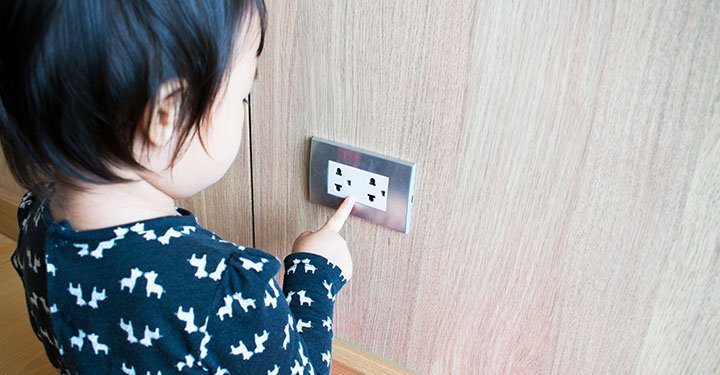
- Plug point covers: Ensure plug points are covered because babies love sticking their fingers into them and this can which can cause electrocution.
- Staircase barriers: If you have stairs inside the house, ensure there is a baby gate at the top and bottom to prevent your young explorer from exploring too much too soon!
- Railing nets: Railings of staircases need to be covered with a net, or toddlers may stick their neck or leg or hand through the railing and may get stuck or worse, slip and fall.
- Corner guards: if you have sharp edged furniture, now is the time to get soft corner guards. Kids are infamous for taking a tumble near coffee tables, sofa edges, etc.
- Remove breakables: The fancy heirloom vase, that tiny porcelain ballerina dancer - you get the idea. Keep away all the showpieces that your child may knock over and hurt himself with.
- Choking hazards: Toddlers have a tendency to grab whatever they find and stuff them into their mouths. These can sometimes lead to choking. Make sure you do not have any potential choking hazard items lying around the house and that you give only age-appropriate toys to your child.
"I have gotten several patients, over the years, who have stuffed peas, erasers and pearls in their noses and ears. Swallowing coins is another common problem. Ensure all these are out of reach if you have a toddler at home," says Dr J Sivanada, ENT surgeon from Bangalore.
Kitchen:
Kitchen is a place where one needs to be extra vigilant because a child can reach for a sharp object, topple a steaming cup of coffee or touch a hot tawa. This is also the place where the toddler may keep trying to get your attention while you cook. How do you prevent accidents?
Keep your kitchen cabinets locked
- Store all kitchen tools out of reach
- Keep all glass items out of reach
- Get knob guards for stove and mixer grinder
- Keep all masalas out of reach
- Buy a fridge guard or lock so that the little one doesn't open the fridge and pull out items
- Ensure that wires to electric kettles, rice cookers, gas cylinders, etc, are not accessible
- Do not keep hot food items and beverages at the edge of the counter
Bathroom:
"Remember a baby can drown even in a small bucket of water. Never leave a baby unattended in bathroom, says Dr Benjamin.
Here are a few pointers to ensure your baby's safety in the bathroom:
- While giving your child a bath, make sure the temperature is right. It is a good idea to invest in a thermostat to check the temperature.
- Prepare the bath - water, soap, oil, shampoo and then get the toddler. Place an anti-skid mat on the floor to avoid slipping accidents.
- After the bath, dry the bathroom floor to avoid chances of slipping and falling.
- Do not store water in buckets.
- Always keep the bathroom door bolted and closed.
- If you keep liquid cleaners in the bathroom, keep it out of your child's reach.
Bedroom:
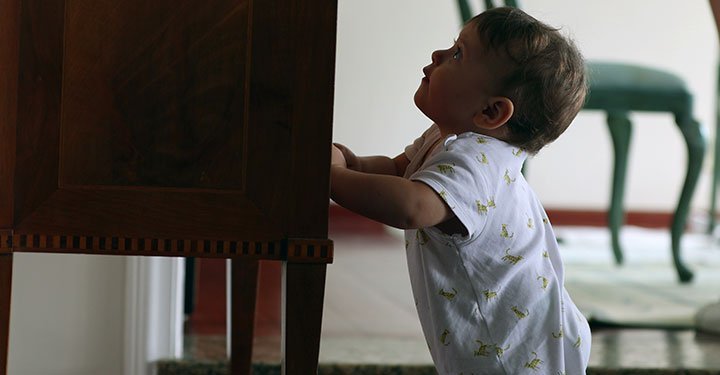
"Rolling off the edge of the bed is a common problem. Though the height is not that much and there usually are no fatal injuries, it is best avoided," explains Dr Benjamin.
Here are a few measures you can take to ensure your toddler's safety in the bedroom:
- Invest in a crib. If you do not want to get a crib, place your mattress on the floor to avoid the risk of falling.
- Buy railings for the side of the bed.
- Use a baby monitor when you are not in the room with your child.
Balcony:
If the height of your balcony or terrace wall is low, consider adding netting or a grill to ensure your toddler's safety at all times. If there are gaps in the balcony railing, these need to be covered with a net or grill.
"Children should never be left unsupervised in balconies and terraces, especially while they are playing. We have had some fatal accidents during kite flying and other such games," Dr Benjamin points out.
Things to do to prevent poisoning
Accidently consuming medicines, cleaning liquids, plant fertilisers, soap - these are a few of the poisoning accidents common among toddlers. How can you protect your child from such accidents?
Here is a list of safety measures you can take:
- Keep all chemicals and cleaners out of reach and under a child safety lock
- Do not keep any medicine by your bedside. Babies and toddlers will get attracted to the shiny foil and may try to put the medicines in their mouths. Keep your medicines where they cannot reach it, preferably with a child safety lock.
Safety during car drives
- While it is not compulsory to have a car seat while traveling with your child, it is a good investment to ensure your child's safety.
- Do not make your child sit in the front seat, whether accompanied by an adult or by himself. Always make the child sit in the back seat and buckled up - especially during long drives.
- Keep the child lock on, so that kids don't accidently open the door.
Clothing and safety:
Avoid flowy garments, bell sleeves and dupattas, especially during playtime or while at the park. "I have witnessed a girl almost getting choked on her dupatta while on the slide. Comfortable t-shirts, leggings and shorts are best for the park," says Shilpa Prashanth, teacher and proprietor of a Montessori school.
- Avoid shiny buttons and sequins on baby clothing. The baby may be attracted to put it in her mouth and it might lead to choking.
- Be extra vigilant during festivals like Diwali or where there are oil diyas and other fire hazards in the house. Remember not wear to synthetic clothes as these catch fire easily.
Toys and safety:
- Always buy age-appropriate toys
- Do not let your toddler tricycle without supervision near potential risk areas or in corridors near stairs
- Avoid small toys as they can be choking hazards.
- Do not allow your child to play with plastic covers as he can get suffocated if it is accidently placed over his head.
- Do not let children play unattended in water areas such as swimming pools or ponds
Identify the high risk zones in your house. Water, fire, height and toxic substances are always high risk. Do a thorough round of childproofing. Bear in mind that childproofing needs will be different for a six-month baby, a toddler and an older child. Always be vigilant around water and fire. For any unforeseen emergencies, learn basics of first-aid. Keep a first aid kit stocked and handy. Keep phone numbers of your paediatrician, local doctor and hospital number at reach. And try to keep an eye on your kids at all times. With a little caution and preparedness, your little bundle of joy can safely explore her world. Happy childproofing!
Ensure your child's well-being with our specialized health and safety program for kindergarten at The Dot Learning Circle. The program helps children learn healthy personal hygiene habits that keep them safe at school and home.
























Comments
Edit
Comment Flag
Cancel Update