
Build Your Preschooler's Attention Skills Through Simple Everyday Activities and Play
Kerina De Floras
Author
Attention is the foundation for learning. Discover why developing your preschooler's attention skills matters and explore simple, play-based activities that help them focus, learn, and thrive

| Thinking Skills for Preschoolers Series |
| Part 2: Memory – Learning to Remember |
| Part 3: Comprehension – Learning to Understand |
Why thinking skills matter during the preschool years
Your preschooler is learning every day, and millions of neural connections are being created in their brain with every new experience.
A report from the National Scientific Council on the Developing Child, Harvard University, states that the first five years of a child’s life are crucial for their development as their brain develops faster during this time than at any other stage of life.
They are rapidly developing skills in many areas:
- Cognition: thinking, learning, reasoning, speaking, communicating
- Social: sharing, cooperating, making friends, and other pro-social skills
- Emotional: self-awareness, emotional regulation, empathy, resilience
- Physical: gross motor skills and fine motor skills
In this three-part series, we'll explore the different thinking skills your preschooler develops. In this first article, we'll look at attention—a skill that lays the foundation for learning. The next articles will explore memory and comprehension.
Attention: The foundation for learning
Paying attention to a task means giving undivided attention without being distracted by other external factors.
Do you often wonder why your preschooler finds it difficult to sit still and pay attention to a task long enough? One minute, they may be playing with their toys, and the very next minute, you may find them coloring or trying to open the fridge.
This is because their attention span is still developing, and paying attention to the task at hand can be difficult for them. The average attention span of a preschooler can range from 6 to 15 minutes. Remember that your child’s attention span is also influenced by factors such as their interest in the task or the distractions around them.
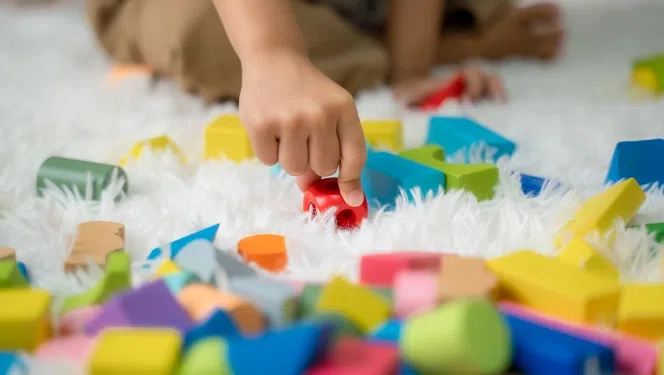
You may notice: Your preschooler is beginning to build a tower with blocks, but soon wanders off after spotting a butterfly outside. A few minutes later, they're happily coloring a picture instead. This is perfectly normal because young children's attention spans are still developing.
Why attention matters
Key to effective learning
Paying attention is the foundation for learning. Your child must be able to pay attention to learn new things, understand them, and apply them to real-world situations.
Develops impulse control
Learning to pay attention builds your child’s ability to stay focused on a task by controlling their desire to shift attention to other tasks or actions. Children with better impulse control are more confident, make better choices, and can regulate their emotions.
Helps identify areas of interest
How much time your child spends on a task can also tell you how much they like it. This will help you identify their potential areas of interest. For example, if your child loves stories with animals, they might also enjoy learning more about animals.
Builds confidence and competence
Paying attention enhances your preschooler’s ability to work on a task when asked, helping them focus on completing the task.
 Simple ways to build your child's attention
 Simple ways to build your child's attention
Here are some ways you can enhance your preschooler’s attention span, keeping in mind their developmentally appropriate limitations.
Break down tasks
Your preschooler may stop paying attention if an activity seems difficult or boring. Break the task into shorter durations, and give them step-by-step instructions instead of long explanations.
For example, instead of asking your child to color a page, you can say, “First, let’s color the flower. What color would you like it to be?” When they have done that, you can say, “Now, let’s color the leaves.”
Keep a flexible routine with a lot of breaks
Taking breaks between tasks improves your child’s attention and helps them concentrate better. Make sure that their breaks involve movement. Let them play outdoors, dance to their favorite song, or take a bike ride.
Remember that your preschooler’s attention span is still developing, so focus on keeping them engaged only for 15 minutes or less at a time. If the activity involves sitting for a long time and your preschooler seems to be fidgeting or turning away, it’s a sign that they need a break to move around.
Incorporate their interests in activities
Just like us, preschoolers spend more time on an activity if they enjoy doing it. For example, if your child loves dinosaurs, incorporate that in their play session, take them to the library to read more about them, or get them dinosaur coloring books.
Look out for signs that indicate your child's interest in certain activities. Do they seem eager and happy or bored while doing the activity?
Engage them with focus games
Simple board games like Snakes and Ladders or Ludo involve keeping the rules in mind and remembering whose turn it is to roll the dice. These games can improve your child’s attention. Other games like ‘Simon Says’ or ‘I Spy’ also encourage paying attention to auditory and visual stimuli.
Focus on their sleep and nutrition
Your child’s sleep and dietary patterns can affect their attention span. Ensure they get a good night’s sleep and plenty of rest throughout the day. Your preschooler may not be able to pay attention when they are hungry or tired.
Giving them a healthy snack (nuts, fruits, raw veggie sticks with fat-free dip) before they start a task can help them reenergize and focus.
MYTH | FACT |
| Preschoolers should be able to focus for long periods | Preschoolers' attention spans are naturally short and gradually increase with age |
| Getting distracted easily is being lazy | Curiosity and shifting attention are normal parts of preschool development |
| Preschoolers learn best by sitting still | Preschoolers learn best through active, hands-on experiences and play |
| Every child develops attention skills at the same pace | Attention develops gradually and varies from child to child |
Parent checklist: Helping your preschooler build attention
- Break activities into small, manageable steps
- Include movement breaks between quieter activities
- Follow your child's interests during play
- Play games that encourage listening and observation
- Keep instructions short and simple
- Reduce distractions during focused activities
- Ensure your child gets enough sleep and eats nutritious meals
- Praise effort rather than expecting long periods of concentration
- Remember that every child develops attention skills at their own pace
Attention is one of the first thinking skills your preschooler develops. It forms the foundation for many other abilities, including memory, problem-solving, and language.
You don't need expensive toys or structured lessons to strengthen attention. Everyday conversations, play, stories, and shared experiences offer countless opportunities to help your child focus, explore, and learn at their own pace.
Trusted sources:
- National Institute of Mental Health and Neurosciences (NIMHANS) - Child and Adolescent Mental Health resources.
- Harvard Center on the Developing Child - Brain Architecture and Early Childhood Development.
- UNICEF - Early Moments Matter for Every Child.
Last updated on: July 15, 2026
Our comprehensive pre-primary curriculum nurtures the physical, social, emotional, and cognitive development of children. It offers parent connect, teacher support and professional development, and a continuous progress tracking system. The curriculum is aligned to the learning goals of the National Education Policy (NEP) 2020.






























Comments
Edit
Comment Flag
Cancel Update