
Moving Back To India: How One Family Rediscovered Their Roots And Belonging
Amrutha Krishna
Parentcircle author...................................................
Relocating to India with family can bring both excitement and challenges. This family shares their experience of helping their children adapt to a new country, settle into a different routine, and build new friendships. Read how their children's adjustment after moving to India helped the family rediscover their roots, culture, and sense of belonging
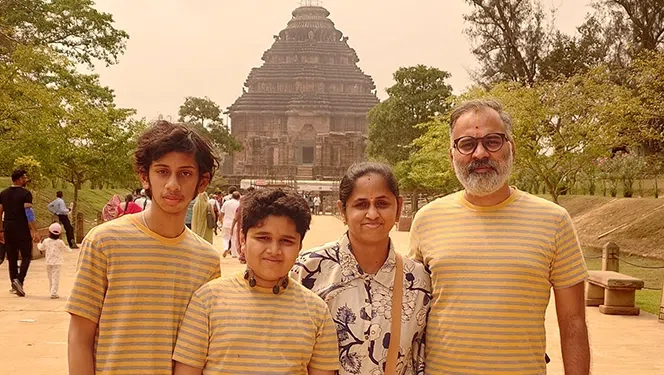
Moving back to India after living in Singapore was not an easy decision for our family. I knew the transition would be challenging, especially because my sons were in grade 2 and grade 7. They had grown up in Singapore and were comfortable with their school, friends, surroundings, and the way of life there. There were many conversations, adjustments, and, at times, uncertainty about whether we had made the right decision.
But children have a beautiful quality we sometimes underestimate. They adapt much faster than adults do.
Today, three years on, my boys are in Grade 5 and Grade 10. I realize that the move taught all of us much more than we had expected. It was not just about changing countries. It was about finding our roots and learning to appreciate both the country we came from and the country we came back to.
A difficult beginning
The initial days were spent getting used to a different environment, pace of life, and way of doing things. As parents, we had to constantly encourage the children to give themselves time to adjust to the changes. There were moments when they missed Singapore terribly. We missed it too.
But slowly, things began to fall into place. The children made friends, became comfortable in their school, and discovered things that were completely new to them. What seemed like a huge change to us gradually became their normal.
One of the biggest advantages of moving to India was the opportunities the children found here. My elder son is a chess player, and he found many more opportunities to learn, participate, and grow in chess. My younger son's musical journey also took a completely different direction. His learning accelerated, and he had many more opportunities to explore music.
However, our transition was not only about adjusting to a new country. Within just three months, we lost my mother and my husband's father. Losing two of the children's most loved grandparents, one after the other, was extremely difficult.
Those three months taught us that life does not always give us time to settle before bringing another challenge. We have to learn to face things as they come. Those difficult experiences made us stronger as a family and taught the children an important lesson about life, family, and resilience.
Discovering India again
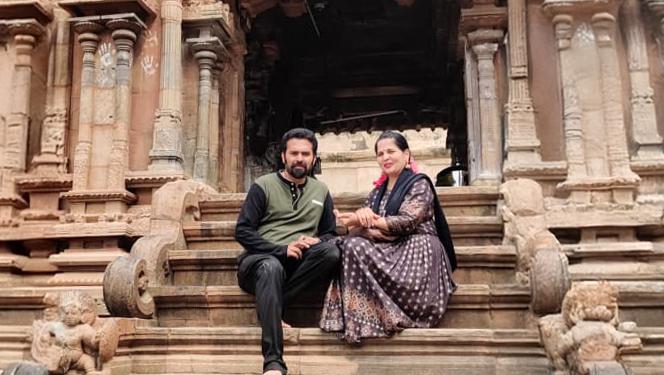
One of the biggest changes after moving back was the way we travelled, from holidays abroad to travelling within our own country. We began discovering places, traditions, temples, landscapes, and cultures that were completely new to the children. The children started learning about their roots, not through textbooks or stories, but through real experiences. They began understanding and experiencing India.
Meeting relatives often has been another wonderful advantage. The children have been able to spend more time with grandparents, relatives, and extended family. These relationships cannot always be recreated through video calls and occasional visits.
Coming back to India does not mean leaving behind everything we learned abroad. I believe the best approach is to practise the good things we experienced there. We brought back with us hard work, cleanliness, discipline, punctuality, respect for rules, and responsibility for our surroundings. But the biggest lesson for me was the mindset of starting change at home.
We follow a planned timetable for the children. It may look like a small thing, but sticking to a timetable teaches them to plan their work, manage their time, and complete their responsibilities on time. Small habits create big changes. The mindset we develop at home eventually influences the way we contribute to society.
Three years have passed since we moved back. We still miss Singapore from time to time. We remember the places, the lifestyle, and the beautiful experiences we had there. But when I ask my children today if they would like to move back to Singapore, their answer is a big "No!" That answer makes me smile. They have found their comfort here. They have made their own memories here. They have discovered chess, music, travel, family, school, and, most importantly, their roots.
We may not know where life will take them in the future. They may eventually study or work outside India. They may even settle in another country someday. But I hope that wherever they go, they will carry the flavor of India with them.
Back to our roots
India is a beautiful country. There are challenges, of course, but there’s also immense beauty, diversity, culture, history, family, and warmth. I wish to tell parents who believe that staying abroad is the only way to give their children a better future: it is not.
Give your children the opportunity to experience India. Let them understand their roots. Let them travel within the country. Let them meet family. Let them learn our traditions. And most importantly, do not just tell them stories about India; let them live those stories.
We cannot predict where our children will live tomorrow. But we can give them a strong foundation today. For us, coming back to India was not just a geographical move. It was a journey back to our roots.
And after three years, I can say with complete honesty, we don’t regret our decision to move back to India.
This is home. This is where we truly belong.
Published: August 26, 2026






















Comments
Edit
Comment Flag
Cancel Update