
Made In India: 7 Incredible Contributions That Changed The World For The Better
Ashwin Dewan
India has gifted the world with remarkable ideas, inventions, and innovations that continue to shape our lives today and impact global progress. Can you guess what they are?
As India and Indians across the world celebrate Independence Day on August 15, get ready to feel prouder to be a citizen of this great country. We are not talking about our impressive military capabilities, our steady journey to become a digitally empowered society, or even the technological revolution that is happening in our country. Rather, we are talking about things that India has given to the world. Some of these inventions and discoveries may have been known to you and will almost certainly have been used by you. But did you know that they were made in India?
Let's go back in time and turn the pages of history to bring to light the inventions that India can be proud of.
1. CHESS
India's very own chess grandmaster, Viswanathan Anand, and the Russian chess grandmaster, Garry Kasparov, have much to thank India for when it comes to chess—the game that gave them fame and fortune. The earliest form of chess is said to have originated in India during the Gupta period in the 6th century AD. The ancestor of chess was a military-inspired game called chaturanga, meaning the four divisions—infantry, cavalry, elephantry and chariotry. It soon evolved into shatranj, which became popular in India and Central Asia, and then a form of shatranj became popular as chess all over the world!
2. AYURVEDA
Ayurveda, an ancient medicine system that uses parts of plants, has its origin in India. In Sanskrit, Ayurveda means the science of life. It is based on the belief that one's health depends on a balance between the mind, body and spirit.
Charaka, an Ayurvedic practitioner, authored the Charaka Samhita, a text dealing with Ayurvedic medical theories and practices, various diseases, diet, hygiene, and disease prevention. According to the Encyclopedia Britannica, the Charaka Samhita as it exists today is thought to have arisen in the 1st century CE. Charaka's medical text is used by students for training in Ayurveda even today.
The other foundational text of Ayurvedic medicine is the Sushruta Samhita, written by Sushruta, a physician who is considered the father of Indian medicine. The text deals with the medicinal properties of herbs and the preparation of various medicines, and even describes surgical instruments and procedures.
Today, along with mainstream therapies, our traditional system of medicine is still popular among many people as a complementary and alternative medicine to treat many illnesses.
3. YOGA
Yoga, which means 'that which brings you to reality,' is famous throughout the world and practiced by countless people. Yoga originated in India over 5,000 years ago! An ancient practice that involves physical poses, deep breathing, and intense concentration, yoga is known to promote strength, endurance, calmness, flexibility, and good health. It finds a mention in the Rig Veda, an ancient text containing a collection of hymns chanted during rituals. Yoga comes from the Sanskrit word yuj, meaning union or to join.
Supriya Srivastava, a yoga expert from Bengaluru, says, "There's always one foreigner in every batch of mine. When they gush over yoga and say how much it has benefitted them both physically and mentally, I proudly mention that yoga originated in India."
4. SHAMPOO
The next time you wash your hair with foamy shampoo, thank India. Did you know that shampoo, a must-have in our hygiene ritual today, was first invented in India? Shampoo derives its name from the Hindi word champu, which, in turn, evolved from the Sanskrit word chapyathi, which means to massage or to press. The earliest form of shampoo is believed to have been made in India in the 15th century—a concoction of soapberry (reetha) and other ingredients like Indian gooseberry (amla) and soap pod (shikakai)!
5. PLASTIC SURGERY
Who would have thought a complex procedure like plastic surgery would have been possible in the 6th century BC? Thanks to Sushruta, surgery was being performed in India during that time. His medical treatise, Sushruta Samhita, documents the etiology of more than 1,100 diseases and provides instructions for performing scores of surgeries, including cataract operation, skin grafts, and nose reconstruction. The book is considered one of the world's earliest works on medicine and surgery.
Historian Ajoy Sen, who lives in Kolkata, believes Sushruta was way ahead of his time in performing seemingly impossible surgeries. "Sushruta is rightly called the father of surgery. He could perform three types of skin grafts, and even the reconstruction of the nose. Sushruta's treatise provides the first-ever written record of a forehead flap rhinoplasty, a technique that is still in use today," he explains.
It is India that gave us the ingenious method of expressing all numbers by means of ten symbols, each symbol receiving a value of position as well as an absolute value; a profound and important idea which appears so simple to us now that we ignore its true merit.
Pierre-Simon Laplace, French mathematician
6. ZERO AND THE PLACE-VALUE SYSTEM
When we say India's contribution was zero, we don't mean to contradict ourselves and say that India gave nothing to the world. India gave the world one of the most important inventions to date, one without which a lot of things (especially in the domain of math) wouldn't be possible. Yes, we are talking about the numerical digit zero (0). Although many ancient cultures used zero as a placeholder, Indian mathematicians are given credit for inventing zero as a number to be used in math. In fact, according to modern mathematicians, the first documented use of zero came from Brahmagupta, an astronomer and mathematician from ancient India.
That's not all. There is another important invention. We are talking about our modern decimal number system—a base-10 place-value system that is popularly believed to have originated in India. In a paper, titled 'A Review on Indian Decimal Place Value System - Greatest Indian Contribution to the Development of Mathematics, Ashu Vij, an assistant professor in the department of mathematics, DAV College, Amritsar, argues that the decimal place-value system, a method of representing or encoding numbers, originated in India. The paper was published in the International Journal of Mathematics Research (2014).
7. MEDITATION
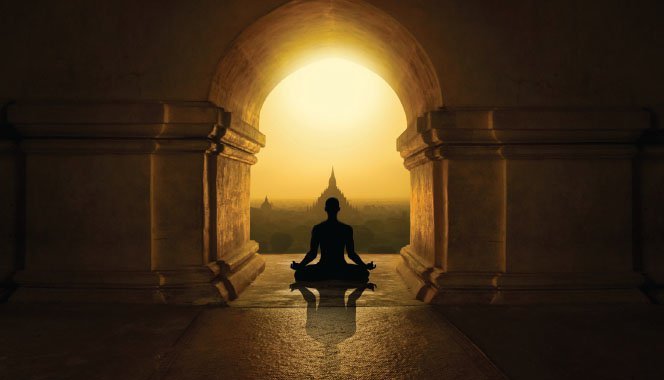
Meditation is all the rage! Almost every self-help author or motivational speaker from across the globe points to meditation as the key to getting you from where you are to where you want to be. Many people have testified that meditation has helped them grow spiritually, connect to themselves, feel better, be mindful, and so much more. And guess where meditation has its roots? According to experts, the earliest written records on meditation come from the Vedas, dating back to 1500 BCE. Archaeologists have unearthed sculptures and cave drawings of meditating figures from excavations at Mohenjo-Daro and Harappa of the Indus Valley Civilization. So, if meditation seems tough to you, think again. Your ancestors mastered the art, and so can you!



























Comments
Edit
Comment Flag
Cancel Update