
Attention Span and Safety in E-Learning: An Interview with Dr Manoj Kumar Sharma
Dr Meghna Singhal
Is your child stressed, exhausted or losing interest in online classes and homework? We asked an expert for tips on how to prevent digital burnout in children

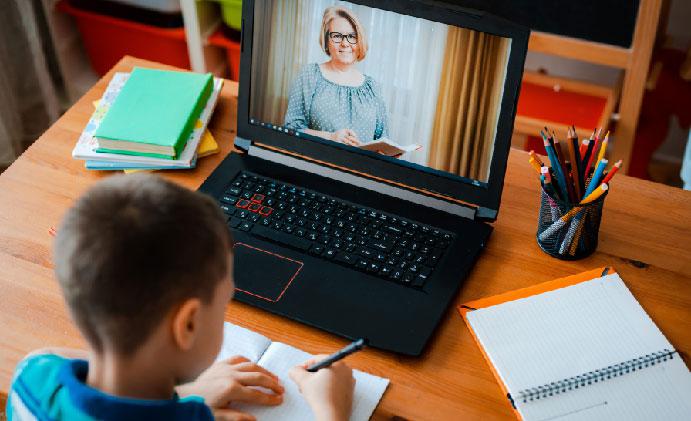
With online classes having become the new normal, it's not uncommon to find each member of the family hunched over their own devices. While e-learning has its advantages, many experts have expressed alarm about the potential dangers associated with young children's gadget overuse.
The United Nations Children's Fund (UNICEF), which is engaged in humanitarian aid for young ones around the world, has said "Millions of children are at increased risk of harm as their lives move increasingly online during the lockdown in the Covid-19 pandemic".
In this context, ParentCircle reached out to Dr Manoj Kumar Sharma, a professor of psychology, who runs the SHUT (Service for Healthy Use of Technology) Clinic, located at the National Institute of Mental Health and Neurosciences (NIMHANS), Bengaluru. The SHUT clinic helps people deal with technology-based addictions.
In an insightful discussion, Dr Sharma offers practical advice on how parents can mitigate the impact of screen exposure on their child's attention span, and keep their child safe online.
This interview has been lightly edited for clarity.
Watch this exclusive conversation with Dr Sharma.
How much is too much screen time?
That varies from individual to individual. Some individuals experience digital burnout, which refers to feelings of fatigue and exhaustion, and reduced productivity caused by excessive use of screens.
Experiencing digital burnout is not about the hours of usage, it's about how gadget use affects the person using screens.
If you experience eye strain, fatigue, and exhaustion after screen usage, you should take a break and switch to another activity.
Screen exposure can affect children's attention span. How can parents mitigate the impact?
Children, while engaged in online classes, sometimes engage in chatting or other activities in parallel. However, research demonstrates that every time a child gets distracted during a focused task, their brain takes 3-5 minutes to get back to the same level of concentration. So, if a child is engaged in other tasks, it may affect their attention span during the online class, thereby impacting their retention and recall. Here are some recommendations for children attending online classes:
- Let them access any non-academic activity (social media, games, chatting, etc.) according to a pre-planned schedule, not when they find themselves losing focus on the online class.
- Make them take a break after every 30 or 40 minutes of screen use. The break could be as simple as looking at a wall (or the floor) or blinking their eyes a few times.
- Ask them to practice movements of their hands, legs, or the whole body regularly throughout the day.
How can parents keep their children focused on online classes?
Firstly, parents should adopt a non-judgmental stance toward their child. This brings acceptance that getting distracted is normal and human!
Secondly, parents should reinforce their child's self-efficacy by pointing their child to the evidence that when the child is focused on online classes, the child displays better grasp and retention than when they are engaged in other activities during the classes.
Thirdly, parents should help their children use technology in a healthy way. This means they should not allow gadgets to:
- delay their child's sleep
- delay their child's academic assignments
- interfere with their child's need for physical activity
- replace their child's interactions with the family
How can parents keep their children safe online?
I would recommend a 2C approach- Communication and Cyber Literacy.
Communication: Parents should communicate with their child to get to know what's happening with their child better, including their child's use of technology. This will bring in openness, instead of it being a secretive activity.
Cyber Literacy: Parents should be media literate themselves and should educate their children about protective software and safe websites. Have these open conversations on an ongoing basis. For example, teach your child to not share personal details online. Talk to them about offensive content, pornography, sexting, and cyberbullying. Tell them why these are dangerous and how to avoid them.
How can parents play a role in making their child or adolescent a responsible digital citizen?
This is the role of all stakeholders only parents, but also teachers and the school. Schools can initiate educatory discussions on technology, maybe once a month or so. This will help children and adolescents use technology responsibly.
In a nutshell
- Digital burnout refers to the feelings of anxiety exhaustion and reduced productivity caused by the excessive use of screens.
- It's important for parents to adopt a non-judgmental stance toward their child, and acknowledge their child's need for recreation and physical activity.
- Adopting the 2C approach can help parents keep their children safe online.
What you can do right away
- Encourage your child to take regular breaks after every 30-40 minutes of screen use.
- Have open ongoing discussions with your child about technology use and overuse.
- Create a schedule that allows your child to spend time on non-academic online activities (social media, games, chatting), once online classes are done for the day.
- Talk to your child about cyber-safety issues (offensive content, pornography, sexting, and cyberbullying) in an age-appropriate manner.
Also read:
Online tutoring: How does it benefit your child



























Comments
Edit
Comment Flag
Cancel Update