
7 concepts from Japanese philosophy that can help children learn to be kinder, calmer, and mindful in their daily lives
Sahana Charan
The beautiful culture and way of life practiced by the Japanese are inspiring to people all over the world. Here are some interesting concepts that your child can adopt in everyday living
- 13.2K
- 3
- 2
As a child, my first glimpse of the Japanese way of life was from a television series called Oshin aired on Indian national television in the 1980s. Later, works of authors like Yasunari Kawabata and Haruki Murakami opened a window to the Land of the Rising Sun and its unique culture.
In recent times, people all over the world have been influenced by all things Japanese from hand-drawn anime to folk tales that teach valuable lessons. But, it is the ancient Buddhist wisdom, inherent in Japanese culture that can be an inspiration to every parent. The concepts of Ikigai, Wabi-Sabi etc., enable the Japanese people to practice discipline, balance and harmony in their lives, and pass on the same values to their children.
Many parents would love to imbibe some of the inspiring concepts that are part of the way of life in Japan and teach the same to their children. So, what are some of these ideas from Japanese philosophy that can help your children lead happy and meaningful lives?
Here are the seven Japanese concepts and how to adopt these:
|
Here, we give you a lowdown on some of these concepts and how you and your little ones can adopt them in everyday living:

1. Kaizen
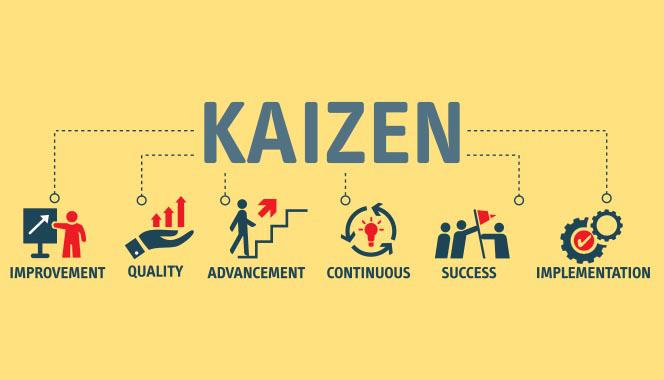 The literal translation of the word Kaizen is good change and the broader meaning of this concept implies making continuous improvements. Kaizen is widely applied in Japan to improve productivity at the workplace, in industries and education center's. It is a mindset that embraces quality over quantity and focuses on better efficiency.
"Kaizen is the core philosophy behind many successful industries in Japan. While putting it in practice in everyday life, the focus is on mastering whatever that you are learning and then getting better by making small changes or improvements that are constant. This way, learning happens by breaking things down to the smallest detail and then working upwards from there. For example, if you are reading a new book, commit to a set number of pages every day but ensure that you are thorough with these pages before you move on to the next set," says Vinay CR, Bangalore-based Japanese language consultant for two decades, who has lived in Japan for many years.
How you can implement it in your daily life: You can help your child make small but steady improvements at home or at school, through this principle. Be it healthy eating habits or learning a language, teach your child to do it one step at a time. This will help the child understand that the task is doable.
While putting it in practice in everyday life, the focus is on mastering whatever that you are learning and then getting better by making small changes or improvements that are constant - Vinay CR
2. Mottainai 
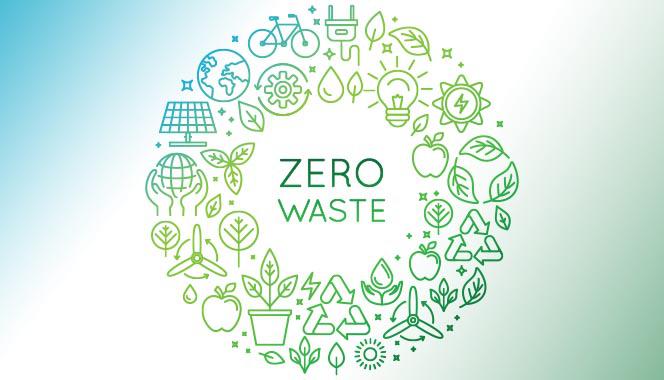
When a Japanese person exclaims Mottainai, it means What a waste! But mottainai has a much deeper meaning in Buddhist teachings. It is a term that expresses remorse over the misuse of valuable resources. Mottainai is a concept that focuses on receiving something with a feeling of gratefulness and showing respect to all things. Japanese parents say mottainai when they do not want their children to waste any food on their plate.
In modern usage, this concept is extended to encourage recycling or reusing of any item that may be deemed as waste. The concept is gaining more importance as there is an increasing awareness about minimalist way of life.
How you can implement it in your daily life: Encourage your child to be grateful for everything that he has and take good care of his belongings. Teach him to avoid wastage, be it food or other material things. Let him think of innovative ideas to recycle stuff for e.g., show him how to make bags or wallets from old t-shirt, jean trousers or to use old containers to store his knick-knacks.
3. Shoshin
Shoshin is a concept in Buddhist philosophy that means beginners mind. This concept encourages a person to have a fresh perspective and be open to learning new things without any preconceived notions. Shoshin allows one to develop a positive attitude and openness to new information, opinions and views, and a willingness to unlearn set practices and beliefs. In a wider sense, Shoshin will also help adults and children cultivate humility and make a fresh start. The beginners mind applies not just to learn a subject or a new skill but in all aspects of life.
How you can implement it in your daily life: Have an open mind while approaching any new subject or task and train your little ones to do the same.
"In Japan, when someone praises you for your prowess in a particular skill or subject, you dismiss it with all humility saying that you are just learning. Even if a person is an expert in something, they do not let their previous knowledge cloud their perspective when gaining new information," explains Vinay CR.
4. Shinrin-Yoku

Most of us look forward to leaving behind the travails of city life once in a while and connecting with nature. Being in the verdant green surroundings of the mountains or forest, taking in the pure and clean air and listening to the sounds of the natural environment makes us feel rejuvenated. This is what Shinrin-Yoku is all about.
It means forest bathing and is a common practice among the Japanese, wherein you become one with Nature and let all your senses immerse in the atmosphere of the forest. This practice is known to restore physical and mental health.
How you can implement it in your daily life: It is not possible to go to a forest every day. Instead, take your child to a nearby park or garden and choose a quiet spot to sit down. Ask her to identify the sounds of the leaves and birds or look for tiny creatures in the grass. During the vacations, take your child to a forest, mountain or river bank and let her experience the sights and sounds of the pristine environment.
5. Ikigai
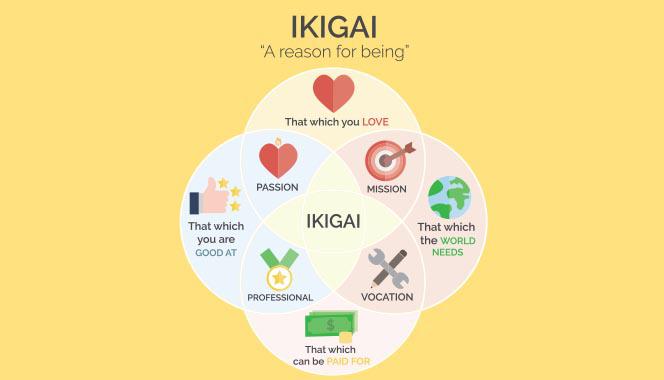
In the book, Ikigai: The Japanese Secret to a Long and Happy Life, authors Hector Garcia and Francesc Miralles write that according to the Japanese, every person has an Ikigai but they need to find it within themselves. The word roughly translates to having a purpose in life. According to Japanese philosophy, when you do what you love and what the world needs; are good at it and also get paid for it, you find your Ikigai. This brings meaning, balance and happiness into your life. You continue to do what you love and lead an active life, even after growing old.
How you can implement it in your daily life: It is important to find joy in the work you do, and to lead a healthy and active life to experience Ikigai. Many of us parents try to influence our children to take up a vocation that we approve, instead of allowing them to choose something that would bring them joy. Also, it is important to inculcate mindfulness and the spirit of giving in children, so that as they grow up they will develop social conscience and feel a sense of purpose in their lives. Simple acts like planting saplings, sharing their belongings with those less-privileged, helping in a charitable cause and spending time outdoors without gadgets will help children come closer to their Ikigai.
Parent quote:
"A close Japanese friend of mine, who grew up in the rural parts of the Aomori prefecture (In Japan, prefectures are the governmental bodies or divisions which are larger than cities, towns, and villages) fondly remembers how his parents encouraged him to commune with Nature. Japanese parents never categorize children or label them saying he's brilliant, she's very naughty, etc. They encourage children to be their natural self. Parents are non-interfering and accepting of their children. This helps the children become well-balanced individuals early in life," says S Narayan, a media professional and father of a 15-year-old girl, who has studied the Japanese language and culture.
"Japanese parents adopt a positive approach toward children. They encourage them to fine-tune their natural inclination towards certain skills. For example, I've seen people growing up close to Mount Fuji taking to pottery and saying that it was something they always wanted to do as children," adds S Narayan.
6. Wabi-Sabi
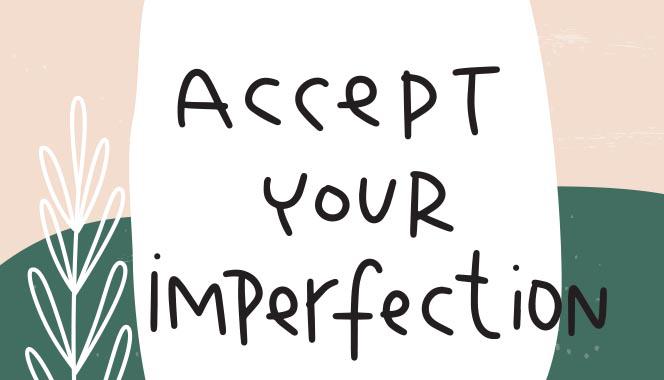
The Japanese philosophy of Wabi Sabi focuses on seeing beauty in imperfections and in the ordinary. It also means accepting these imperfections, finding joy in the simple things around us and the realization that everything in life is impermanent.
How you can implement it in your daily life: Author Mark Reibstein, in his extraordinary children's book, Wabi-Sabi tells the tale of a cat named Wabi-Sabi, who sets out to find the meaning of his name. Through the cat, the author explains to children this profound Japanese philosophy of seeing beauty in simplicity. This book is a good starting point for explaining children about this philosophy. Another activity would be to give your child some molding clay and asking her to make different shapes and sizes that are imperfect or have cracks in them. Help her see the beauty in the pieces. Also, give your child a challenge to find household items that are imperfect, but serve their purpose for example a chipped plate, a shirt missing a few buttons, a crooked pot and so on.
7. Itadakimasu
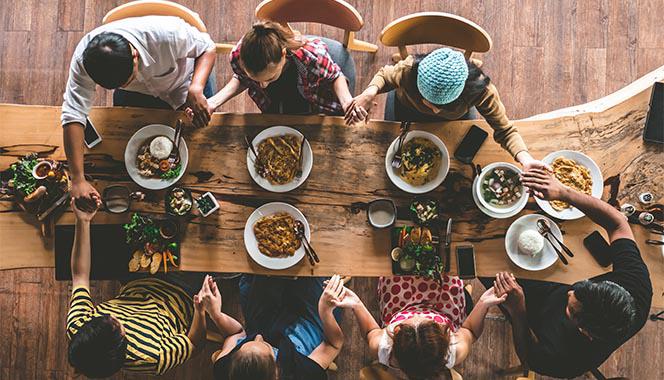
This is an ancient Japanese term which literally translates to, I humbly receive and is spoken before eating a meal. In Japan, every child is taught to give thanks to the food they eat by saying Itadakimasu. It is based on a Buddhist concept to show respect to the produce used to cook the food and the people who made it possible.
How you can implement it in your daily life: Take your child to the vegetable market or a farm and show her where her food comes from. Explain to her how the food is grown by farmers and why she should be thankful for the meals she eats every day. This will also help your child avoid food wastage.
These interesting concepts open a world of Buddhist wisdom for adults and children alike. The key is to use this wisdom to make practical changes for a happy and balanced life.
























Comments
R.Kalaivani Aug 21, 2023
Good to know.
Ranjani Gangadharan Aug 24, 2020
Edit
Comment Flag
Cancel Update