
Childhood fears and how parents can help their kids overcome these fears
Saakshi Kapoor Kumar
author parentcircle author parentcircle author parentcircle author parentcircle author parentcircle author parentcircle author parentcircle author parentcircle author parentcircle
Fears are a normal part of growing up. Should you rush to offer comfort every time your child is afraid-or should you gently help them tackle their fears on their own?
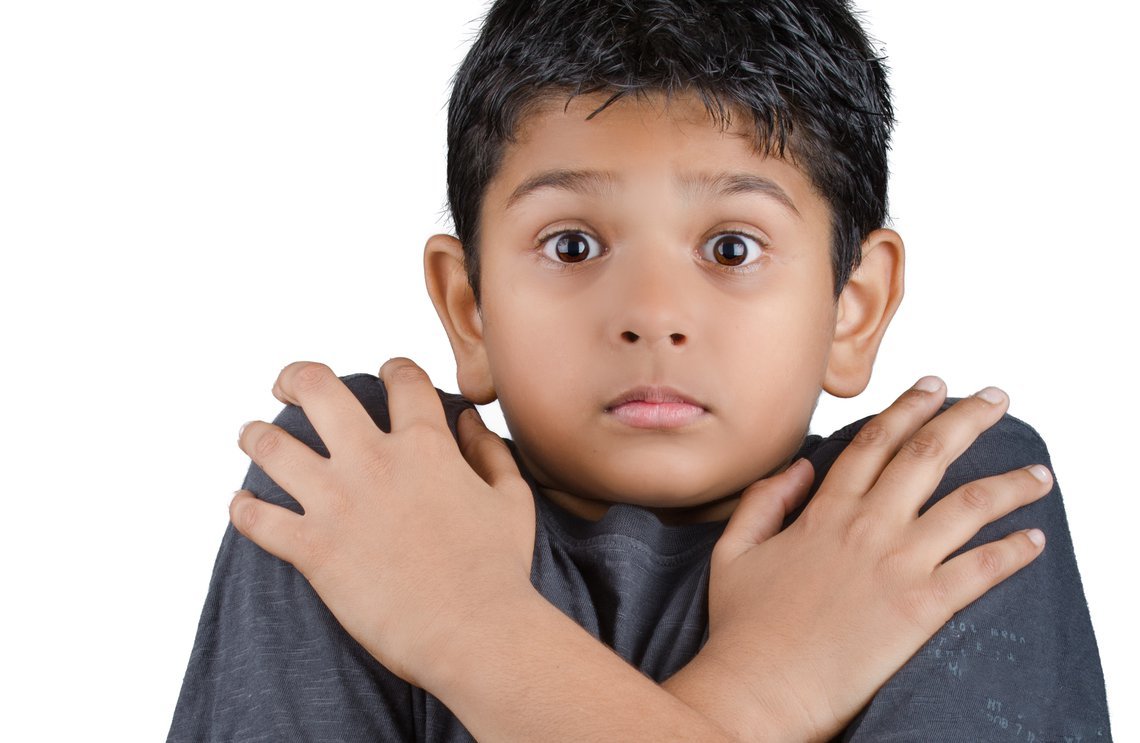
"My son Govind just doesn't want to brush his teeth. Every time I ask him, he runs away to hide under the bed or sofa. Or he cries his eyes out. He tells me that he can't brush his teeth because the toothbrush monster has superpowers and will eat him up! I have changed so many toothbrushes … tried bribing him, have read him stories to reassure him. But nothing works! I don't know what to do," says Neha, Mother of a 3.5-year-old
As a parent to a preschooler, you may have faced a similar situation. A dark room, a visit to the doctor, meeting a stranger, being separated from you, getting into a swimming pool, or climbing to the top of a high slide-every child (even adults!) experiences these typical fears. Fears are a part of growing up, and it is natural to get worried about your child's fears, as natural as it is for your child to have them. You can definitely help your child navigate these common fears. Just don't be in a hurry. Instead, remember that helping your child manage her worries is a long process through which you need to hold her hand patiently.
Why does my child have fears?
Think about the last time you were anxious. What was it about? It could be something as moving as a loved one's health or as mundane as your child not pooping. The truth is, we all have these fears. You'll be amazed to know that we are all wired that way. Our hunting ancestors would go into the forest, and any real or perceived threat would stimulate an intense fight/freeze/faint/ flee response. These responses were a part of the survival instinct. So, our brain's response to an actual or perceived threat is something we have inherited from our early ancestors.
When we are very frightened, we experience physical symptoms such as sweaty palms, rapid heart rate, shaky hands, or a need to go to the toilet. Even for a grown-up, these can be debilitating. Now, imagine what your child goes through. For them, fears can be far more intense, as their young brains are still developing, and they're still building their coping skills. Dealing with fears is unfamiliar territory for them, so they're bound to feel confused.
When there is a real threat, it invokes fear, and when the threat is perceived or doesn't actually exist, what we feel is anxiety. When your child gets scared of the dark, he may have anxiety whereas when he enters a dark room, he experiences fear. As children grow, their fears and anxieties also evolve.
During the preschool years, it's not easy for your child to clearly differentiate between what is real and what is imagined. For this reason, many children at this age begin to fear monsters, ghosts, imaginary characters. What makes it worse is when parents instill fears by saying, "Finish your food or the monster will come!" Imagined fears are very real to them. Acknowledging this can help you support your child adequately. With age, children overcome and grow out of most perceived or imagined fears. For instance, a teenager may not fear darkness but may feel anxious about being bullied by peers.
Let's look at some of the common fears that most children at preschool age have and how you can help your child manage them.
1. FEAR OF THE DARK
This is the most common type of fear in preschoolers. As your child transitions from infancy to toddlerhood, they become more aware of the world around them. For them, darkness means not being able to see what's around. Children of this age are more likely to be afraid of the unknown.
Your child doesn't want to turn off the lights at night and if she wakes up in the middle of the night, she may get thrown off by the darkness and cry uncontrollably.
What you may be tempted to say: "Big girls aren't afraid of the dark. Even your sister sleeps all by herself in the dark. There's nothing to worry about!"
What she feels: The darkness is only scary to me. I don't know why I am the only one feeling this. I don't know what to do.
What you can say instead: "I see how darkness can be scary. What scares you about the dark? Mom and Dad are here if you need us."
What she feels: Mom and Dad understand my fear, they are around and I feel safer. I can talk to them about it. Maybe they were scared of the dark too!
What you can do:
- Once the lights are turned off, keep a dim light on for your child. Stay in bed with her for a few minutes, asking her something that brought a smile to her face during the day.
- Develop a meditation or relaxation routine where you can ask your child to close her eyes and imagine a calming scene like watching a butterfly on a beautiful plant. Doing this before bedtime can be especially helpful.
- Give her a favorite toy or blanket that she can have with her during sleep. It will help her feel more secure.
- Tell her she's brave when she makes it through the night. She is mustering up the courage to confront her fears-and encouragement is what she needs!
2. FEAR OF SEPARATION
Separation anxiety is extremely common in preschoolers. Most children experience heightened separation anxiety when they start preschool. Your child feels safest with you around. In a new place, he doesn't feel so secure. No wonder he responds with anxiety with the most pressing fear being "Mumma isn't coming back!"
Every time you wake your child up for school, he refuses to budge and cries all through bath time up till breakfast. He doesn't get in the car easily and dropping him off is a nightmare!
What you may be tempted to say: "All the other children look so happy, what are you so scared of? Did the teacher say something? Don't you like school? It's only three hours, and then you'll be back with Mumma. Come on, you are a big boy now."
What he feels: I don't want to be without Mumma. She makes me feel so safe. School is nice, but it doesn't have her in it. What if I need her? Why can't everyone understand this? My stomach aches and I want to hug only Mumma.
What you can say instead: "I know you don't want to leave me and would like me to stay with you. But, if you stay home, you'll miss out on all the fun at school! Can you see your teacher there? She's going to take very good care of you while I am away. I will pick you up at 1 p.m. and finish all my work so that after you come back, we can play together. Let me draw a small smiley face so that whenever you are upset, it will remind you to smile! See, your new friends are waiting too. Show them the smiley if any of them feel a little upset too! Now, let's do our secret handshake!"
What he feels: I feel better already. School does look colorful and a lot of fun. My smiley can help me and others too! I can tell my teacher when I need something. Mumma will be back around lunchtime!
What you can do:
- Establish a morning routine that leaves a little bit of time for a morning chat and cuddle with your little one. A hush-hush morning is likely to leave them feeling more anxious.
- Never let your anxiety rub off on them. It's hard for you too, but try not to let your child see this. Once you've dropped them off, call a friend to let your heart out!
- Show trust and confidence in the school staff, especially in front of your child. Talk about them in a good light because if you trust them, it's more likely that your child will too!
- Remember, it won't always be this way. Your child will grow out of this sooner than you think. So, sneak in that extra cuddle while you can and enjoy these moments!
3. FEAR OF GOING TO THE DOCTOR
Parents of young children, who fear getting a shot or even going for a routine checkup, will admit how nerve-wracking a visit to the doctor can be for children. This is another commonly experienced fear because children associate the doctor's clinic with pain and discomfort. The pain they felt during a previous vaccination can stay with them.
Your child has a cold and needs to see the doctor. Fearing her reaction, you tell her you're taking her somewhere else. As soon as she realizes it's the doctor's clinic, she refuses to come out. She howls and cries in the clinic, rather loudly.
What you may be tempted to say: "What's there to be scared of the doctor? Do you want to remain sick? He's the one who will help you get rid of the cold. We have to go."
What she feels: The injection hurts me. I don't like seeing needles. What if I bleed? He also has funny tools that he puts around his ears. He also puts something in my ears and mouth. I don't trust him; he can hurt me!
What you can say instead: "I know you don't like visiting the doctor because you don't like getting injections. No one does. But they're important to keep us healthy. And, this time, we're only going to see him to ask for medicines for your cold. You have been so uncomfortable. You told me this morning that you want to play with friends. The doctor can help you get healthy soon so that you can go out and play! Don't worry, I will be right beside you."
What she feels: Oh, injections hurt everyone! Mom understands. She will sit next to me when we visit. I think it won't be so bad!
What you can do:
- Never instill in your child fear of the doctor or injections. Many parents say things like, "Have your milk or you will need injections!" Be mindful of these statements.
- Play a game with your child while visiting the doctor. Before entering the clinic, ask them to look for five blue things they can see. This will help them focus on other things.
- Have them ask questions about doctors and what they do, and let them converse with the doctor freely so that they can begin trusting him.
4. FEAR OF ANIMALS OR OTHER CREATURES
Your child may not be an animal lover and may, in fact, fear animals. Most children are afraid of the loud sounds they make, or that they may bite them. The creepy-crawlies may freak them out as much as the large animals. The situation may be different when children have pets at home.
Your child's grandparents have a pet dog and fearing him, he doesn't want to visit them. You have to take him along and as soon as he gets there, he only wants to cling to your lap and doesn't want to be on the floor at all!
What you may be tempted to say: "Relax! He won't do anything. He doesn't bite. Pet him and see."
What he feels: The dog has such big teeth. He can bite me. I only want to be on Mumma's lap. If I walk on the floor, he will bite me.
What you can say instead: "He looks so big, barks so loudly and jumps around so much. This can be scary for you. I will hold you in my lap when we enter. You can try petting him while sitting on my lap. He jumps and wags his tail because he wants to be friends with you. And he barks because he can't talk like you and me."
What he feels: I feel safer on Mumma's lap. I think I can pet him from there. I think Mumma does understand. I will try to touch him if I want to.
What you can do:
- Talk to your child about animals and their behaviors. Show them pictures of the dog as a puppy. Tell funny stories about animals!
- Avoid saying things like "Don't touch, he will bite!" or "Stay away from him". Such talk will only magnify your child's fear of animals.
- Discuss with them how domestic animals attack only when someone is cruel to them. It's important to remember that animals are living beings too!
5. IMAGINARY FEARS
Parents of preschoolers always want to encourage imagination and curiosity. While you read them stories about fantasy and fiction, their imagination goes wild. They not only think about the heroes but also about the evil characters. The witch, the ghost, the monster-all form a part of your child's vivid imagination. She begins to fear them because she still isn't mature enough to know that they don't actually exist!
In the example given at the beginning of the article, the child thought that the toothbrush was a monster! He didn't want to brush because of it.
What you may be tempted to say: "There's no such thing as a toothbrush monster. It exists only in storybooks. Stop being so scared!"
What your child feels: The toothbrush monster seems so real to me. I start to feel so funny and shaky at the thought of being eaten up. Why doesn't Mumma understand?
What you can say instead: "The toothbrush monster scares and worries you so much. Why don't you start brushing with Mumma? I will do it with you so that the monster stays far far away! I don't think he's real, but let's see if he comes. I'll make sure he doesn't come near you!"
What your child feels: If Mumma brushes with me, I am sure the monster can't do anything. I am so glad she agreed to stay. She will protect me.
What you can do:
- No matter how irrational you think your child's fear is, it is very real for them. Don't encourage their beliefs, but don't rubbish them either!
- Validate their fears and then move on. Don't pay too much attention and keep talking about the topic over and over. Chances are, this week they fear the monster, the next week they have forgotten all about it!
- Keep a tab on the kind of content your child is exposed to, whether it is through books or videos. Sometimes, the content can be too graphic for a child.
No matter the fear, your child needs to feel safe and secure to manage it. As parents, your role is not to help them overcome it completely. The idea is to help them work through it and find their own coping mechanisms. Being courageous doesn't mean not having any fears, but perhaps accepting them and facing them in our own unique ways, something children are naturally good at. Parents, you can breathe, your child is more resilient than you think!




















Comments
Edit
Comment Flag
Cancel Update