
How To Establish Family Rules For Children At Home: Simple And Effective Parenting Strategies
Anitha Bennett
author parentcircle author parentcircle author parentcircle author parentcircle author parentcircle author parentcircle author parentcircle author parentcircle
Family rules can be a gentle way to guide children, not a source of stress. This article offers simple, effective parenting strategies to set clear rules at home with warmth, understanding, and consistency
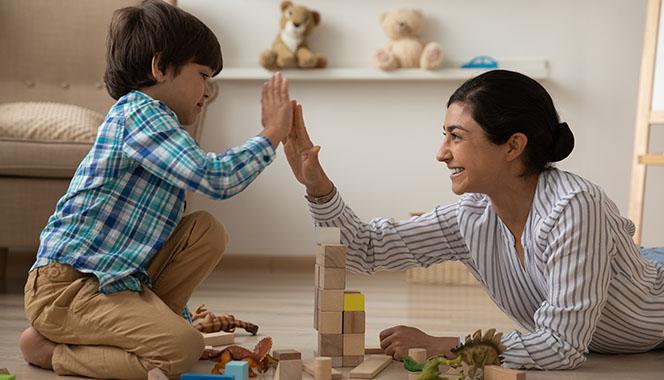
'Household Rules' reads a sign on a wall in Mrs Arthi Malhotra's home in Mumbai. There are 10 rules listed, ranging from the obvious to the quirky. Mrs Malhotra's children, Dhruv and Aarav, aged 7 and 5, seem to know the rules by heart. Mrs Arthi laughs as Aarav rattles the rule, "If you take something out, put it back," to his brother Dhruv when he leaves his Lego behind and runs off to the next activity.
Indeed, rules are an integral part of our everyday lives. We follow them everywhere, from roads to the workplace to the dining table. Rules help to maintain order in the world, and their importance at home is no less. However, framing rules for children to follow at home is no child's play.
Here are seven simple tips to make rules easy for children to remember and follow:
1. Simple rules for the home
While it may be tempting to cover every aspect while making house rules, avoid being elaborate. Keep your rules short and simple. The fewer the better. Keep revising the rules and ask children to repeat the same whenever the need arises.
2. Practical rules for the home
You may need to consider the temperaments of family members and the timings of your household before making the rules. 'Homework first, Play next' will not work if your children have extracurricular activities that stretch all evening. Keep practicality and functionality in mind when you make the rules. It makes it easier for children to follow them.
3. Follow the rule of three
The rule of three seems to work, as three things are easier to remember than a dozen. Make three rules under Dos and three under Don'ts. Another idea is to have three non-negotiable rules that must never be compromised, no matter who, when, what, where, or how. For example, the rule - 'Do not speak to strangers.' You can also personalize and make three age-appropriate rules for each child. The key here is to make rules that are necessary and customized to suit your home and family members.
4. Display the rules for easy recall
A good idea would be to post the rules in various corners of the house. For example, the rule 'Clean-up time every day at 8:00 p.m.' can be placed on the doors of the playroom and toy cupboard. You can also make an attractive wall hanging of the rules or frame them. For example, 'XXX's Family Rules' or 'In our home, we...'
5. Be consistent, but flexible when it matters
While you may not feel like following through certain rules over a lazy weekend, an extra-busy weekday, or when your mood swings take over, try your very best to stay consistent. Children pick up on parental inconsistencies and take advantage by working around or breaking the rules. So, if it is 'Brush your teeth before going to bed,' then make sure that it is followed. It's alright to be flexible when necessary.
6. Be a good role model for your child
The rule 'No gadgets at the table' will not work if you or your spouse fiddles with the phone while having meals together. Discuss ahead of time with your spouse what rules will apply. When parents disagree on the rules, children cannot follow them. Arguments ensue with sides being taken, and the whole purpose of establishing rules for a chaos-free home is defeated.
7. Follow through with rewards and consequences
Children follow rules when encouraged with a reward. Rewards can be anything from a sticker chart that tracks their progress to treating them with their favorite meal at the end of the month! Consequences for breaking rules must also be clearly defined while making the rules, and must be enforced consistently. For example, if a child deliberately breaks a sibling's toy, they must pay out of their own pocket money to replace it.
Being clear about rules, rewards, and consequences will help in establishing them with the least amount of resistance. While your children may protest against the rules or break them, don't give up. Instead, be firm and polite, and before you know it, you will feel pride and joy for your well-disciplined family.
Build a happier home with practical parenting rules. Read more.
Last updated on: December 18, 2025


































Comments
Edit
Comment Flag
Cancel Update