
Is Your Child A Sore Loser? How To Teach Kids To Lose Gracefully And Build Resilience
Dr Meghna Singhal
Does your child get upset when they lose a game or a competition? Learning to handle defeat is just as important as celebrating wins. Here are some practical tips to help your child accept loss with grace and bounce back with confidence
- 23.3K
- 1

"My 6-year-old sulks every time he loses a game, even if it's just a game of carrom we play with our family for fun. If he gets the fewest pieces, he instantly starts crying, sometimes throwing the pieces around the room. He starts saying that someone cheated or that we should all play again. This is when we're not being competitive. At school, when he doesn't get a prize for the running race, he mopes around all week. This is such a sore point that I have put off enrolling him in team sports for the fear of how he will react in front of his classmates at school. Not sure how to handle this. Please help!"
It is natural for a child (or even an adult) to feel bad about losing a game or competition. While some children can take losing in their stride, for others it causes heartbreak.
Signs that your child may be a sore loser
- Sulking, yelling, anger, and generally displaying a poor attitude when they lose at something. It could be a silly game ("Let's race to the car") with less at stake, or a high-stakes school-level competition.
- Quitting mid-way because they're behind, or deliberately disrupting the game
- Cheating because they know they're losing
- Challenging other players repeatedly for a rematch to avoid leaving the play session as the losing player
Why do some kids struggle with losing
There are several reasons why a child could become a sore loser:
- Our immediate tendency to praise our child when they win or even do well plays a role in putting winning on a pedestal. While there's nothing wrong with our children seeking our appreciation and celebration for winning, this may make them perceive losing negatively. Both losing the game and losing out on their parents' approval can cause some children to struggle to maintain a positive attitude.
- For some children, the need to win stems from some earlier emotional upheaval, when the child may have felt helpless or alone. According to Hand in Hand Parenting's founder, Patty Wipfler, wanting to win is a sign that the child wants to be noticed and feel good about himself.
- Being unable to regulate their feelings of anger or frustration is another reason why some children may become sore losers. These children may not have the tools to appropriately express their negative feelings in the face of a loss, or might not know how to make themselves feel better after an upset.
- Another reason why some children may become sore losers is, paradoxically, when their parents have called them out for being one! Judging a child for their competitive feelings ("Why are you being so sulky?") or issuing directives ("It's only a game, brush it off!") means, in effect, telling them that they're a 'loser' for not being okay with losing.
- A child can't lose well if they have never had an opportunity to win. When they can experience the thrill of winning, they derive confidence, and then losing doesn't seem like the end of the world.
Should you let your child win?
Does this mean we should let our child win in an "I'll lose deliberately to make you win" manner? Sometimes, but not always. For children to experience the delight of winning in the safety of your presence is important. It helps them work out their feelings and supports their needs. Then, even when they do lose, it doesn't threaten their identity.
Some ways in which you can let them win
- By asking your young child at the outset, "Do you want me to let you win?" If your child says yes, let them. The idea is to be upfront about letting them win, instead of tricking and enabling your child to enjoy the game without always worrying about the outcome.
- Let your child make up the rules and lead the game. This gives them the power and control, and allows them to make up (emotionally) for the times they have lost.
As your child enters grade school and starts playing skill-based games, winning and losing start to matter. You can, over time, explain to your child that you win mostly due to the advantage of your age or size, or experience. One way to help your child appreciate this is to pit yourself against multiple children of different ages, to even the odds. Another way is to include games that involve chance or luck (only the ones that depend on physical and mental competence).
Simple strategies to help your child handle loss calmly
- The short answer? Stick around, show your support, and let your child express her hurt.
- The long answer? You mustn't get preachy or judgmental. Telling them not to get angry or upset won't work. It may end up making your child feel worse. Let them express their feelings freely (unless it violates your boundaries or family rules).
- Convey empathy by saying something like, "I understand what you're feeling...not winning makes you feel frustrated," instead of "It's not a big deal, get over it". Then brainstorm ways in which they can feel better.
- The idea is to empower your child by demonstrating that even though they can't control the outcome of the game, they can choose what they do with the outcome.
EXPERT TAKE
ParentCircle interacted with Dr. Saurabh Mehrotra, consultant psychiatrist at Medanta Medicity in Gurugram. Here's what he said about children becoming sore losers:
Q. What makes a child a sore loser?
"A problem behaviour, such as being a sore loser, can emanate from homes where:
- Both parents see the world as black or white.
- Children are not encouraged and supported.
- A lot of emphasis is placed on what others think about them.
- There are unhelpful beliefs such as the need to be at the top, to be perfect, there is only one winner, failure is not acceptable, etc.
If parents are judgmental, competitive, perfectionist, or critical, this may play on the thoughts of the child, and they may believe that everything needs to be won and achieved. When the bar is raised so high, failure becomes unacceptable, and when it comes, the child has no emotional or cognitive mechanisms to handle it, thereby displaying behaviors of a sore loser."
How to inculcate a positive attitude to losing
- Look at the positive. Even after a defeat, you could discuss with your child the positive aspects of the performance. Even if, for example, India loses a cricket match, you could have a conversation with your child about which player played well or what good sportsmanship the team displayed. Instead of focusing on how not to act when losing, focus on how a winner should behave.
- Role model. You won't be displaying good sportsmanship when you yell at a player on TV for missing a goal, or at the referee for handing out a yellow card. Your child is watching you when you congratulate the winner you were not rooting for, or cheer on the players on the losing team for playing well, and you display good sportsmanship, even when you're not playing the game yourself.
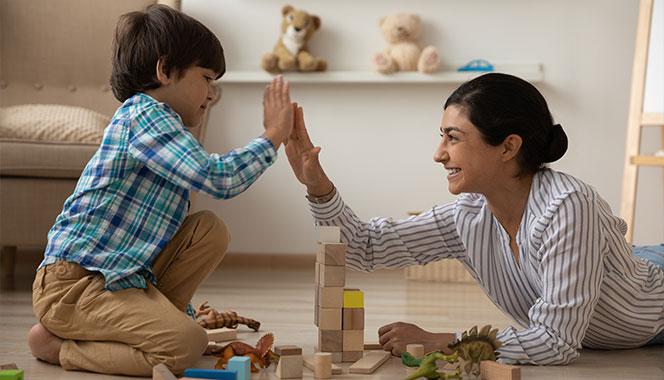
- Practice being a graceful winner. When your child wins, teach them to show kindness to other players by saying, "Fun game", shaking their hands, or giving high-fives with a genuine smile, or saying, "Thank you for playing with me." Help your child focus on the pleasure of playing, instead of who won or lost.
- Emphasize uniqueness. In your everyday interactions, focus on how everyone is good at something. Each one of us is unique and different, with our own set of strengths that one can inculcate with practice and hard work, no doubt. But one person can't be skilled at everything. Talk about your own failures, both big and small, and how you could bounce back from them.
- Inculcate a growth mindset. Press the view that any failure is never permanent. Emphasize that a person's skills can be honed with perseverance and practice and that mistakes or failures are learning opportunities. Praise your child's efforts regardless of the outcome. Avoid using labels when your child does win, such as "smartest boy" or "fastest runner," which can fuel a competitive spirit and inculcate a fixed mindset. Instead, point out good sportsmanship ("I liked how you cheered for other children today.")
- Teach emotional regulation. Talk to your child about feelings of sadness, anger, disappointment, and frustration. Help them identify these feelings and develop healthy ways of expressing them. When your child is in a neutral or positive mood, for example, sit down with a pen and paper and brainstorm all the ways they could feel better when angry. Call this the anger list. Let them stick it up in their room. When your child gets angry, remind them to refer to this list. On your part, validate your child's feelings, instead of brushing them aside.
- Don't condone a victim mentality. Some children receive a message that says, "You won't succeed, so don't bother trying," or "Why do these things happen to you only?" This is a victim mentality. Suggests Amy Morin in her book 13 Things Mentally Strong Parents Don't Do, don't rescue your child at the first sign of struggle. This underestimates their self-belief, throws their sense of control out of the window, and teaches them that they must depend on others to do things for them, such as winning a game.
So, Dear Mom, by all means, go ahead and enroll your child in team sports. Let him experience the sting of losing. Give him space to express his hurt and frustration to you, without any judgment or criticism. Coach him in developing a positive attitude toward losing. After all, we don't really win until we lose. All the best!
In a Nutshell
|
What you can do right away
- When someone grabs the parking spot you were eyeing or gets their turn first, avoid losing your cool. Or else, it will only emphasize that winning matters.
- Play cooperative instead of competitive games as a family, such as The Secret Door, or make one big puzzle together, which requires everyone to pitch in and help each other.
- During game night, enforce the rule that games will continue if everyone is having fun. If your child starts to whine or throw a tantrum on losing, take a pause without judging or shaming them, and tell them you'll resume if they can be in a better mood.
Last updated on: August 22, 2025





























Comments
Jayanthan Feb 16, 2021
Edit
Comment Flag
Cancel Update