
How do parents know if their child is autistic? An expert view on the same
Team ParentCircle
This World Autism Awareness Day, we look at the most crucial element in treating autism – early detection. How do parents know if their seemingly normal child is autistic? An expert perspective coming your way
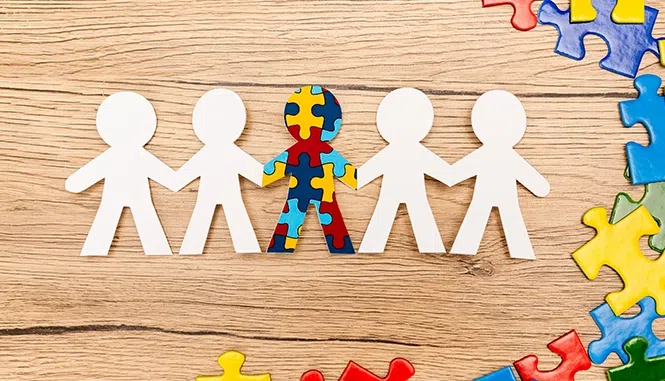
Latha and Ravi have two sons – five-year-old Naveen and three-year-old Nitin. When Naveen was a toddler, Latha and Ravi saw him engage with toys, gestures, games, songs, and everything under the sky. But when it came to Nitin, there was hardly an interest in any of the activities mentioned. Initially, Latha and Ravi were under the impression that Nitin was a ‘reserved little boy’ and probably the exact opposite of Naveen in nature. But with days passing and no improvement in Nitin's behavior, a worried Latha decided to seek help. She met a developmental specialist, who confirmed Nitin was autistic.
Unfortunately, Latha used the ‘wait and watch’ approach, which is now hurting her. If only she had sought help immediately after the initial signs, Nitin would have responded to treatment much faster, since an infant’s brain enjoys remarkable plasticity.
Latha is not alone. Nor is Nitin. Even as medical advancements have been the norm in the 21st century, autism continues to challenge modern medicine.
What is Autism?
The World Health Organization (WHO) defines Autism Spectrum Disorder as "a range of conditions characterized by some degree of impaired social behavior, communication and language, and a narrow range of interests and activities that are both unique to the individual and carried out repetitively".
WHO further states, "Autism Spectrum Disorder begins in childhood but tends to persist into adolescence and adulthood. In most cases, the conditions manifest during the first five years of life".
The signs and symptoms of autism vary between children. While some children have only mild impairments, others face major obstacles to tide over. However, autistic children generally lag in the following three areas:
1. Verbal and non-verbal communication
2. Relationship with others and the world around them
3. Flexibility in behavior
What causes Autism?
Although autism has a genetic predisposition, it cannot be diagnosed in the womb. One of the common genetic disorders associated with autism is called Fragile X Syndrome. This is a single-gene disorder. Families with a strong history of mental issues like slow learning and other behavioral problems should check if one of the parents is carrying the Fragile X gene. Other factors that may cause autism include
- Taking anti-depressants
- Nutritional deficiency of the mother during pregnancy
- Age factor of parents
- Very low birth weight
- Neonatal anemia
- Maternal infections
- Exposure to chemicals, metals, and pollutants during pregnancy
Though marriages within relatives lead to many genetic disorders, autism is not one of them.
Diagnosis holds the key
Age-related milestones provide valuable insights into determining whether a child is autistic. The most obvious milestone-related misses are:
|
Repetitive Behaviour
According to the fifth edition of the Diagnostic and Statistical Manual of Mental Disorders, restricted and repetitive behaviors and interests are among the core symptoms of autism. Repetitive behavior is usually due to sensory processing problems in children. Unfortunately, there are few treatment options for restricted and repetitive behaviors and interests.
| Age-related milestones provide valuable insights in determining whether a child is autistic |
Do not ‘Wait and Watch’
Many parents tend to go for the ‘wait and watch’ approach even though they suspect something’s amiss with their child. They refrain from asking for help. It is important to note that the brain is extremely neoplastic in the early years; this means the brain is expanding and forming new connections to develop skills in children. It is possible to maximize the potential of the brain only if autism is diagnosed in the early stages.
According to autism-india.org, "obtaining an accurate diagnosis of autism" is one significant issue faced by parents in India. Having said that, things have been changing for the better in recent times. There is a major awareness drive underway and our country has slowly started witnessing a greater acceptance of autistic children in society.
Common repetitive behavior patterns to watch out for
- Hand flapping
- Head banging
- Unusual preoccupation
- Ritualistic behavior
- Sensory sensitivities
- Limited interests
- Verbal rituals
- Staring at lights
- Moving fingers often in front of eyes
- Complex mannerisms
- Continual thoughts
- Stereotyped utterances and motor movements
- Repeated interest in the same subject
- Insistence on sameness
- Lining up toys in the same pattern
- Repeating words or noises
We hope this article helped you understand what’s normal and what’s not when it comes to finding out if your child is autistic. But remember, as a parent, you are best placed to spot the earliest warning. After all, you know your child better than anyone else.
(With inputs from Dr. Nandini Mundkur, a developmental pediatrician. She has done pioneering work in the field of early detection and intervention services for developmental disorders.)




























Comments
Edit
Comment Flag
Cancel Update