
10 Tips to help your child remember what he has studied
Erode Kathir
Does your child find it difficult to recollect what he has studied? Here are some tips to help improve his memory.
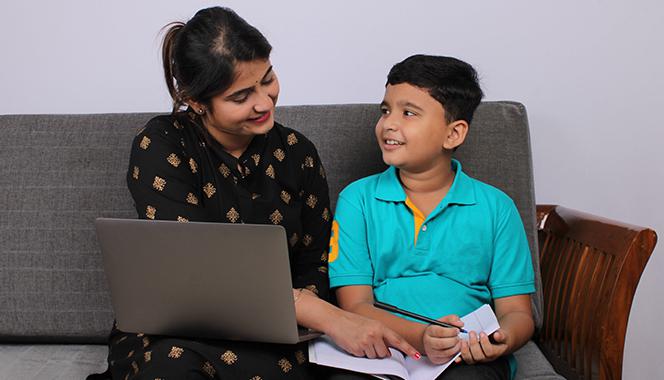
One problem school children face is forgetting what they have studied. All the students in a class are taught the same way by the same teacher; they follow the same textbook; they also write their exams based on the same question paper. So, why is it that all of them don't get the same kind of marks? There are several reasons for this, but the most common and important one is that many children just don't remember what they have studied. Even a good student who puts in a lot of effort and hard work might end up getting low marks in the exams because he has forgotten what he has learned.
So, as parents, how can you help your child overcome this problem? We spoke to some teachers and here are 10 tips they suggest for your child:
1. Remember keywords
When your child cannot recollect what she has studied, she will find it difficult to write a proper answer for the exam. To fix this problem, make her note down some keywords for each answer and keep them in mind. When she is about to write the answer, she will have to just recall the keywords. Then, she will be able to write the whole answer without forgetting.
2. Read thoroughly
Ensure that your child cultivates the habit of reading his lessons daily at home. He must revise thoroughly whatever was taught at school that day. This will help him to easily understand the lesson and also remember it well.
3. Write it out
Your child must practice writing out the answers when she is preparing for the exams. Writing an answer once is equal to reading it several times. It will help her remember the answers during the examinations.
4. Get doubts cleared
If the teacher is teaching a lesson and your child has a doubt, encourage him to get it cleared by the teacher right away, however small it might be. Not doing that will only result in his not being able to understand the lesson properly. Discussing the lesson with classmates will also help.
5. Read repeatedly
One of the best ways for children to remember what they study is by reading the same lesson several times. Help your child prepare a chart for reading the lessons at regular intervals so that she revises each lesson properly. She will have no problem then remembering the answers during an exam.
6. Proper diet and rest
It's very important that children eat nutritious food, especially during exams. This will help in proper metabolism, thereby promoting memory and alertness. Get your child to eat a lot of fruits and vegetables, and avoid junk food. Also, make sure he gets the right amount of rest and sleep. Most importantly, help him to learn to relax so that his fear reduces to minimal levels.
7. Become a teacher
To understand and remember lessons properly, you can get your child to occasionally play the role of a teacher and teach her friends. She can do this when the children sit together for group study. Teaching others helps your child know which parts of the lesson she is confident of, and which parts she needs to revise again.
8. Have discussions with friends
Sometimes, children may be overconfident and feel they have studied everything. But there are chances that they might forget what they have studied while writing their exams. To prevent this from happening, ask your child to discuss the lessons with friends during group study sessions. In this way, your child will find the gaps in her preparation and attend to them.
9. Build confidence
Help your child build her self-confidence by making her repeatedly tell herself that she will understand and remember her lessons and write the answers properly in the exams. Most children fail to do well in exams because of a lack of confidence. Positive self-talk helps build confidence.
10. Prepare a flow chart
Help your child prepare flow charts for all the lessons, incorporating the important concepts. As your child goes through these flow charts and keywords, it will be easy for him to recall the content of the lessons. It's a great way to remember what he has studied.
As parents, these are ways in which you can help your child prepare well and do the best she can in the exams.
Our comprehensive pre-primary curriculum nurtures the physical, social, emotional, and cognitive development of children. It offers parent connect, teacher support and professional development, and a continuous progress tracking system. The curriculum is aligned to the learning goals of the National Education Policy (NEP) 2020.
























Comments
Edit
Comment Flag
Cancel Update