
10 fun games to expand and improve your toddler's vocabulary and its long-term gains
Susan Philip
Parents wait eagerly for their child to begin speaking. But what if it appears that the toddler isn't improving her vocabulary by learning new words? Playing these games could do the trick
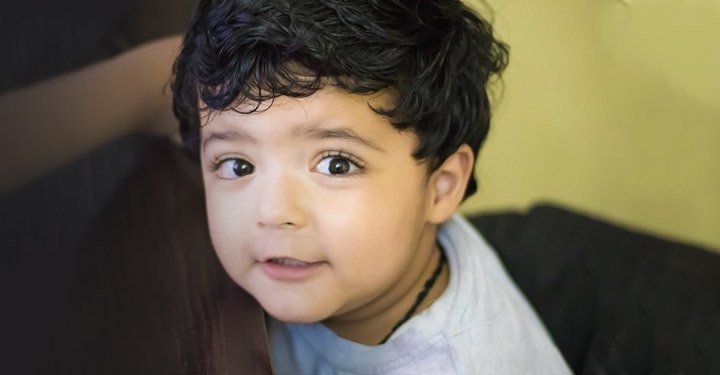
Two-year-old Rose still says "inngga" for milk, and many other words which she has made up. Her parents enjoyed her baby babble initially, and didn't try to correct her. But now, they find it difficult to get her to use proper words.
It's a common problem, but one that's preventable. With just a little help from parents, toddlers can quickly acquire a wide vocabulary.
Before going into how parents can help in this regard, let us understand how toddlers begin speaking.
It would be interesting to note that children start 'talking' very soon after birth. Initially, only the parents and caregivers are able to understand them. But, as they grow, they pick up the words of the language spoken around them. This process is almost unconscious, and amazingly fast. This is because the young, growing brain grasps things faster than an older one. However, parents and caregivers should play the important role of catalysts. With their active encouragement, toddlers can very quickly pick up an excellent vocabulary. Even infants understand and respond to cues. They follow the direction of an adult's pointing finger, and begin to imitate actions and sounds. These abilities can be capitalised on to improve a toddler's vocabulary. On the flip side, without parental encouragement, the process can remain stunted.
10 ways to expand your toddler's vocabulary
- Lend them your ears: Listen to your toddler. When he talks 'baby language', focus on him. It is an indication that he wants your attention. Make eye contact with him while you speak. He loves to listen to you. The time you spend talking to each other will also strengthen the bond. As he grows, use more sophisticated words, explain new terms and repeat them often. This will help him use the words correctly later.
- Table talk: Make mealtimes interactive and fun. While you are feeding your toddler, identify the objects around him; for example, the 'spoon', 'bowl', and 'cup'. As your child grows, talk to him about the various foods he's eating. And when he's able to respond, listen to what he has to say.
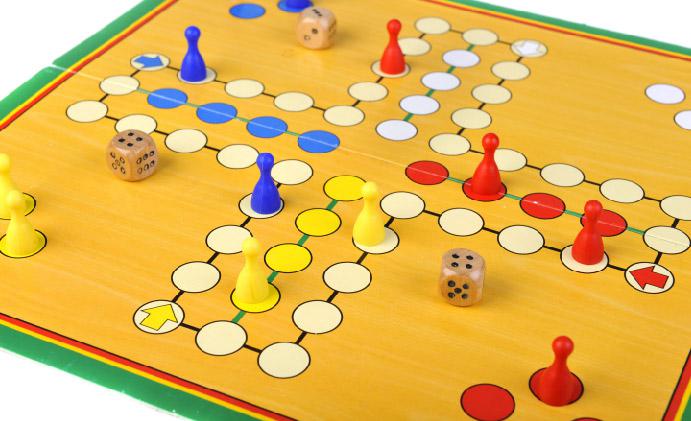
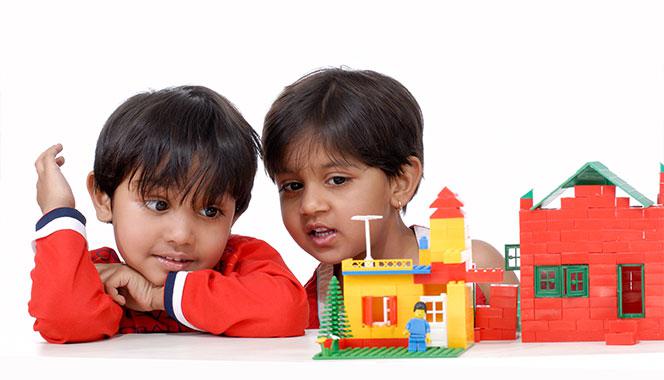
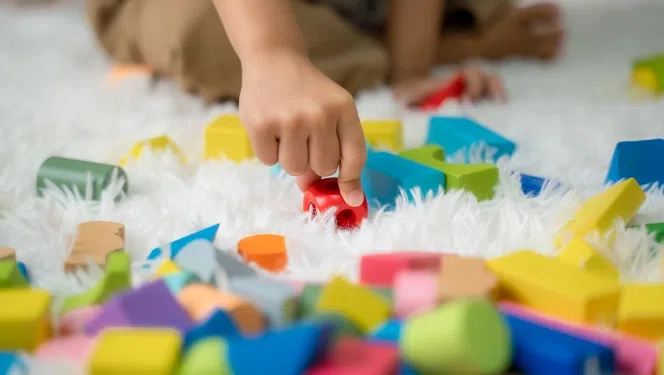
- Play-way: Play time is quality time for a toddler. When you play with your child, talk about her toys. She will unconsciously learn not only about nouns, but also verbs and adjectives, and understand how to use them in sentences. Older children benefit by playing with other children. For, when they interact, children pick up new words, maybe a few even from a new language!
- Book learning: Read to the toddler and bedtime is the perfect opportunity. Use big, bright picture books initially, preferably ones that are plastic-coated or made of cloth. As the child grows, shift to simple books. Read with expression. If there are onomatopoeic words, like 'Caw, caw, said the crow,' make cawing sounds as you read. This is fun for the toddler, and she will look forward to the reading sessions. Also, she will be motivated to read books herself.
- See and tell: A walk in the park, a visit to the zoo, a journey by train or even a visit to the doctor can be turned into an opportunity to improve your toddler's verbal skills. Talk to her about what you see using simple and clear words. Toddlers are naturally curious and will ask for information about every unfamiliar thing that they see. Encourage your child to ask questions, and always give him easy-to-understand explanations and answers.
- Don't babble: Babbling is what babies do. It sounds cute, but don't let it become a habit for your toddler! Encourage your little girl to use words by gently correcting her every time she uses 'baby language' for a person or an object, and repeating the right word yourself. Praise her when she uses the correct term.
- Drama kings and queens: Acting out favorite stories is a fun activity to do with older children. Get together a play group with children of similar age. Pick a well-known story, like Red Riding Hood, or one of the Panchatantra Tales. Give each child a small role, and take on the bigger parts yourself. Then act out the story. Remember to restrict the script to short words and phrases.
- Show and tell: Pick your child's favorite toy or a familiar vegetable or fruit, or even the family pet. Ask your toddler to tell you what he likes or doesn't about it. Help him express himself by suggesting words and ideas. Praise him for his efforts. Soon, he will be telling you, without prompting, about what he sees, hears and feels.
- What's the good word?: Play a question-and-answer game with your toddler. Ask her to identify one familiar object after another, and teach her the name of a new one every day. Ask her to name the new object several times, till she's sure of the word.
- Rhyme and reason: Toddlers love nursery rhymes because they are repetitive, and easy to remember. If you use appropriate gestures or actions, they become even more entertaining. Many old favorites like 'Old MacDonald had a farm' are informative as well.
Long-term gains
Why is it important to improve your child's vocabulary? The answer is, it will help him communicate better.
There are other, less understood reasons too. Psychologists have linked oral proficiency to a child's ability to think and learn. The American psychologist, Jerome Bruner, who has made a significant contribution to the field of education, said, "Proficiency in oral language provides children with a vital tool for thought. Without fluent and structured oral language, children will find it very difficult to think."
Children with a wide vocabulary tend to pick up reading and writing faster than children who cannot speak well when they enter school. Therefore, work consciously to introduce new words to your child as she grows up from an infant to a toddler. It will pay off in later years. But remember, as each child is unique, the developmental milestones also differ. Some children stay longer at one stage while others fast-forward to a higher plane.
We need to be very careful with what we talk in front of our children, especially toddlers. I realised this in a fairly hard manner. My son's preschool teacher called me one day to state that my son was using bad language during a recent cricket match for toddlers held at his school. I was initially astonished, but soon realised where it had gone wrong. While watching nail-biting cricket matches at home on TV, I used the same words when our bowlers missed taking a wicket or when there were close moments. I had never imagined my son would quietly pick up my inadvertent usage of words. Lesson learnt! - Rakesh Kumar, Parent, Bengaluru
In his work, Through the Looking Glass, Lewis Carroll penned these lines -
"When I use a word," Humpty Dumpty said in rather a scornful tone, "it means just what I choose it to mean - neither more nor less."
"The question is," said Alice, "whether you can make words mean so many different things."
"The question is," said Humpty Dumpty, "which is to be master - that's all."
With the tips given above, shall we make master wordsmiths if not Wordsworths out of our toddlers?
Engage your child in our innovative Dot language and communication program for pre-primary, focusing on vocabulary building and effective communication.



























Comments
Edit
Comment Flag
Cancel Update