
Fun Pre-reading Activities For Your Toddler
Leena Ghosh
Wondering how to get your toddler interested in books? Here are some pre-reading activities that'll help you.
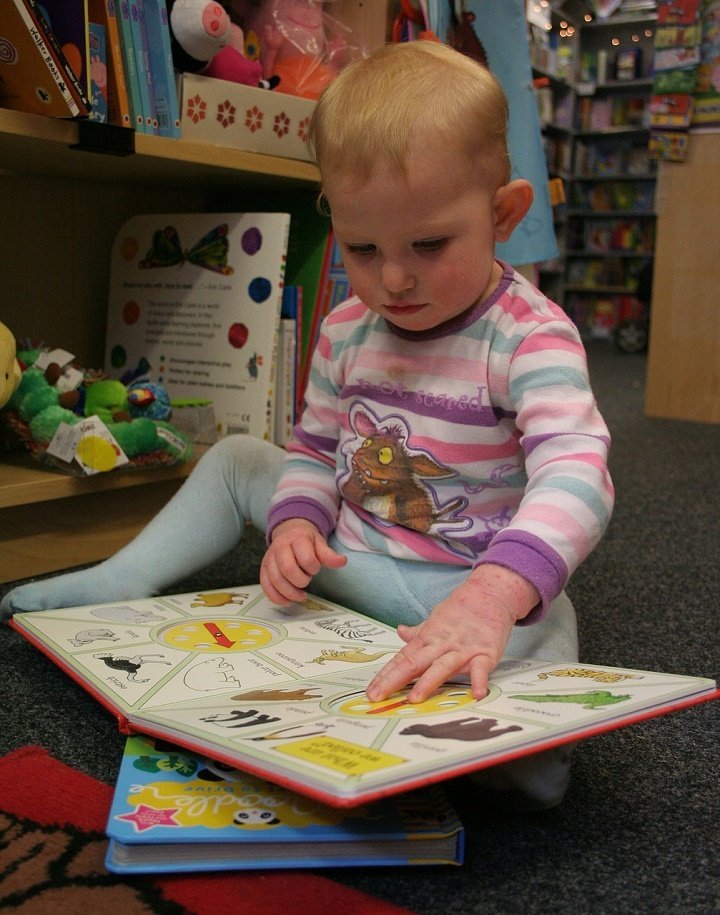
Children learn to read and develop an interest in reading over time. However, they can recognise voices and understand language long before they begin to reciprocate in words. Right from infancy, babies develop the skills required to communicate in the form of vocalisations, sign language or word approximations. This leads to rapid learning and literacy development during the initial years. Therefore, as parents, it is essential to read to your toddler and engage them in pre-reading activities. It will help nurture their vocabulary and language skills significantly. In his book 'Raising Confident Readers', Dr J Richard Gentry says, "Parents should begin reading aloud to children at birth. It feeds the child's hungry brain with data for language development, speaking, and early word reading. It's a wonderful way to bond and leads to cognitive, social, and emotional development."
Children whose parents frequently talk or read to them know more words by age two than children who have not been read to. Also, children who are read to during their early years are more likely to learn to read at the right time. When a child is read to, they hear you using many different emotions and expressive sounds, which helps in their social and emotional development.
Reading also invites an infant to look, point, touch, and answer questions - all of which promote thinking skills. Your child's skills in language improves when they imitate sounds, recognises pictures and learns words. - Anjita Deepak, Founder, Realizing Dreams School, Chennai
What are Pre-reading skills?
Pre-reading skills are the skills your child needs to develop before they start reading. Having these skills will prepare them to read and introduce them to the world of books. They will also help them when they start school. These skills involve recognising, associating and discriminating letters and words.
The five important skills your child needs to develop before they start reading are as follows:
Being motivated to read: To begin with, your child needs to develop an interest in reading. That means, they should want to pick up books and either pretend to read them or ask you to read aloud to them. This lays the foundation to becoming an avid reader.
Understanding the concept of reading: Your child needs to understand that each word in the book represents a spoken word. This also includes knowing how to hold a book, how to turn the pages and in which direction to read (left to right and top to bottom), and so on.
Having an awareness of the letters: It is important that your child understands different letters and the sounds they make. This also involves associating letters with words and discriminating between letters. You can recite the alphabet songs and spell their name aloud, for them to understand the importance of each letter.
Understanding Phonics: Your child should be able to understand that each word is made up of smaller sounds. They should also be able to utter individual sounds and play around with them. Usually children start experimenting with phonics around the age of three or four years. They replace syllables or change sounds to make a word sound different.
Being able to narrate: Simply put, your child should be able to retell parts of a story or describe things. This skill helps develop reading comprehension and encourages them to read more.
Now that you know what pre-reading skills are, here are a few fun activities you can do with your child to help develop them.
6 Fun Pre-reading Activities
1. Read out aloud
The best way to get your toddler interested in books is by reading a book together every day. You can read aloud to your toddler in an animated way. For example, if it's a book about farm animals, make the appropriate animal noises as you point out each animal. This will make them understand that reading can be a fun activity.
2.Point to words
Whether you are reading the shopping list or a story book, point out the words as you read them. This will teach your child to associate the written word with the spoken word and they will understand that you read words and not pictures.
3.Organise a letter hunt
Take a box and fill it with sand or flour. Bury some plastic letter tiles in the sand. Then take a piece of paper and write each letter on it and ask your child to find the corresponding letter in the sand and match it with the letter on the paper. This activity will teach them about different letters and make it a fun task for them.
4.Teach the right way
One of the most important skills of reading is teaching your child to read left to right and top to bottom. Take a blank piece of paper and draw a start sign at the top left and a stop sign at the bottom right. Make the rest of the page a race track with the 'roads' moving from left to right, all the way to the bottom of the page. Take a toy car and ask your toddler to race it along the track in the right way. You can even draw letters of the alphabet or pictures of fruits on the 'road' and ask them to collect them in the right order (left to right and top to bottom).
5.Sing along
Songs are the best way to teach your toddler about phonics. Sing aloud, stressing on the sounds of each letter and ask them to repeat the sounds. Another interesting way to teach your toddler phonics is to teach them to pronounce their name. Break up the name and sound it out to them. For example, the name Avinash can be broken into A-Vi-Na-Sh.
6.Recite a rhyme
Children love rhymes, specifically repetitions of words, because that way they can predict what comes next, which gives them a sense of mastery over the phrase as well as the rhyme, when they say it. Phrases like the 'Clock goes Tick Tock, Tick Tock' or 'Pat A Cake, Pat A Cake' are easier to remember and, in turn, easier to recite. This evokes in your child a sense of confidence which encourages them to explore more reading material.
With these fun activities, you can not only bond with your child, but also introduce to them some very important skills that will enable them to become an avid reader in the future.
The Dot literacy and phonics program offers a systematic method to help young children learn the foundational reading skills. The literacy and phonics program for kindergarten ensures that every child can read even before they enter primary school.






















Comments
Standard Cold Pressed Oil Jun 25, 2019
Edit
Comment Flag
Cancel Update