
Career Counseling For Students: When To Start, Why It Matters, And Key Tools
 Arundhati Swamy 9 Mins Read
 Arundhati Swamy
Mother, grandmother, family and school counsellor
Wondering how to guide your child’s career journey? Learn the importance of career counseling, the right age to begin, and the helpful tools and methods used to support students in making informed choices about their future

'Career choice is always a search for the self and for work more fitting to that self.' - Richard N Bolles, author of What Color Is Your Parachute
Students are often asked to make one of the most important decisions of their lives—choosing a career—at a time when they’ve had little exposure to the world of work or what truly inspires them. Hence, choosing the right career is not an easy task. Also, there may be innumerable opportunities awaiting them in the future, but the gateway to those choices is limited by the narrow choice of subjects available in the present academic streams in Class 12. This calls for some serious decision-making by the students.
While some students know exactly what they want to do, most are either clueless or confused. To make things worse, they are often coerced or misled into choosing subjects. The bigger problem lies in the disabling, outdated belief that a high score in a subject is often the only criterion for making a choice. This is where career counselling for students comes in.
Importance of career counselling for students
Career counselling offers school students a more systematic and thoughtful way to make better choices for themselves. Career information offers factual data about the subjects available, course content, job requirements and the opportunities available. Career guidance for students enables deep inner exploration to understand their core interests, family influences, aptitude, personality, skills and attitudes. These elements can be combined to derive a personal career profile, which will help the students choose subjects and a career which they are more likely to enjoy and find satisfying in the long term.
What does a career guidance counsellor do?
It's common for Class 10 students to feel overwhelmed when choosing a stream after their board exams, as they often lack the guidance and information needed to make a confident decision about their future path. Class 12 students face a larger dilemma of choosing the right career option from a plethora of choices.
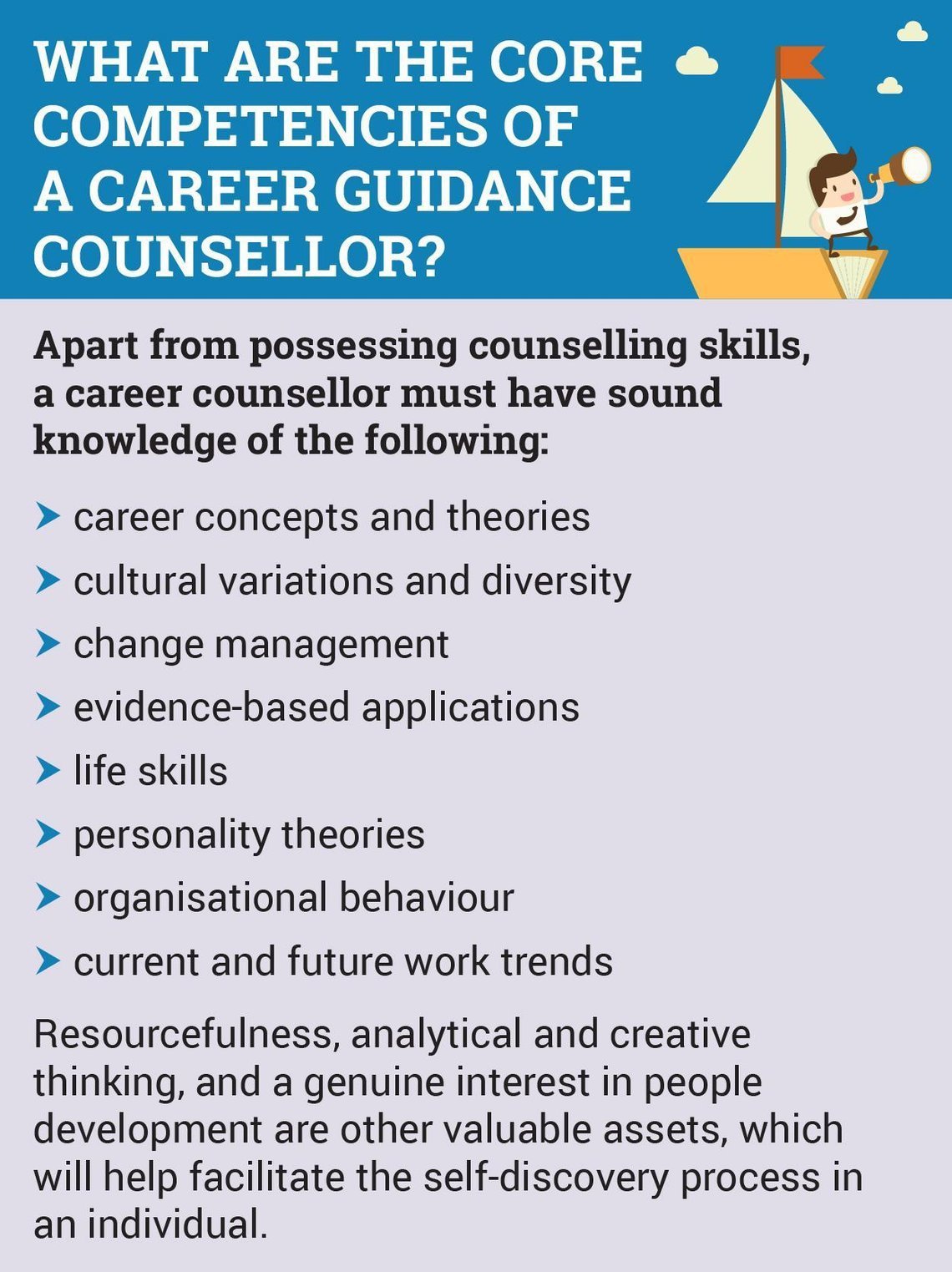
It is important to seek help from a career guidance counsellor at such times. The role of a career guidance counsellor is to help students select the right subjects or stream and to keep them aware of all the great career options they can choose from.
How is career guidance helpful to school students?
Career guidance uses a scientific approach to map an individual's career profile. It offers students information and support in making choices, and leads them from conflict and confusion towards clarity about what they truly want to do in life. Most importantly, it gets them actively involved in making a major decision. When they love the work they do, they are motivated, energized and confident, and will seize any opportunity that comes their way.
What is the right time to begin career guidance?
The subtle influences of early childhood play an important part in shaping a child's future career choices. Introducing children to the world of work is the first informal step to career guidance.
Class 8 is a suitable time for you, as parents, to start having casual conversations with your children about life after school, your career journey, how you made choices, the key factors within and beyond your control that influenced your decisions, and what you like and dislike about your work. You must stimulate and encourage your child's curiosity. You can also share interesting stories, talk about your successes and setbacks, and your hopes and aspirations.
In Class 9, these conversations can be extended to explore the career experiences of other family members, including grandparents, older siblings, relatives, and friends. You can also teach your children how to ask questions about other people's work and learn about various career profiles.
Also, participating in extra-curricular activities will give children an opportunity to begin learning work-related skills such as getting along with people, researching information and resources, planning and organizing, engaging in teamwork, solving problems, coping with frustrations, turning setbacks and failures into learning experiences, expressing creativity, and managing time.
How can it help students choose a suitable career?
The formal career guidance process uses a scientific approach based on multiple human science theories and their applications. While it cannot, of course, offer any guarantees, it can suggest subjects and career pathways that the child is most likely to enjoy and be successful at. Most importantly, the process will make them aware of personal and social biases and any misinformation they may have picked up.
What should your child do to make the most of a career guidance session?
- Keep an open mind and be attentive. This will help them ask pertinent questions and have their doubts clarified.
- Be aware of their socio-economic circumstances and look for ways to overcome any obstacles they may face.
- Ask people about their experiences, likes and dislikes about the work they do, growth patterns and possibilities in the field, and the required qualifications.
- Explore and understand the future of the industry they are interested in, for the next twenty years, the risks involved, and the opportunities.
- Find out how people have used their unique skill sets to enhance their work or create new avenues and pathways for themselves.
The difference between interests and aptitude
An aptitude assessment measures a person's cognitive or thinking skills. The scores indicate how well the child can grasp concepts in various subjects. These inputs are combined with a student's core interests and career profile to create a career path that is most likely to be suitable for them. Often, there is a high correlation between the two.
What are the tools or processes used by career guidance experts?
Career counsellors use a variety of assessment and guidance tools. These tools help them in identifying the key components and competencies of a student. They may be administered individually or in groups; often, a combination of both is used.
A unique feature of the personal approach is the self-exploration process, which many students find very satisfying. The merits of the group approach are that it reaches out to large numbers and is therefore time-efficient. Questionnaires, worksheets, discussions, standardized tests, and assessments are used for guidance.
Web searches, seminars, and career fairs are mainly used for giving information about subject content, courses available, and college admissions.
A skilled counsellor or a well-designed questionnaire can detect whether a student's mood or mental state is influencing the analysis.
Analysis and feedback are points for discussion between the student and the career counsellor. They can express their doubts and have them clarified, and ask questions arising from the new insights they have gained. A thorough understanding of the analysis and recommendations will lead to clarity for the students and point them in the right direction.
As with all information on the Internet, one must be cautious about the authenticity and credibility of the assessment tools. The resources must be standardized material and culture-sensitive, too.
What is the role of a parent in career guidance?
As a parent, you have a key role to play in helping your child make career choices. They require your active participation and guidance, as they may not yet be ready to make this big decision entirely on their own.
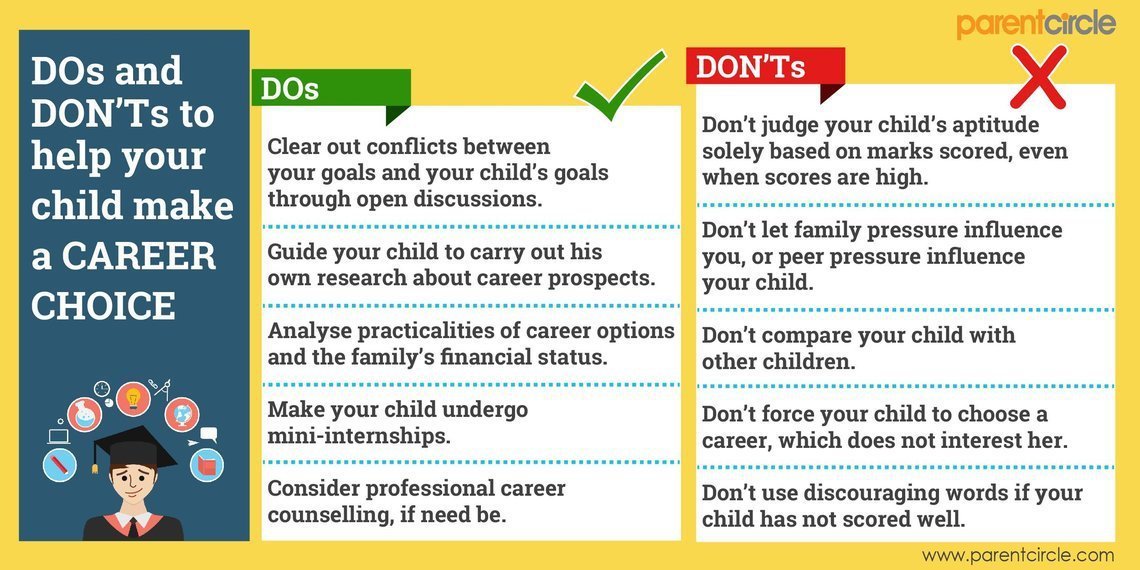
Dos and don'ts for parents
Allow your child to do the research themselves. This engagement with information broadens their thinking and stimulates their interest, besides leading them to discover something new. Assist them in their search with patience and understanding. It is important to discuss the options available for further study and employment after school.
Listen to them when they talk about their doubts, fears, hopes, and ambitions. Explain family constraints, abilities, finances, social norms, etc. Discuss, debate, and research separately, and together. Be aware of your own needs and unfulfilled desires, family pressures, expectations, and interferences.
Your child can choose subjects that enable them to work to their strengths, they enjoy learning, and those that challenge them to make the most of their capabilities. Do remember that as your child matures and finds out more information, they are likely to change their understanding about the choices they want to make.
All said and done, their subject choices for Classes 11 and 12 must be made carefully. Ensure that they do not inadvertently close any doors by making too narrow a choice. For example, if they omit a subject, they may not be able to take it up again for higher studies. Let them talk to as many people as possible, so that the decision you make together about the subjects they choose is one that they will feel most comfortable with.
Canaptitude change over the years?
You may wonder whether career guidance is the perfect approach to finding the right career for your child. You may also ask yourself whether there will be a difference in the results of the aptitude tests if done a few years or months later. Remember, there is no perfect approach. Different things work for different people. Core interests develop from various life experiences and influences. Hence, these interests do not change. Children may acquire new interests, some of them connected to existing ones, some entirely new. However, the differences will lie only in minor variations. Therefore, there will not be any major change in the results. So, go ahead and guide your teen early on, on the right career path.
Making the right career choice will mean a lifetime of contentment. With these pointers, I hope you ensure your child enjoys that contentment.




























Comments
Edit
Comment Flag
Cancel Update