Wondering how to develop your child's ability to think through a question or analyse a problem objectively? Read this article to know in detail.

When your family doctor prescribes a medicine, how do you evaluate the advice? How do you, as a family, decide which places to visit during the summer vacation? How do you decide which brand of chocolate, tea or coffee to buy? How do you know if the salesperson, who is trying to sell a smartphone is not lying about its features? The answer to each of these questions lies in critical thinking.
Considered a game-changer in today's world, critical thinking is a set of mental processes that you go through while evaluating the merit of something. 'Merit' here can be the truth of a statement, the usefulness of a product or a process, the moral rightness/wrongness of an action, the significance of an event, and so on. A number of choices that we make in our daily lives get processed through this 'critical thinking' filter in our minds.
So, where can you begin to help your child sharpen his critical thinking abilities? Before we get there, let us first look at the different sources of knowledge.
How do we know what we know? Where does our knowledge come from? If we consider 'knowledge' to be a collection of conclusions, let's look at how we arrive at those conclusions.
Example: You see a chair in front of you and conclude that there is a chair in front of you.
Example: You recall being stung by a bee when you were a child. So, you conclude that bee stings can be painful.
Example: Your friend tells you to avoid Restaurant X because each time she ate there, she experienced food poisoning. You conclude that the restaurant serves inedible food.
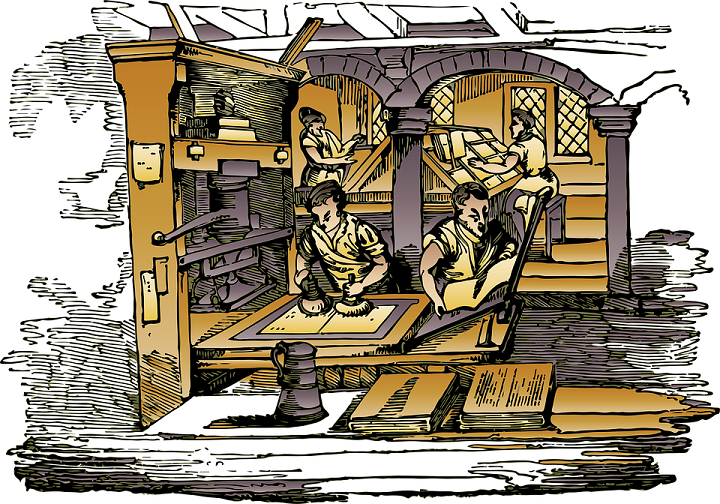
Example: The science textbook tells your child that the Earth is tilted at 23.5 degrees. She takes that as the truth.
Here's a short quiz for your child. What could be sources of knowledge for the following statements? (Get your child to think about how she can verify the truth in these statements.)

You just looked at the different sources of 'knowledge', but did you know that each of these sources has its own drawbacks? For instance:
If you become aware of these drawbacks, you may be able to look for rational ways to minimise the errors they lead to.
Here's 'an experience that is not accurate' and one that can easily lead your child to jump to a wrong conclusion.
It is natural for a child to conclude that it is the Sun that goes around the Earth every day. He sees the Sun rise in the East and set in the West. Not once has he observed an exception. Then, how is the child being made to believe, against his own experience, that it is the Earth that goes around the Sun and not vice versa?
Textbooks and teachers tell him so. It is a dogma he is supposed to accept without questioning. What you are now doing is to convince your child that he should forget his experience (of Earth not moving) and simply believe that it is going around the Sun at some breakneck speed. But for your child to wholeheartedly accept this fact, he may need an understanding of some other related theories and observations (like the retrograde motion of Mars). So, the process of moving your child from his experiential knowledge to rational knowledge needs to go through critical thinking and not through blind faith in the textbook. It is not difficult to get your child to objectively analyse and form his own judgement, but it requires sustained effort over a couple of months.
Children ask a lot of questions. More often than not, these questions present excellent opportunities to make them think. When these questions pop up, do not give your child the answer right away. Get her to think and analyse first.
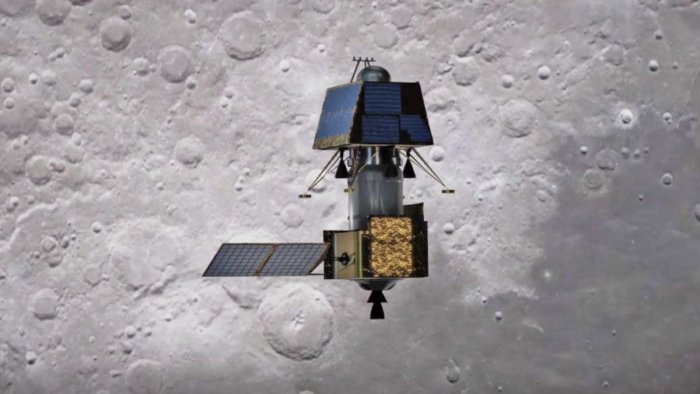
Examples: Let's take a couple of questions involving the moon. Suppose your child asks you the following questions, here's how you can take the conversation forward.
Question 1 : Why does the moon walk with me?
Your response: Does it do so in every direction? Let's walk 100 metres north and see where the moon is. Let's walk 100 metres south and check where it is. Does this happen with streetlights and lampposts too? How about a distant tree or a mountain? Is it possible for a star also to walk with you? But why not the poor lamppost?
Guide your child to discover the role of the distance between your child and the moon in making this happen. It might be a bit hazy in the beginning, but that's ok. It is important 'not' to explain!
Question 2: Is the moon bigger than the stars?
Don't be tempted to respond with a 'no'. That would kill an excellent critical thinking opportunity.
Your response: Which is bigger - that building far away or the window through which we can see it? Shall we check if it is the moon that goes over the stars or the other way around? What would you conclude in either case? That would at least clarify if the moon or the stars are nearer...
Your child will begin seeing connections between the size of the objects and the distance. Don't be in a hurry to explain! The struggle to make connections is far more valuable than getting to know them by being told by someone.
A hypothesis is an explanation that is made on the basis of limited evidence and is not necessarily conclusive. It is only a starting point for any investigation/discussion. So, encourage your child to test hypotheses and not to accept anything blindly.
Example: Grandmas prescribe this recipe as a treatment for common cold (to be consumed three times a day): boil water with a few tulsi (basil) leaves and ginger, add some honey. (Let's call this TGH: tulsi-ginger-honey tea.) Now, assume your child asks you if there is any reliable evidence to show that drinking TGH tea cures cold. Instead of responding instantly, encourage your child to do a 'thought' experiment on the following lines to check if TGH tea cures cold. We give the TGH tea to a group of people who have a cold and here are the scenarios post that:
Scenario-1
If they recover in seven days, can we conclude that TGH tea cures cold? Not really.
Scenario-2
If a group of people who don't take the preparation also recover in seven days, can we conclude that the TGH tea has had no effect? Probably.
Scenario-3
If the cold disappears on its own in four days, but takes seven days to disappear among those taking TGH tea, can we conclude that the preparation in fact slows down the body's healing mechanism? Most probably.
Scenario-4
If the cold disappears in four days for those taking TGH tea, but takes seven days for others, can we conclude that TGH works? Definitely. You can design a number of 'thought' experiments like this.
Two groups of patients are considered: an experimental group that takes the treatment, and a control group that doesn't (but is usually given some fake treatment to facilitate what is called the 'placebo' effect - in this case, some flavoured hot water but they think they are consuming TGH tea). If recovery in the experimental group is significantly better than in the control group, the results support the hypothesis. If there is no difference between the two groups, we must conclude that the hypothesis is not supported by evidence. At least, not yet.
Problem-solving and decision-making are important aspects of critical thinking. Create imaginary problems for your child and get her to solve them.
Example 1: A village in Africa that survives on fishing from a lake nearby suddenly finds that the fish population is dwindling. They realise that people from another village are fishing in the lake stealthily at nights, since they are facing a drought. The two villages are about to go to war with each other over fishing rights in the lake. What can be a potential solution that is mutually acceptable?
Example 2: When someone asks you 'Which is the best route to the Chennai airport from Marina Beach, what would you say? The time of the day, the day of the week, the vehicle (car or bike or public transport) and so on need to be considered before coming up with a tentative response, and this involves critical thinking. Also, one needs to define what is 'best' here; it need not necessarily be the 'fastest'.
Example 3: In situations involving the moral question 'What is the right thing to do?', critical thinking plays a pivotal role. For instance, you might hold that stealing other people's money is a bad idea. But then, if you are a fan of Robin Hood, there is a contradiction between this moral principle and what you like. You might want to tweak the moral principle or stop liking Robin Hood!
Children ask a lot of questions. These questions present excellent opportunities to make them think
Resources that can help develop critical thinking skills in your child: Here's a clipbook with a collection of resources(write-ups, book-suggestions and videos) that can help your child begin to think critically.
There you go. It may appear difficult to build critical thinking skills in your child in the initial stages. But, with practice and encouragement, you will master the art of teaching and your child will master the art of critical thinking. Remember, there is one thing that you must avoid: giving an instant response to your child's questions. Look for learning opportunities by asking counter-questions and answer only if you must.
Also read:
7 ways to boost critical thinking abilities in children
How to raise a child with critical thinking skills
Develop your child's critical thinking and writing skills
Ways to encourage children to read
About the author:
Written by Sriram Naganathan on January 2020.
Sriram Naganathan is a core team member of THINQ. He can be reached at srihamsa@gmail.com
Join our Circles to share, discuss and learn from fellow parents and experts!
Looking for expert tips and interesting articles on parenting? Subscribe now to our magazine. Connect with us on Facebook | Twitter | Instagram | YouTube
Comments
Raaj Esh R Dec 9, 2020
Edit
Comment Flag
Cancel Update