1. Learning
  2. Building Skills
  3. Science In The Kitchen

FEATURED

Science In The Kitchen

Aruna Raghuram Aruna Raghuram 15 Mins Read

Aruna Raghuram Aruna Raghuram

Follow

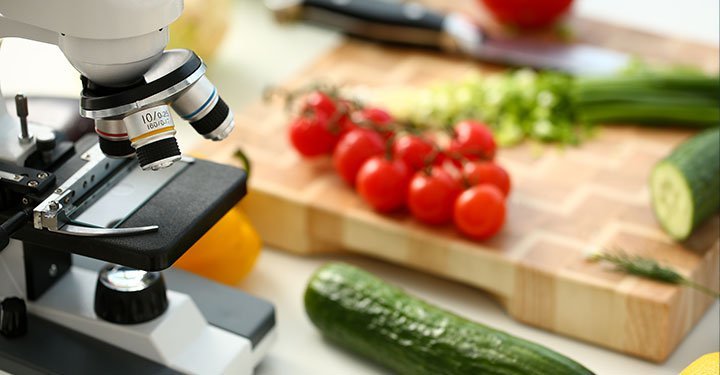
Science experiments in the kitchen - sounds incredulous? Not really. Here is how you can bring science alive in your kitchen with these interesting experiments you can do with your child.
Primary to Teen
Science In The Kitchen
"A scientist in his laboratory is not a mere technician: he is also a child confronting natural phenomena that impress him as though they were fairy tales." - Marie Curie, Polish scientist and the first woman to win the Nobel Prize

Who would have ever thought that the kitchen could turn into a science classroom for children? Well, it certainly can. It is the best place to help your child explore science. For, how often would your curious little one have asked you questions while observing you cooking. Her curious nature would be most aroused in the kitchen. And, curiosity and observation are what science revolves around as the following definition about science tells us.

According to NASA Science's web page, science is . . .

  • Observing the world
  • Watching and listening
  • Observing and recording

Science is curiosity in thoughtful action about the world and how it behaves.

So, nurture this curiosity in your child by encouraging him to observe, ask questions and experiment. For, children are naturally curious and eager to explore the world around them.

In an exclusive interview with ParentCircle, Preethi Vickram, educator, STEAM enthusiast, parent coach and founder of Leadership Initiative For Educators (LIFE) gives her insights on the subject.

"There's not really much parents need to do to get their children interested in science. Children are born curious. They learn by trial and error. They learn through their senses. And, they really learn by exploring and understanding on their own. We could help them maintain their curiosity, allow them to explore and encourage them to ask more questions."

Also, children learn best through play. So, it is a good idea to introduce scientific concepts to your child in fun and playful ways to capture his interest.

Preethi further says, "Asking your child the right questions to build higher-order thinking skills is vital. For instance, instead of asking: 'What colour is the sky?', parents could ask: 'Why do you think the sky is blue in the morning when it is not cloudy?' If there is a culture at home to be curious, children will love science as they grow up".

Why science in the kitchen

There can't be a better setting for learning science than the kitchen. For, science experiments in the kitchen combine the principles of physics, chemistry and biology. You can use the ingredients and recipes to conduct interesting science experiments in the kitchen with your child.

According to Preethi, "Getting a child involved in the kitchen is a great way for experiential learning. Following a recipe is nothing but following the steps of an experiment. You do things by trial and error while cooking. You get to work with different kitchen ingredients. There are combinations happening. For instance, the use of soda in cooking is a lesson in chemistry. We can learn about converting liquids into solids when dosa batter is transformed into a dosa."

Science in the kitchen for kids

There are several different activities that you and your child could do in the kitchen to learn science. Of course, some of them should always be done under your supervision. Here we describe a few kitchen science experiments for children of different age groups.

Science in the kitchen for primary schoolchildren (6-9 years)

1. Reversal of changes: Ask your child to fill an ice tray with water and place it in the freezer. After it has frozen, ask him whether the ice can be changed back into water? The idea is to allow him to come up with an answer. After your child answers, or you help him come up with the answer, ask him another question. For example, "Once we cut an apple into pieces, can we make it whole again?" He will probably figure out that the answer is 'No'.

Science In The Kitchen

2. Germination of seeds: For this activity, invite your child to soak a cup of green gram in water overnight. The next morning, ask her to drain the water and wrap the kernels in a piece of moist cloth and leave it for the next 24 hours. You can imagine the delight on your child's face when she finds the kernels sprouting the next morning. This is also the time when you can go over the entire process with your child and explain to her how seeds germinate.

3. Types of vegetables and fruits: Asking your child to observe the different vegetables and fruits in the kitchen is an easy way of introducing him to botany. You can ask him questions like, "What is common between a carrot and a radish?", "What is different between an onion and a potato?", "Is tomato a vegetable or fruit?" Try to give cues to your child to think and come up with the answer. But, if he is unable to, then go ahead and make him understand.

4. Insects in rice, pulses and vegetables: When food grains are left in containers for some days, they get infested with tiny insects or worms. Also, vegetables like aubergine and cauliflower sometimes have worms. Show these different pests to your child. Tell her why food items become infested with pests and how to keep food items pest-free.

5. Invisible ink: Going invisible is the dream of every child (especially when she's been up to mischief and doesn't want to get caught by you!). Although she can never become invisible, she can certainly learn to make invisible ink. For this, ask her to squeeze a lemon and collect the juice in a cup. Then, ask her to dip a toothpick or ear bud in the juice and write a message on a piece of paper. The writing wouldn't be visible. But, when you hold the paper close to a candle and heat it (it is better to do this part yourself), the message will magically become visible!

Science In The Kitchen

6. Absorption of water: Some materials absorb water while others don't. To help your child understand this, make her conduct a simple experiment. For this experiment you need to give her paper towels, aluminium foil, a sponge, a napkin, a zip-lock bag, a Styrofoam cup, teaspoon and water. Ask your child to use the teaspoon to pour a little water on each item and observe. Then ask her from which items the water has disappeared. Since the sponge, napkin and paper towel absorb water, there would be no water on these items. However, the zip-lock bag, styrofoam cup and aluminium foil would have water on them. Now, explain to your child why the water disappeared from a few items and not from the others.

Science experiments in the kitchen for pre-teens (10-12 years)

Science In The Kitchen

1. Baking a cake: Take the help of your child while you are baking. Not only is it a great opportunity to bond together but also to make your child understand some chemistry in the kitchen. For example, explain to him why you mix baking powder with the batter. When the cake batter is placed in an oven, the heat makes the baking powder produce bubbles of gas. This makes the cake rise and become fluffy.

2. Curdling milk: Does your child love curd? Then show her how you prepare it. Add a spoonful or two of curd in lukewarm milk and stir the mixture. After 6 to 7 hours, show your child the bowl of curd that has set. And, explain to her the process, how adding a spoonful of curd to milk starts the chemical reaction between the lactic acid bacteria (present in curd) and casein, a protein in milk. Again, some kitchen chemistry! Next time, you can ask your child to prepare curd by herself.

Science In The Kitchen

3. Fungi forming on bread: Quite a few times you would have discarded bread that developed green, yellow, black or grey patches. The next time it happens, before discarding the bread, show it to your child. Explain what those patches are and how they formed-that spores of fungi floating in the air land on bread, feed on the starch present and begin multiplying; that the coloured patch is a colony of fungi; that keeping bread at very cold (refrigerating) or high temperatures (baking) does not allow the spores to multiply. Also, tell your child about some edible fungi such as the different types of mushrooms.

4. Measuring volume: Understanding volume and how to measure is an important skill that you must teach your child. To get a sense of volume of liquids, give your child a 100ml measuring cup and a 1 litre jar. Ask him to use the measuring cup to fill the jar with water to the brim. While doing so, make him count the number of times he uses the cup to fill the jar. Also, show him how to use the scale printed on the side of the measuring cup to measure the quantity of liquids.

5. Water moving up a plant's stem: This could be a fascinating experiment to do with your child. Take a jar of water, add some food colouring and stir well. Put a stalk of celery in the jar. Your child will be able to see how the coloured water moves up the stem.

Science In The Kitchen

6. Making cottage cheese (paneer): For this, you need half a litre of milk, lemon juice and a pinch of salt. Boil the milk in a saucepan and keep it aside. Now ask your child to add lemon juice and allow the milk to cool. After some time, show your child the result - the milk will appear curdled. Explain to him that adding lime juice increases the acidity of milk; that this causes particles of casein (a protein in milk) to come together and form lumps; so, the milk appears curdled. Drain the whey (the liquid) and the soft, creamy solid that remains is paneer.

Science in the kitchen for teens (13-18 years)

Science In The Kitchen

1. Understanding what makes popcorns pop: Children love popcorns. So, before you pop corns the next time, call over your child for watching some physics in the kitchen. While doing this task, you can show your child that some physical changes are irreversible. Give your child a corn kernel and ask her what makes it pop? If she doesn't know the answer, then reveal the secret - the starch present in each kernel contains some water. When the corns are heated, the water heats up and changes to steam. As steam escapes by bursting the kernel, we hear the 'pop'. And as the kernel pops, the starch within it expands as well which gives the flower-like shape to the kernel. Although this is a physical change, it is still irreversible.

2. Learning to make compost in a bag: This could be the first step towards turning your child into an environmentalist. Help your child put food waste like vegetable peels and egg shells into a transparent zip-lock bag. Now, ask her to add a few teaspoons of water to the bag and place a straw such that one end of it projects out of the bag. Then she should seal the bag. The straw would let the air inside the bag to escape. In a week or two, the compost will be ready for use. You can turn this into a project by asking your child to note the changes happening in the contents of the bag every day.

3. Making a battery with lemons: Here is some more science in the kitchen. Ask your child to get two 1.5-inch galvanized nails (coated with zinc to prevent rusting), two pieces of 1.5-inch 3 mm copper wire, 1 m of thin copper wire, two lemons, two alligator clips (metal clips with serrated jaws) and a torch bulb from your toolkit. Once ready, this is what she has to do -

  • Insert one nail and one piece of 3 mm copper wire into the opposite ends of one lemon, ensuring that they do not touch. The copper wire forms the positive terminal and the nail the negative terminal.
  • Do the same with the other nail, 3 mm copper wire and lemon.
  • Now, using a length of thin copper wire, connect the 3 mm copper wire and the nail of one lemon.
  • Do it for the second lemon as well.
  • Now, using another length of the thin copper wire, connect the nail of the first lemon to the 3 mm copper wire of the second lemon.
  • Then attach one end of another length of copper wire to the alligator clip and the other end to the 3 mm copper wire of the first lemon.
  • Similarly, attach one end of another length of the thin copper wire to the other alligator clip and the other end to the nail of the second lemon.

The battery is now ready. Finally, your child should attach the alligator clips to the light bulb to see a faint glow. She will be surprised to find that she can produce electricity in the kitchen. Explain the science behind this phenomenon.

4. Extracting DNA from strawberry: Before doing this kitchen science experiment, explain to your child what DNA is and its function. For this experiment, you will need a few fresh strawberries, some cold rubbing alcohol, some liquid dish-washing soap, a bowl, a pair of tweezers, a funnel, a strainer, measuring spoons, salt, a transparent glass or vessel, and a zip-lock bag. Once your child has all the materials required, this is what he has to do -

  • Mix 1/3 cup of water with tsp salt and 1 tbsp of dishwashing soap in the bowl. Remove the stems of the strawberries and put them in the zip-lock bag.
  • Pour 3 tbsp of the solution prepared earlier into the bag and seal it after pressing out the air.
  • Squeeze the bag so that the strawberries become pulpy.
  • Strain the pulp.
  • To the liquid obtained after straining, add an equal amount of rubbing alcohol. Don't stir the solution.
  • Now, using the tweezers, remove the top layer which would be viscous and cloudy. This is the DNA that has been isolated from the liquid.

It may require a detailed explanation to make your teen understand this experiment. Basically, the soap pulls out the DNA from the cell membrane and since DNA is not soluble in alcohol it can be isolated. The experiment is best done with strawberries as there is a large amount of DNA in each cell of the fruit.

Science In The Kitchen

5. Measuring the density of liquids: For your child to understand the concept of solid, liquid and gas, he needs to understand density. And, you can easily explain it to her with this simple kitchen science experiment. Ask your child to pour equal amounts of warm water in two glasses. Then mix three tablespoons of sugar and red food colour in one glass and six tablespoons of sugar and yellow food colour in the other. Now, ask him to use a straw to suck up some yellow water and add this to the red water. The yellow water would sink. Explain to your child why this happened-the yellow water is denser because of the higher amount of sugar. So, it is heavier than the red water. Hence, it sinks.

Safety issues

The thought of performing these experiments with your child must have got you excited by now. But, it would have also raised concerns about how to keep your child safe while doing these experiments.

Preethi has the answer to your question. She says, "As human beings we have the innate ability to defend our bodies and minds. When we childproof the entire house and children are brought up in a bubble wrap, they don't understand safety. Children learn about safety and taking precautions with some guidance from parents. Of course, while conducting science experiments in the kitchen, parents should set a few ground rules."

So, when you have your ground rules in place, you can go ahead and bond with your child conducting these experiments (of course, be watchful always).

And you must have noticed that all that is required for science experiments in the kitchen are the usual kitchen ingredients along with loads of enthusiasm. Yes, your kitchen may get messy, but cleaning with your child can also be a fun experience and a great bonding moment.

So, unleash the scientist in your child and get her exploring and experimenting with science in the kitchen. Mix in some fun and make kitchen science an experience to remember for your child!

About the author:

Written by Aruna Raghuram on 10 November 2020.

Aruna Raghuram is a journalist and has worked with various newspapers, writing and editing, for two decades. She has also worked for six years with a consumer rights NGO.

Join our Circles to share, discuss and learn from fellow parents and experts!

Looking for expert tips and interesting articles on parenting? Subscribe now to our magazine. Connect with us on Facebook | Twitter | Instagram | YouTube

Enhance your child's cognitive skills and scientific thinking skills with The Dot Me and My World program for kindergarten. It provides a solid foundation in science through sensory explorations and engaging experiments.


Connect with us on

Comments