
Independent dressing: Effective and useful expert tips to teach your child how to get dressed
Sahana Charan
When your toddler pulls out his favorite red sweater to wear it on a sunny day or insists on buttoning his jacket himself, it's a cue he wants to dress on his own. Here is how parents can help
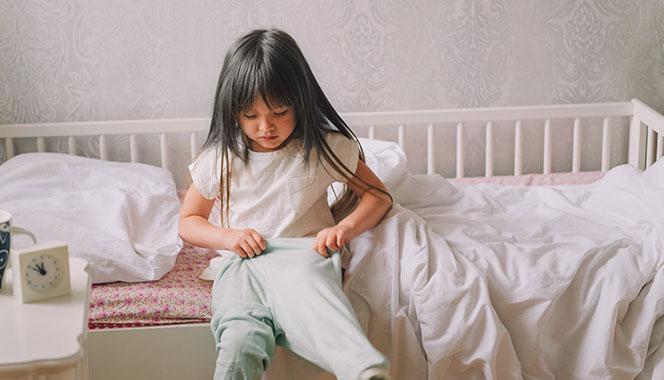
When three-year-old Mia refused to wear the striped black and white dress to her playdate and asked for the floral one instead, her mother was a tad taken aback. Not only was her little one showing interest in dressing herself, but she was also expressing her choices. The little girl's mother conceded to her decision but did not wait till Mia slipped the garment over her head. Instead, she quickly took it from her, slipped the dress over her head, and fastened the buttons. The disappointment of not being allowed to do things on her own was writ large on Mia's face.
It might take a while before the little girl can get the buttons right, put on a belt, or tie her shoelaces impeccably. But if she is allowed to try dressing at her own pace, she will gain the confidence to do it. Adults often take such tasks for granted, and may not realize that for toddlers/preschoolers, mastering a task like self-dressing is a big deal. So, they need the time and space to slowly and surely learn the skill, while having a happy and stress-free experience
"Learning to dress oneself involves multiple skills and is a gradual process of discovery, practice, and ability. Toddlers from the age of two years begin to show interest in dressing themselves. They observe keenly, and with encouragement from parents and caregivers, pick up the skills as they grow. Overall, they must have pleasant experiences with learning to dress." - Arundhati Swamy, Head of Parent Engagement Program, ParentCircle
"Mistakes must be taken lightly so that the child learns that it's alright to keep trying. Parents can first allow them to try, and help when asked. Stepping in while they are trying can thwart their need to learn and move towards independence. Emotionally, it leaves them frustrated or makes them want to give up," adds Arundhati.
A few tips for parents on getting started
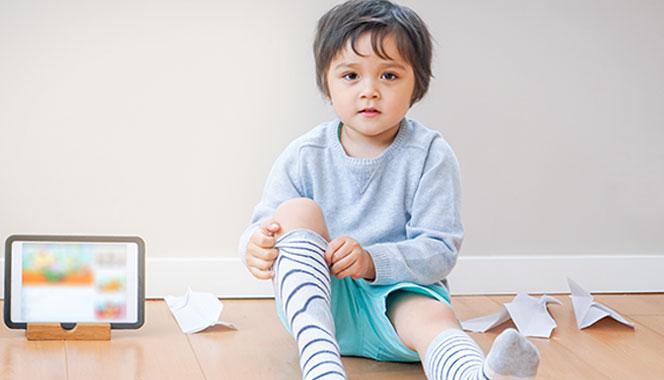
- Give a limited choice of clothing at a time, so that your child does not get confused about what to wear
- Show him different types of garments, including sweaters, cotton shirts, windcheaters, party clothing, and so on, and explain when they can wear each type of garment
- It is a good idea to name each piece of clothing and where it goes, for example - socks for the feet, pants for the lower body, etc
- Initially, give the child easily wearable clothing, like pants and dresses with elastic waistbands, or dresses that can be slipped on without difficulty
- Avoid pants and other garments with difficult hooks and buttons, as it might be difficult for your child to remove them and redress on his own when he uses the toilet
Each child has her own pace; one may learn quickly while another may take a little more time. They graduate from skills that are simple to the more complex ones.
"Simple tasks include garments that are easy to slip on and require large motor movements such as taking off and pulling down garments. The more complex tasks include putting on and pulling up garments, manipulating buttons, and tying shoelaces, as they require fine motor movements, coordination, memory, body awareness," says Arundhati Swamy.
As kids learn to dress, these are the skills they will master.
Children who are always dressed by others, without involving them actively in the process, are likely to expect others to do it for them, and become dependent and passive in self-help tasks, says Arundhati
Physical: Large and fine motor movements, coordination, balance, body awareness.
Emotional: Self-satisfaction, expression of choice, bonding with the adult or sibling, the value of effort and practice, sense of accomplishment.
Social: Conversation, cooperation
Cognitive: Thinking about the 'how' and 'what' of a garment, memory, language naming the garments and its parts, colors, texture, sense of body in relation to space and dimension.
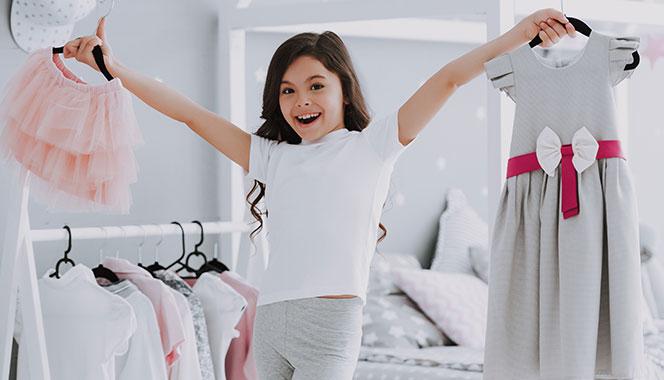
"Mastery over a task makes them feel competent and good about themselves. Children who are always dressed by others, without involving them actively in the process, are likely to expect others to do it for them, and become dependent and passive in self-help tasks," Arundhati adds.
Milestones to expect
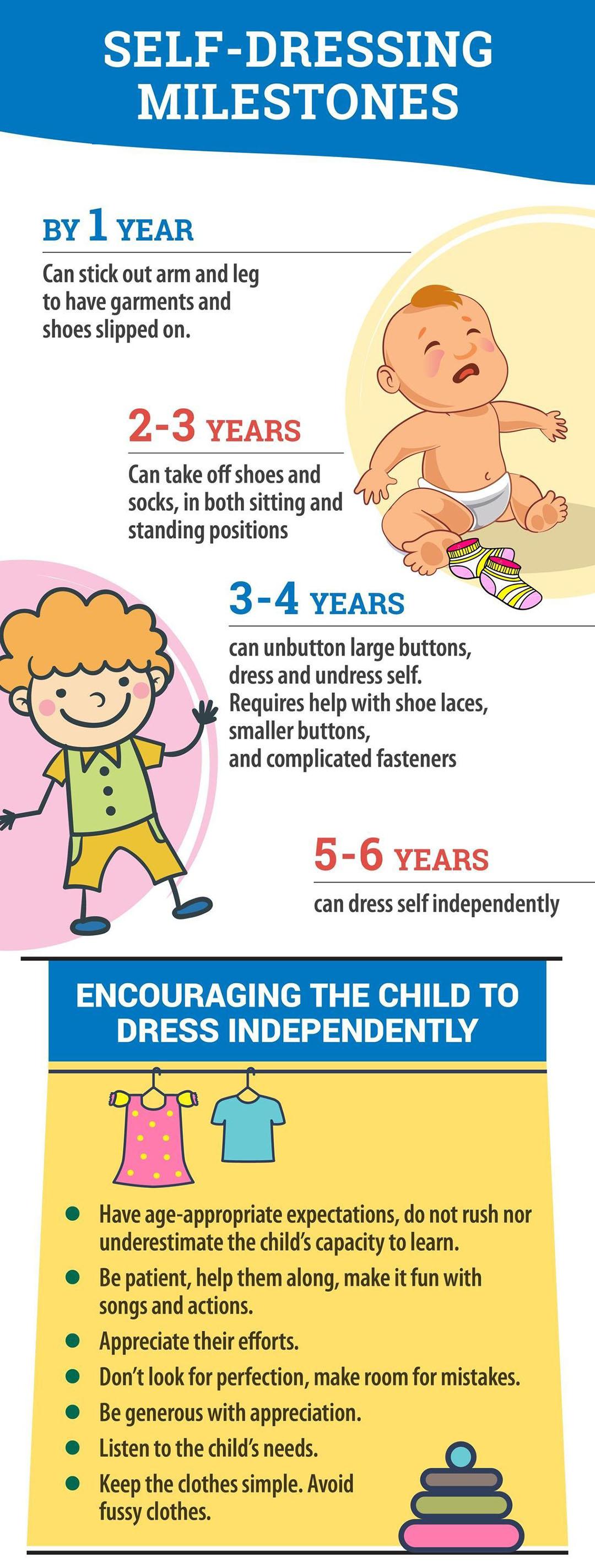
Parental expectations can either make or break the learning process. Expecting too much too soon or excessive pampering can be deterrents to a child's growing sense of self. Realistic expectations must be based on the child's development stage that gives broad limits within which a child learns to do things.
Arundhati Swamy gives parents important pointers on what self-dressing milestone to expect at what age and what parents can do to help their child, in the box below.
























Comments
Edit
Comment Flag
Cancel Update