
Fun Grammar Games For Your Child That Are Not Only Entertaining But Engaging
Hannah S Mathew
Grammar games are fun educational tools that come in handy in teaching grammar to your child.
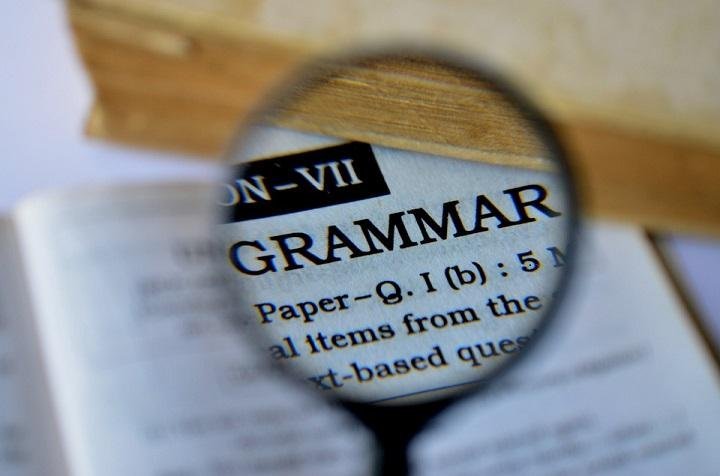
Good grammar is a game changer in any scenario. It allows your child to convey their intended meaning, thereby increasing their self-esteem, confidence and respect from others. On the other hand, poor grammar is annoying to the listener and can make a dent in your child's perceived personality.
Many parents find their child's grammar mistakes amusing and laugh. This encourages the child to repeat the mistakes, as they find it entertaining. Subconsciously, their brain records and reinforces the repetition and makes the mistake a part of their learning. This can be a blow to them later on as they have to unlearn the mistake before they learn to use the language correctly. With this danger in mind, it's never too early to start teaching your child correct grammar.
How you teach your child grammar can cause either boredom or attentiveness. Grammar games are a surefire way to make language use and forms enjoyable and easy for them to grasp. These games induce an increase in their brain's ability to learn and remember the lesson. They also prompt them to be inquisitive and eager to explore the study of grammar with gusto.
Although the Internet is brimming with games to teach grammar, be bold and create games for your child based on time, interest and available supplies. Detailed below are some samples for you to follow. These can be used to teach your child in individual sessions or can include their friends when they come over for a play date.
Easy-Breezy Plurals
Like the name of the game implies it makes learning plurals a breeze!
1) You will need At least 5 containers (paper cups, coloured boxes or pencil holders), labels, a marker pen and 25 strips of paper of a width of 1 inch each.
2) Place the open containers in front of your child and label each container with one of the following plural suffixes: '-s', '-es', '-ies', '-ves' and 'No Change'. If your child is old enough to learn irregular plurals, you may add a few more containers and label them '-en', '-eet', '-eeth', '-a', etc. Use simpler nouns for children aged five and below.
3) Write the singular form of a word, each on a separate strip of paper. Ensure that you have words correlating to each plural suffix label. For example, the word 'knife' would correlate to the container labelled '-ves'. Add pictures to the strips if your child is in primary school or younger.
4) Now, ask them to read each word aloud and state its plural form before putting it in the container it belongs in.
Punctuating match
This is a simple game of matching sentences with appropriate punctuation marks.
1) List sentences without the required punctuation marks on a chart, black-board or white-board.
2) Ask your child to insert the appropriate punctuation within and at the end of each sentence. Increase the complexity of the sentences based on his age and knowledge of English.
Verbzilla
Verbs or Action Words are easier to add to his register of words if your child can act them out.
1) Tell them a part of a sentence that involves an action. For instance, "I am listening to music." As you say this, perform an action to suggest the meaning of the verb in the sentence. Here you may cup one of your ears.
2) They need to repeat what you have said and add an action to it as a continuation of the sentence. They could say, "I am listening to music as I brush my teeth." Ask them to make actions to suggest the verbs they say.
3) It's now your turn and you might add (with relevant actions), "I am listening to music as I brush my teeth while I'm waving to my neighbour through the window."
4) Take turns until one of you forgets a part of the sentence and then start a new sentence.
Order! Order!
Word Order will no longer terrify your child, especially if their native language isn't English.
1) You will need Paper, newspaper, magazines, scissors, a marker pen and small covers (envelopes, Ziploc bags or pouches).
2) Write down sentences or cut short sentences out from a magazine or newspaper.
3) Cut the paper to separate the words from each other and put the words of each sentence in a separate cover.
4) Time them as they put the words in order to complete each sentence.
5) Increase the complexity of the sentence based on their age and knowledge. Use large letters and coloured paper for smaller children to make it more interesting.
Blind Man's Preposition
Based on the popular Blind Man's Buff, this activity is a hands-on way for children to practise prepositions.
1) You will need a blindfold and a medium-sized soft toy.
2) Clear the room of breakable objects and pad sharp edges.
3) Ask your child to blindfold you.
4) Tell them to place the soft toy somewhere in the room.
5) They must now instruct you using prepositions like under, on, behind, in front of, etc., to help you find the soft toy.
Using these games and others like these will make the learning of grammar easy for your child. It will be useful as a means to revise what they have learnt at school too.






























Comments
Edit
Comment Flag
Cancel Update