
Mom Shares How To Support Children With Special Needs During The Pandemic
Deepa Garwa
author parentcircle author parentcircle author parentcircle author parentcircle author parentcircle author parentcircle author parentcircle author parentcircle
If you are raising a child with special needs, here are some tips on how to support your child and yourself in these difficult times
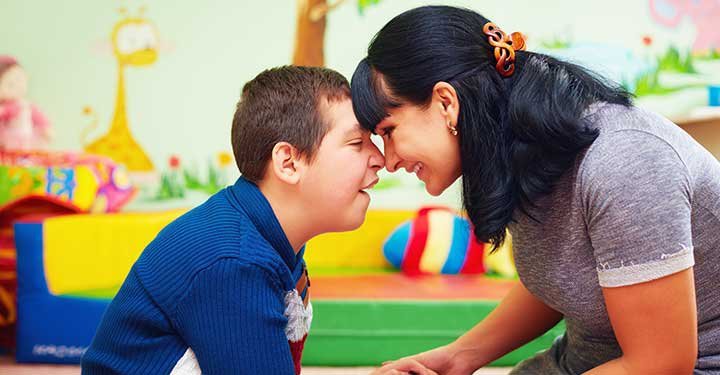
“Our lives have come to a standstill,” says Pallavi, the mother of a 10-year-old girl, who has cerebral palsy. The child’s only routine in the last few years has been going to a therapy center and spending time with the therapist. “I can’t engage her all the time. I need to look after her younger sister who is also home, and cook and clean by myself. I wish this all goes away soon so my daughter can go back to her routine.”
This is not the plight of just one mother. Hundreds and thousands of parents of children with special needs are slowly getting used to the new normal, in the absence of reassuring routines that took them years to teach in the first place. Thankfully, our children have been spared from the coronavirus, which mainly affects older people. But there’s no denying that the lockdown has had psychosocial and emotional effects on our children, leaving us in a particularly difficult situation. Also, as parents, we have to deal with the impact of COVID-19 on our children’s education.
Challenging times for children and parents
Most children with special needs can intuitively pick up the vibes from their surroundings. They feel the tension, even if they can’t communicate their distress, which is why the current times can be unsettling for them. Children with intellectual or physical disabilities benefit from various therapies—occupational, behavioral, sensory or speech—a few times a week, especially in their first few years. Early intervention can change the course of a child’s life. This is why most parents enlist the help of special educators and therapists for their children.
Gradually, these therapy centers become the only school or a place outside of their house that these children would ever know. And a prolonged gap can take away years of hard work, which is why most therapists believe that this lockdown can be daunting for children who need extensive support. For instance, children with hyperactivity need a great amount of outdoor sports, and if that’s absent, some might show aggression. Needless to say, parents are worried.
“My daughter’s only way for social interaction was her school. Because she is nonverbal, she doesn’t have any friends in our society or otherwise,” shares Monika, a homemaker who lives in a joint family comprising seven members. “Her special school was the only place she was happy to go to, and now that it is closed, my daughter is often upset. I hate to see her like that, but I can’t do anything. Nobody can! I hope this gets over soon.”
Most children with special needs are trained to make sense of the world around them with structure. They learn to thrive on routine and predictability. So, when things change, it becomes extremely difficult for them to cope with the unfamiliar situation. This unpredictability can lead to behavioral challenges, and children may develop extreme mood swings or severe anxieties. As much as we ourselves need it, our children also need help with their anxieties in these tough times. If the behaviors persist, reach out to your local community, professionals or even older parents who can help.
Schools remain shut, and the challenging part is making children understand why they can’t go to their school. Or to their center, or out for a walk.
Six-year-old Ashima, who has Down syndrome, is upset that she can’t meet and hug her friends or neighbors. “She is so social and loves to hug everyone she meets,” says her mother. “She stands on the balcony for hours wanting to go out, waving at anyone who passes by. I know she misses going out.”
As classes move online, there are fresh concerns over how children with special needs (and their parents) will cope with the sudden shift.
Difficulties of online inclusion
When a child with intellectual delays is sent to a mainstream school, often, academics is not the main goal. Largely, the primary objectives are functional and incidental learning, learning social skills, peer interactions, and nurturing their sense of belonging to a group.
As online learning replaces traditional learning, it has become difficult to achieve these goals. In online teaching, academics takes precedence over everything else. Because of this, children with special needs, who were part of mainstream schools, are now feeling disengaged. Most of these children, who had a shadow teacher or a teacher’s aide to help them simplify instructions or break up tasks, are finding it hard to process all that is being taught for a few hours every day.
For my daughter, who is in Grade 7 in a mainstream school, the novelty of online classes soon wore off. She started avoiding the classes, as coping with the fast-paced instructions and lack of face-to-face interactions wasn’t easy for her. Predictably, she would fake stomach aches, headaches and everything in between to not log in on time. She needed constant help in processing instructions in real time, as well as modifications in worksheets and other classwork. The last leg of the lockdown almost convinced me that if things don’t change, it’s only fair that she’s removed from these classes and is taught what would be functionally important rather than sheer academic work.
Many children with special needs also have associated conditions, such as visual and hearing challenges, lack of attention or speech delays, which make them the worst sufferers of online classes. After all, online learning relies on one’s ability to navigate the platform independently, with vision, hearing, and speech being the prerequisites.
It can be easily said that the pandemic will cause a significant loss of learning life skills for our children with special needs and also affect inclusive education.
Tips for working with your child
As a parent, it’s only natural to feel concerned about how this lockdown is going to affect your child. Most of us are already juggling house chores and work life, and on top of that, managing our children’s therapies, medication and dietary or educational needs can be extremely challenging. We feel overwhelmed with having to do it all.
But with a little planning and some insights and help from professionals, it’s possible to get through these trying times and keep track of your child’s progress. Here are some tips for parents, emphasizing structure and communication:
- Set a routine: Although the pandemic has disrupted school life, routines still matter. From setting a fixed time to wake up and go to bed to having a set routine comprising activities (e.g., studying, exercising or watching TV), it’s important to follow a routine. Knowing what is coming next helps your child process the day better. Also, creating a visual timetable for younger children can help them navigate through the day better.
- Engage your child in physical activities: Most children have abundant energy. When they burn off excess energy by exercising, practicing yoga or doing even household tasks, they become calm. Finishing a chore not only helps them get better at a life skill, but also gives them a sense of satisfaction and purpose.
- Communicate with your child: Talk to your child, even if they are young or nonverbal. Telling them why they can’t go out in simple language, or through social stories, will help address their anxieties and fears. Playing news channels on the TV all day long or discussing the pandemic in your child’s presence can distress them. Use calming forces, such as instrumental music, scented candles or essential oils, to soothe your child’s nerves
- Help your child socialize: Being social animals, we need social interactions regularly. The same holds true for our children with special needs. Your child may miss their classmates, friends, cousins or teachers. As a parent, you can help your child create an online network of people they can interact with. It could be other children with the same disability or other disabilities, their cousins, friends, children from the neighborhood, your friends’ children, or anyone with an empathetic heart. A 10-minute video call with different social groups every other day can benefit your child on multiple levels. We want to be valued and needed, and our children are no different.
- Avoid micromanaging: While it’s good to have a structure, micromanaging your child’s day can be counterproductive. Sometimes, sparing time for extra sleep, pretend play, free play, or letting your child decide what they would like to do will help them become confident. Some children like to do things that they have already mastered or watch a film they have already seen. It’s comforting for them. So, giving your child some space and not micromanaging their day will help you and your child.
- Prepare for bad days: Despite all the schedules and thoughtful routines that you may have created, there will be days when everything goes for a toss, the anxieties run high and the behavior gets out of control. It will be difficult for you and your child to get through the day. When that happens, just breathe and let the hands of the clock take you slowly to the next hour and to the next day. Some days are going to be more difficult than the rest, and it will be extremely helpful to have a mental note ready for such days. Plan in advance how you will react if A or B behavior happens, or how you will calmly deal with the outbursts.
- Believe in yourself: As a parent, it’s quite easy to feel inept at providing the support that your child needs. But believing that you are capable of more than you give yourself credit for, will help you look at everything with a fresh perspective.
Reach out to therapists and educators
Richa Kapoor is a senior occupational therapist at Sir Ganga Ram Hospital and also runs her own early intervention center, Sensitivity, in Delhi. According to her, this lockdown has provided children and parents an opportunity to reconnect and understand each other. Here’s what she said:
“Parents are the child’s first and best therapists. The lockdown forced most parents to take things in their hands ... But the children are doing really well. Being with their family and spending more time with their parents helped develop more connections and a better understanding of each other. Parents could train them on various life skills. I’m sure it isn’t easy. But if a few hassles of everyday life are taken care of with guidance from the therapists, I am sure our children will do well with their parents at home. They are safe and have fewer insecurities, and the bonding has been unlike ever before. COVID-19 taught us that in the midst of difficulty lies opportunity.”
So connect with your child’s therapist or educator and ask for ideas on how to manage your child at home. Because of their expertise, therapists, based on what stimulus is needed according to the specific disability, age and spectrum of a child, may design therapies you can implement at home.
For instance, an occupational therapist can identify the long-term goals and then break them into weekly or daily activities. She can design an individualized therapy program, train the parents, and meet them once a fortnight to oversee the progress. And a speech therapist, in order to teach a certain sound, may give specific oral-motor exercises, while combining them with more general oral exercises, such as blowing candles, playing flute, blowing bubbles or talking in front of the mirror.
This pandemic has changed the way most therapies were being done. So, you can explore online therapies, which have helped many parents save their time and energy and connect with their child at home.
Practice self-care as a parent
Shalini Chiblani, who runs a therapy center in Faridabad, wants parents to stay optimistic and not ignore their own health. Here’s her advice:
“Be creative, think what activities you can do with your child with the existing resources. ‘One can’t pour from an empty cup’—this phrase explains why parents need to look after their own physical and mental health. It’s crucial that we acknowledge that this ongoing journey may be challenging and isolating. Online groups, video calls with friends and family, listening to music or pursuing a hobby can help us manage better our own anxieties in these times. And if some of us still feel alone, we must try to talk to our friends, and in case that doesn’t help, reach out for professional help.
In the end, we need to be positive about coming out of this stronger. It’s like, we all know swimming ... Now, we need to also learn to swim in rocky seas and rough weather, which—going by our abilities in the past and our adaptability as human beings—might take time but will surely happen. However, we need to be aware that on the days it’s difficult to swim, there’s a boat filled with professional swimmers and our friends who can lift us up and give us some rest, so that we can get back in the sea again to swim with new vigor and strength.”
In a nutshell
- Children with special needs feel comfortable with routine and predictability. They find it difficult to adjust to changes in their routine.
- The primary objective of sending a child with developmental delay to school is to help them learn “social skills” through peer interactions and create a sense of belonging to a group.
What you can do right away
- Knowing what is coming next helps children process the day better. Set a predictable routine and put up a visual timetable for your child to help them navigate through the day.
- Communicate as much as possible with children to help them stay calm, and address their fears and anxieties. For example, you can tell your child why they can’t go out to play or why their school is closed. Playing instrumental music, lighting scented candles or using essential oils can also help calm their nerves.



























Comments
Edit
Comment Flag
Cancel Update